YUIMA NAKAZATO Fall Winter 2023 – 2024, inspired by Kenya
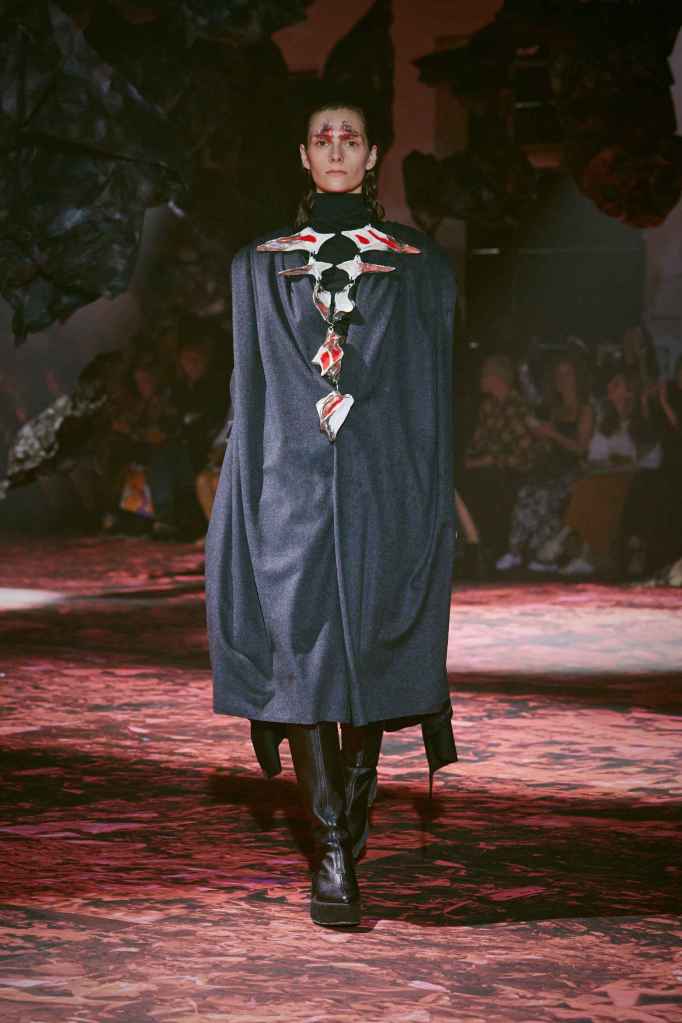
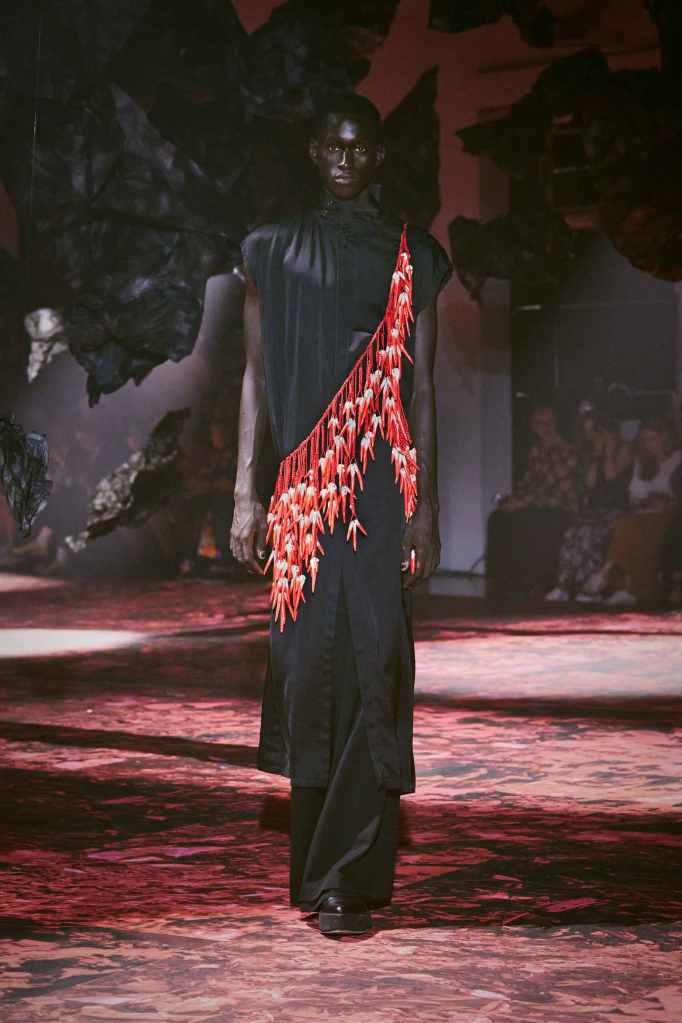
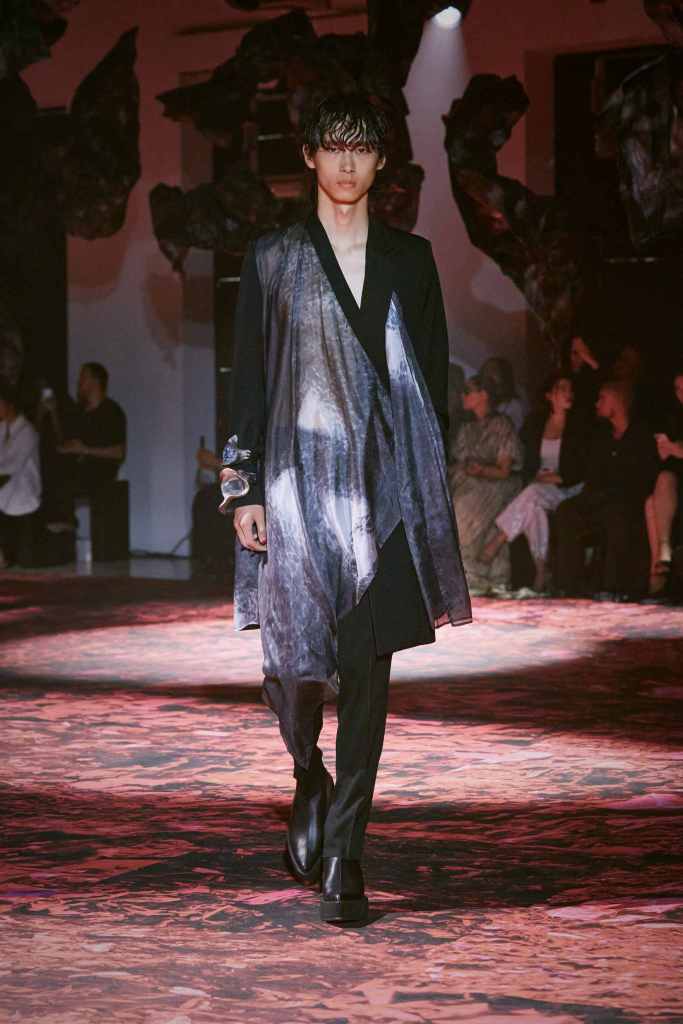
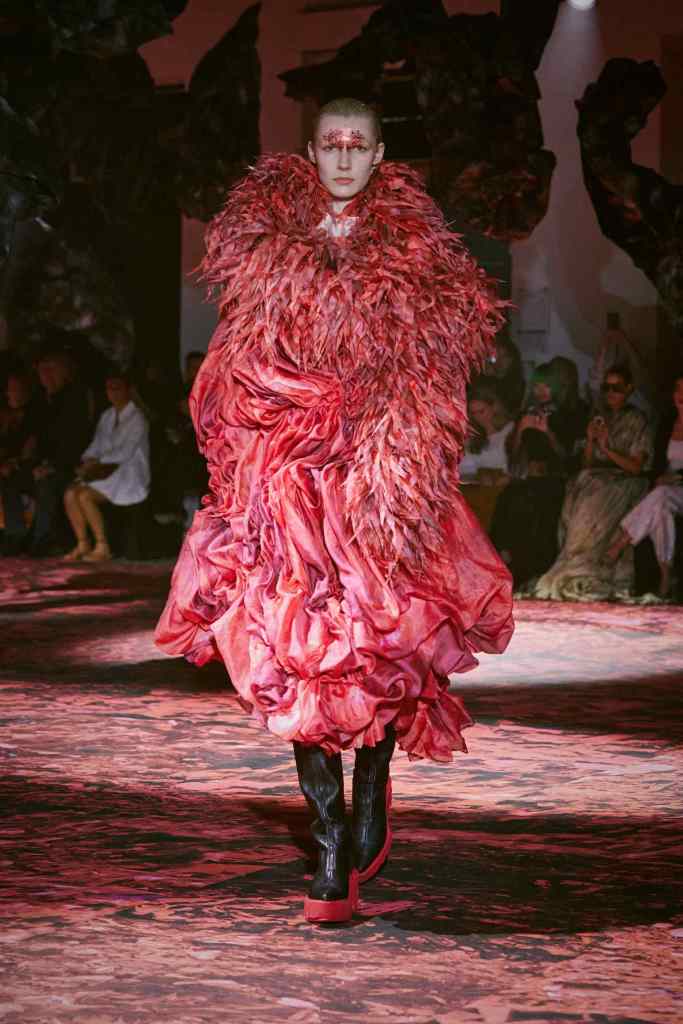
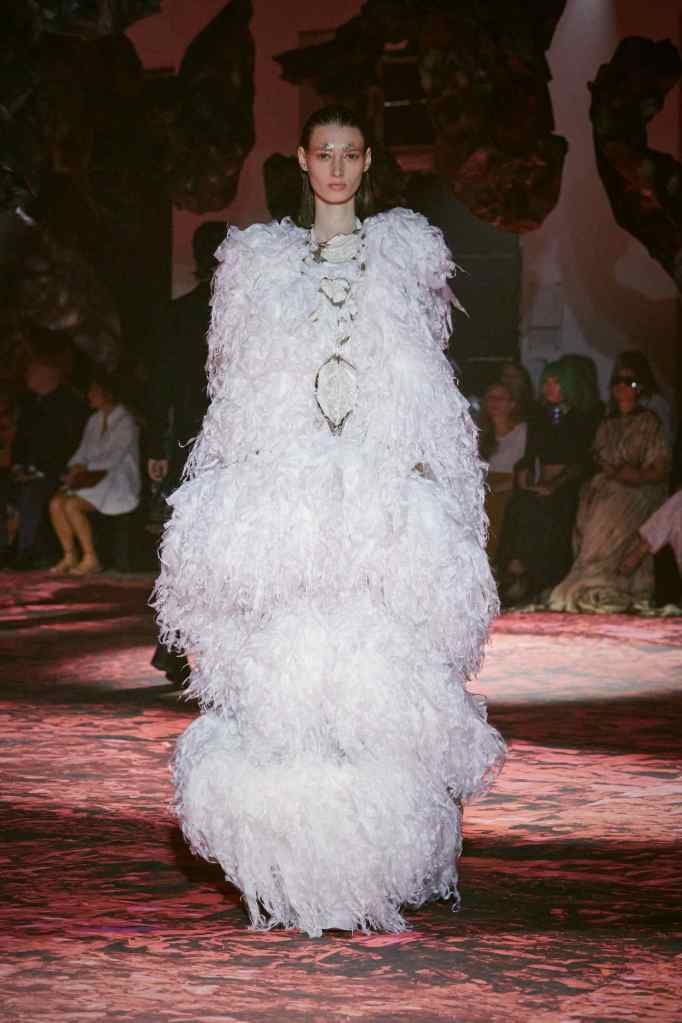
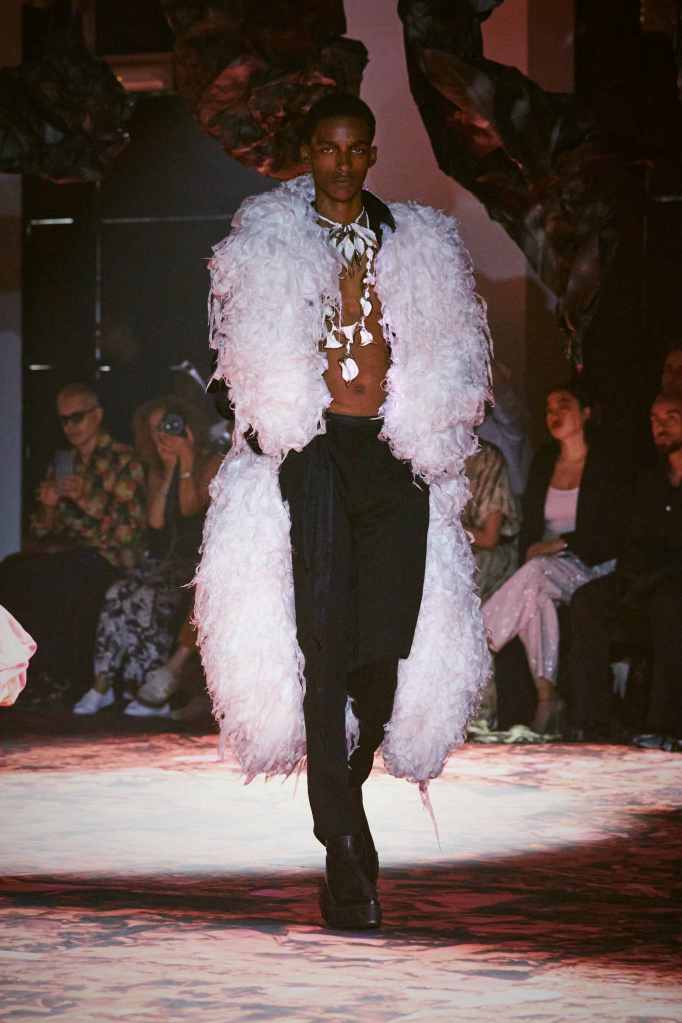
On July 5th, 2023, YUIMA NAKAZATO presented MAGMA, its Fall Winter 2023 – 2024 of 14th collection, with a runway show at Haute Couture Week in Paris.
Designer’s message for Yuima Nakazato Fall Winter 2023 – 2024 Collection
The shocking experiences I had during my 2022 visit to Kenya still remain vivid in my mind to this day.
Among the many memories I have of that time, the mountains of garbage I saw are particularly hard to forget. The spontaneous flames, the reeking odors, the garish colors of the plastic trash—it seemed like the end of the world, and it left my head spinning.
The other day, I saw a piece by Hokusai commonly known as “Aka-Fuji” at an art gallery. This scene of Fuji in red called to mind thoughts of the magma sleeping within the mountain, and somehow made me aware not only of its beauty, but also of the spooky nature of the landscape as well.
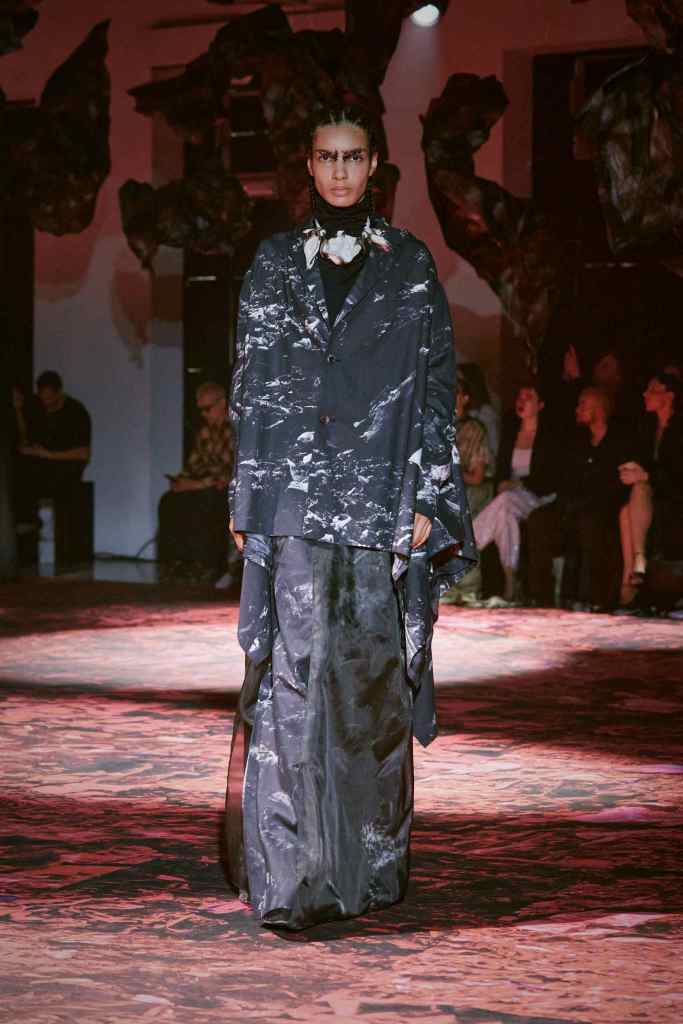
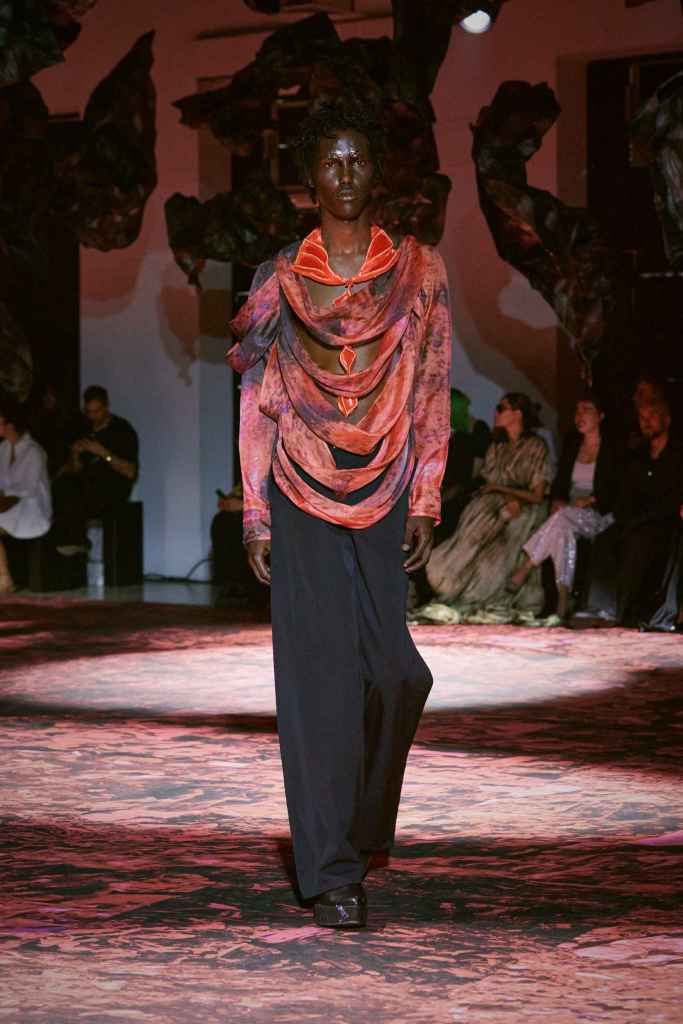
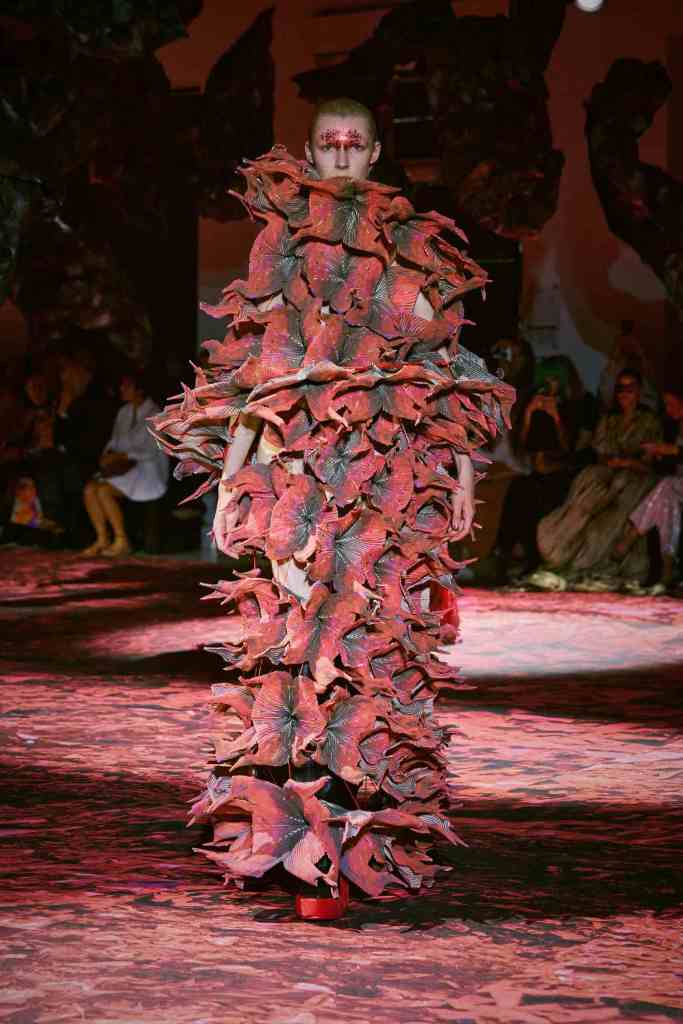
This is it, I thought. Using a photo I had taken while in Kenya, I graded it all in red and printed it out on a piece of fabric. Suddenly, the awful scenery became abstract, and the mounds of hand-made garbage somehow turned into something almost like a landscape.
At that moment, I realized that it was possible to reconsider the essential meaning of a thing, thereby endowing it with a new meaning and an entirely different value.
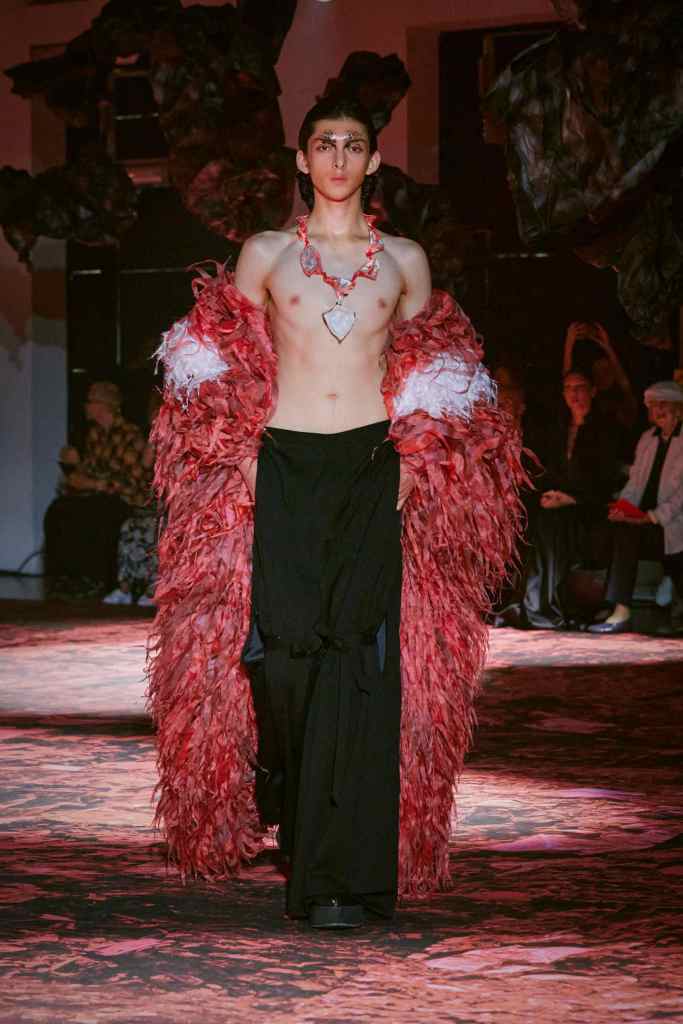
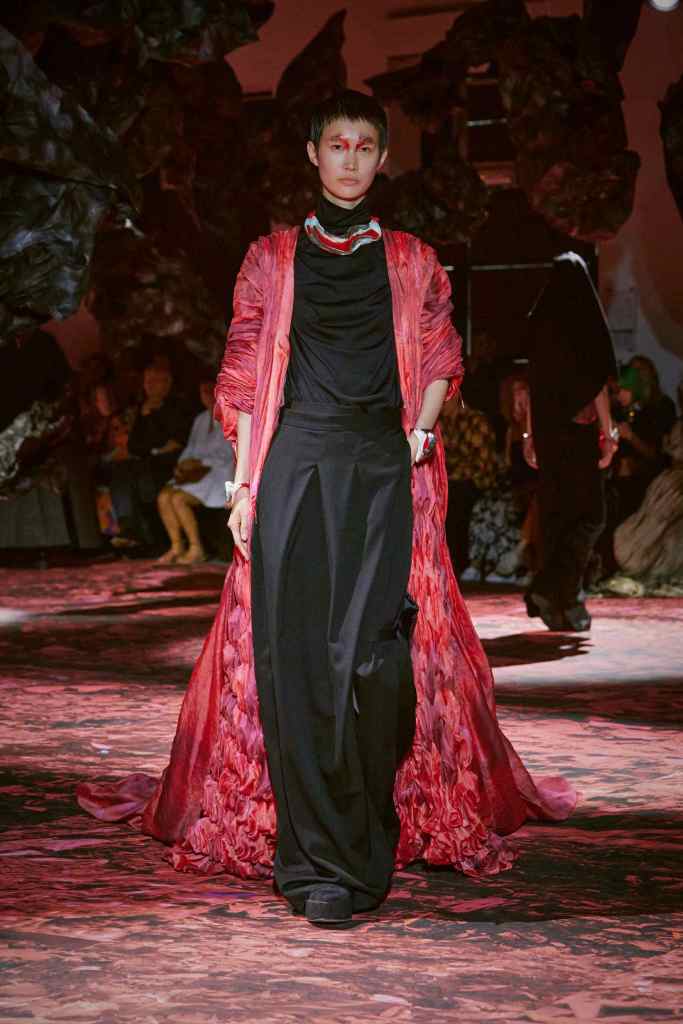
Red usually represents warning or crises. However, rather than viewing it as an alert to the environmental issues facing us today, I’ve chosen to put my belief in the color red, and use it to express my conviction that there is a way for us to change the future. Yuima Nakazato
Creating a better future through garments – YUIMA NAKAZATO Fall Winter 2023 – 2024
The production of this collection began when 150kg of used clothing was brought back to Japan from Africa. Most of the clothes did not have proper labels, and so their origin and component materials were impossible to ascertain. These sorts of clothes are generally very difficult to recycle, but with Seiko Epson’s dry fiber technology*1 we were able to convert them into new textiles for creating new garments. It was almost as if we were rescuing clothes that had nowhere else to go.
For this project, I selected graphics and color pallets based on the scenery we encountered in Africa. I was moved by many things seen during our travels: the sight of colorful plastics reflecting the sunlight on a trash heap mixed with smoke from a spontaneous combustion; people wearing bright textiles and beads in the dry desert air; and colorful old clothes scattered on the ground as people trod them underfoot. These scenes reminded me of both the ugliness and the beauty of humanity. During this trip to Kenya, I also visited areas struggling with severe droughts, and experienced firsthand the preciousness of water.
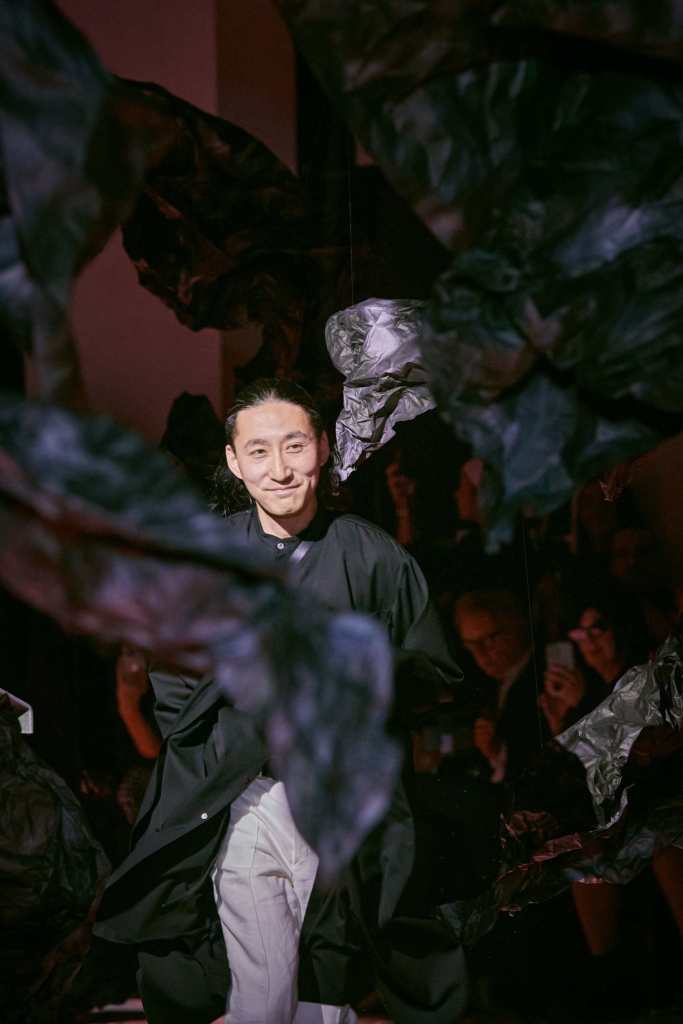
Seiko Epson’s digital textile printing technology allowed me to transmit the impressions I gained from my travels in Africa onto fabric while also helping to reflect on the importance of adopting water-conserving treatments and processes. The photographs taken from the mountains of garbage were printed on the fabric of a paper installation presented at the show venue, designed to express Earth’s destruction at humanity’s hand.
We also gathered stones from the largest desert in East Africa and ground them down to nano-size natural pigments using submicron/nanoparticle technology developed by the Japanese Painting Laboratory at Joshibi University of Art and Design. These pigments were used to make dyes, which were employed to color the synthetic Brewed Protein™ materials developed by Spiber Inc. that feature in the collection. Witnessing the reddish-brown landscape from the desert being dyed into the artificial protein fibers was quite beautiful, as if the hot, dry African air itself was being carried into the fabric.
Tribespeople living in the interior of Northern Kenya showed us their traditional costumes made of livestock skins. They eat livestock, use it for clothing, and even make their homes with livestock-derived resources. I was impressed by the extreme simplicity of their life, where all food, clothing, and housing are obtained from livestock, and I felt keenly that this is where we human beings first had our beginnings.
The way tribespeople wrap cloth around their bodies is reminiscent of the Japanese kimono. Clothes made almost entirely using the fabric as-is are worn by unisex, young and old, in accordance with their own bodies, and with evident enjoyment found in the art of styling. Similarly, YUIMA NAKAZATO drew upon inspiration from the kimono to further evolve its original pattern-making technique of creating three-dimensional shapes from rectangles, thereby attempting to reinterpret fashion’s approach to size and gender.
The story of this collection’s production will be made into a documentary film by director Kousai Sekine to be released this summer, exploring questions concerning the future of the fashion industry. Moving forward, YUIMA NAKAZATO will continue to confront important social issues while seeking new questions and solutions through the art of clothing.
*1Epson’s proprietary technology that converts diverse materials into fibers and makes them highly functional. For details, please refer to Epson’s
website: www.epson.jp/prod/smartcycle/dft.htm
Designer profile Yuima Nakazato
Born in 1985, Yuima Nakazato graduated from the Royal Academy of Fine Arts Antwerp in 2008, before founding YUIMA NAKAZATO Co., Ltd. in 2015. In 2016, Yuima was formally selected as a guest designer for Haute Couture Week. Since then, he has continued presenting his collections at Paris Fashion Week, offering his trademark fusion of technology and craftsmanship. From 2021, Yuima initiated the FASHION FRONTIER PROGRAM, an educational project for ambitious, next-generation fashion designers. Yuima seeks to address social issues while pursuing cutting edge fashion through his collections presented at Haute Couture Week.
For more information to YUIMA NAKAZATO official website http://www.yuimanakazato.com/





















Creative direction: YUIMA NAKAZATO
Hair and makeup: Hirofumi Kera for Shiseido
Staying: Robbie Spencer
Music, Ryuichi Sakamoto & Senjan Jansen
Production support for the MAGMA paper sculpture: Seiko Epson Corporation
* Photography taken in Kenya by Nakazato is printed on this paper sculpture
PR Agency KCD Worldwide Paris