Franck Sorbier Fall Winter 2023 – 2024 Haute Couture Collection Presents….
Couture improvisation
Some will say “It’s the childhood of Art” (it’s very easy to do).
However, finding yourself faced with a square of fabric and making it surprising, playful or simply pleasant to look at is not so simple.
I immediately liked this loose garment: the caftan, which is written according to the region, kaftan, khaftan or even qaftan.
It is found in the Middle East, the Maghreb, Central Asia, Persia, the Republic of Venice, the Mongol Empire, the Umayyad Empire, the Ottoman Empire and also in Eastern Russia. Basically, it is a long and ample coat with sleeves, the nomadic clothing par excellence.
The history of the caftan is rich in twists and turns. The kaftans worn by the Ottoman sultans constitute one of the main collections of the Topkapi Palace, in Istanbul.
In the Ottoman Empire, caftans have a strict codified language. The fabrics are mainly produced in Istanbul and Bursa when they are not imported from Venice, Genoa, Persia, India or even China.
In 1922, Mustafa Kemal Ataturk overthrew the former sultan of the Ottoman Empire. In a desire for total rupture and modernization of the territory, the father of modern Turkey proclaimed the prohibition of Ottoman clothing attributes like the caftan and the fez in favor of Western outfits.
On another territory, in his policy of reforming Russia at the end of the 17th century, Tsar Peter I, known as Peter the Great, decided to ban the wearing of the ”kaftan” in favor of Western-style costume. He used to say: “With your wide sleeves, misfortunes always happen to you: sometimes they soak in the soup, sometimes they smash the glasses.“
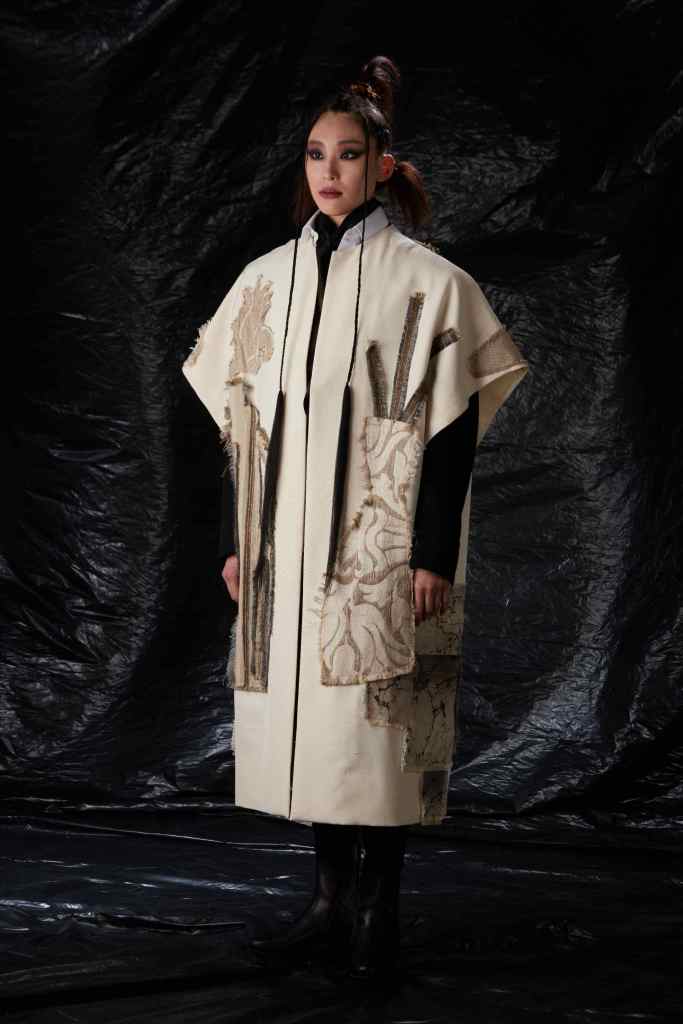
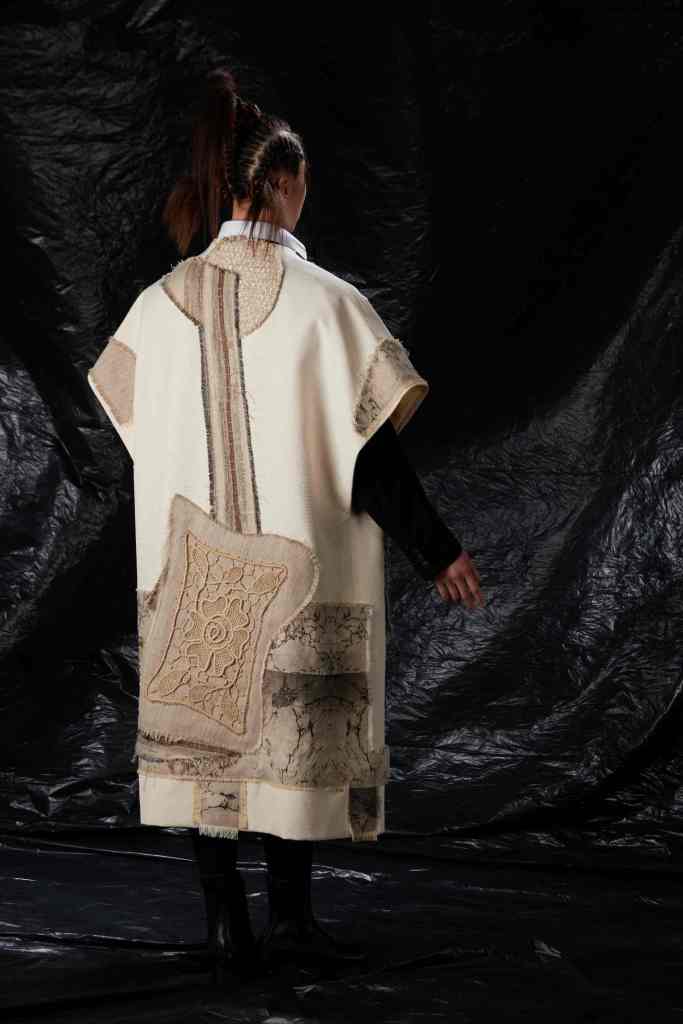
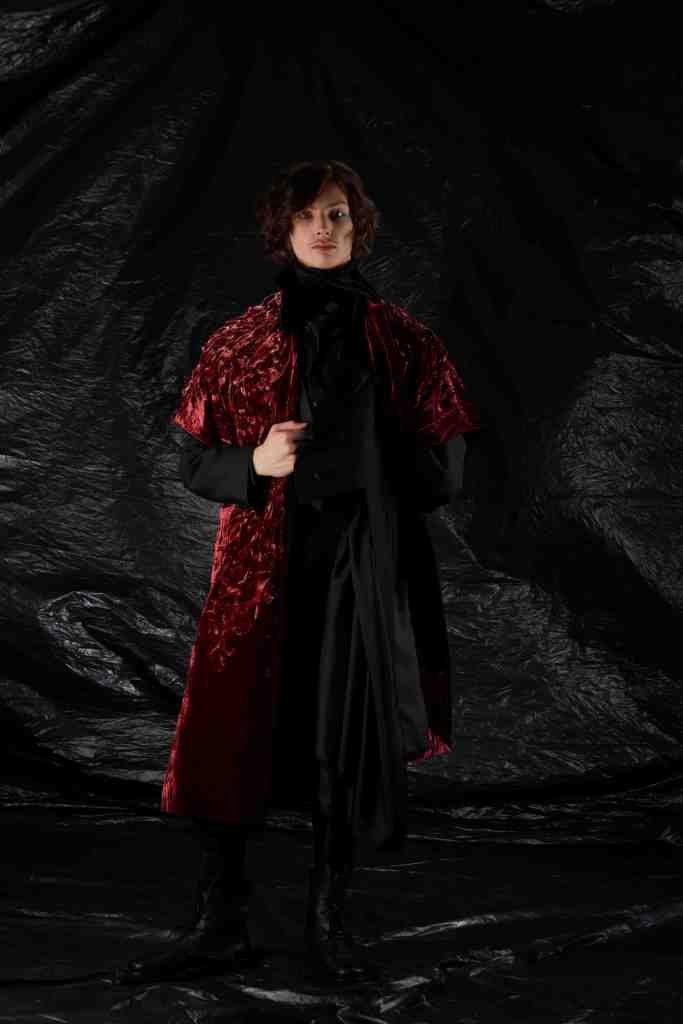
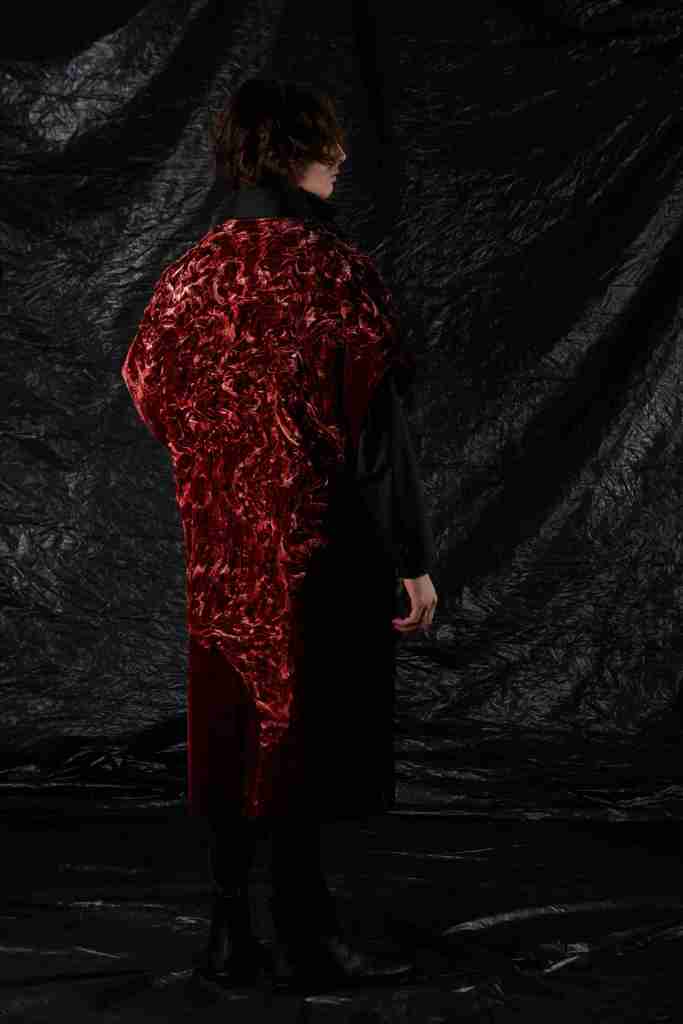
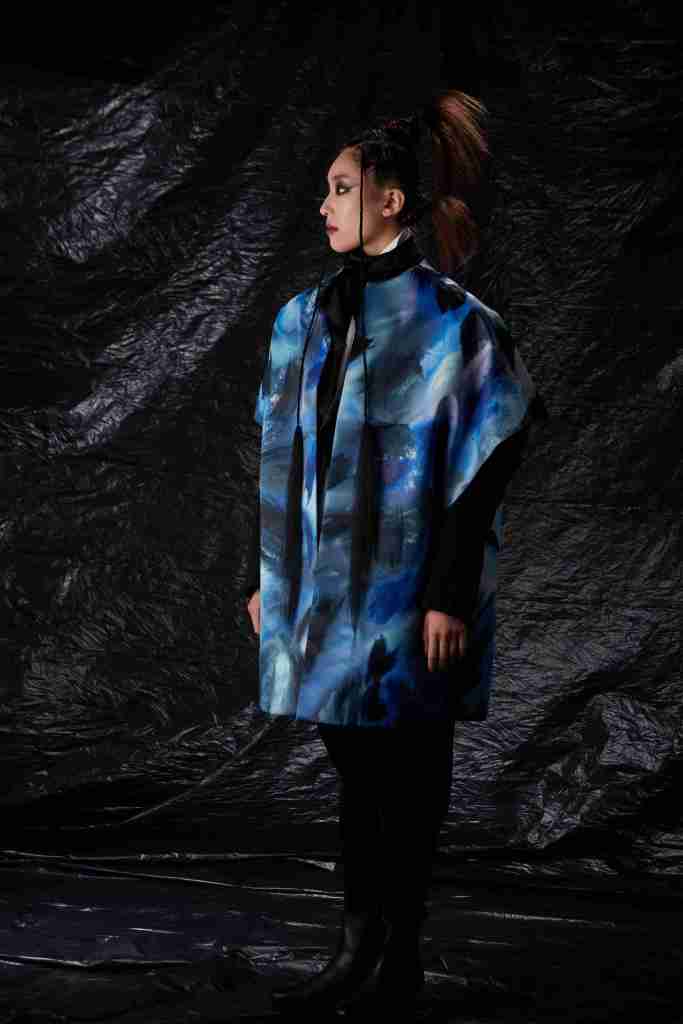
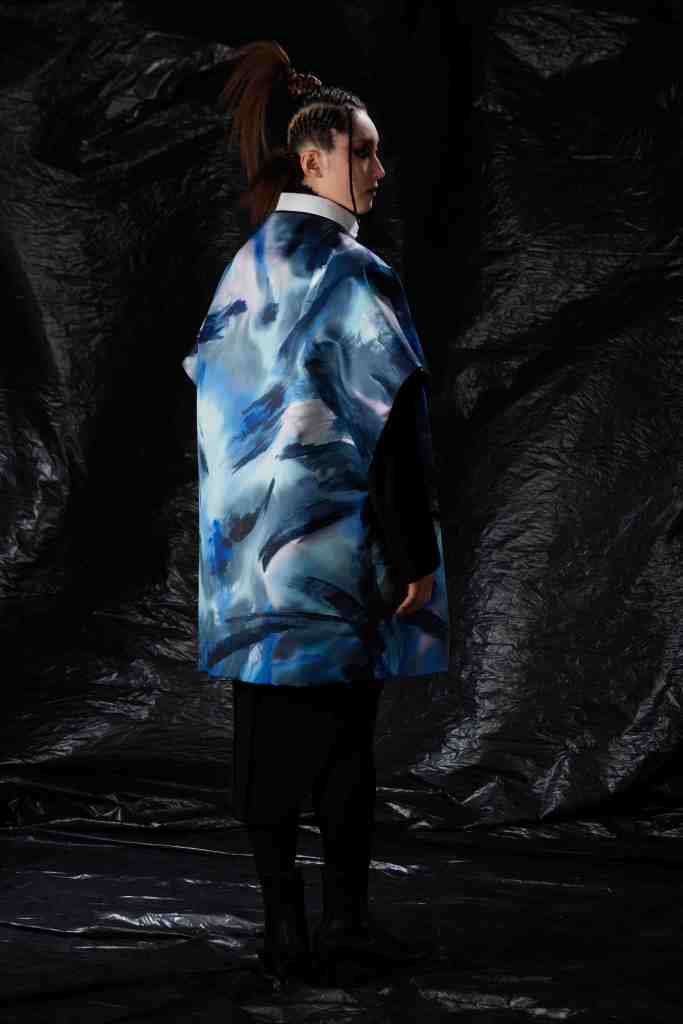
I took off its sleeves from this illustrious garment to create an unstructured cardigan, an oversized overcoat or a loose overcoat. Each one tells little stories, the images collide, the patterns are displayed or veiled in mystery. A succession of wild zapping. Couture that dreams of adventures and experiences.
This “cubic” cardigan is worn over a tailcoat or frac, a masculine white shirt and dance tights, worn by Trippen.
The tribal hairstyles of Alexandre de Paris by Frédéric Pavard and the charcoal makeup of Natalia Vlasova, accompanied by Serguei Chatel, will give a resolutely urban tone to the silhouettes.
I wanted to show a lively, spicy or even incongruous couture… A sign of the times.
Today, art is visible to everyone. Formerly reserved for collectors and an informed public, it has invaded our living spaces.
The history of art is punctuated by scandals, revolutions which most of the time announce sociological upheavals where they are associated. It is in these moments that new aesthetic languages and new artistic movements are born: the emergence of new writings. There are, in these pieces, claims or, at the very least, “arty” intentions.
Tributes are legion, starting with the Dadas and the Surrealists, without forgetting the montages of Soviet Constructivism and the German Bauhaus…
Many artists such as Juan Gris, Pablo Picasso, Jacques Prévert, Jean Cocteau and many others… seize this artistic technique.
I leave it to each of you to get closer to this or that model because the collection is eclectic. We are very far from the standards and that’s good!
I approached Yoyo Maeght and asked her to be the Godmother of this collection. Her answer was immediate and enthusiastic, even though we had only met twice… We hit it off right away!
Apart from his love for Art and artists, Yoyo envelops you with an authentic and sparkling look… “What a great temper”.
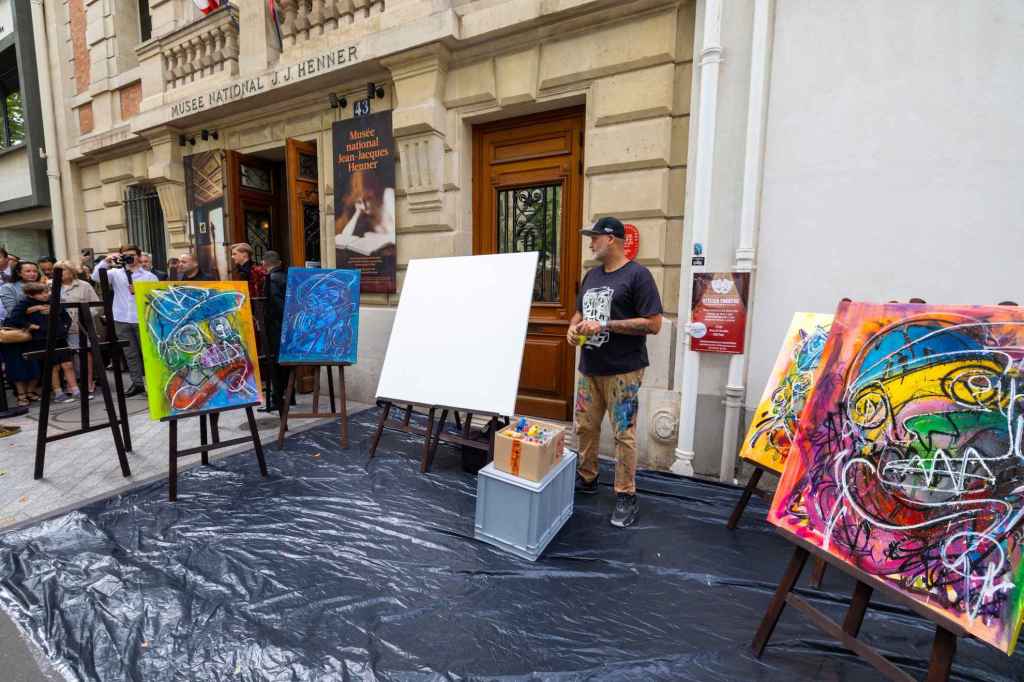
I hope that Yoyo will be seduced by the characters she will discover at the entrance and on the four levels of the Musée national Jean-Jacques Henner.
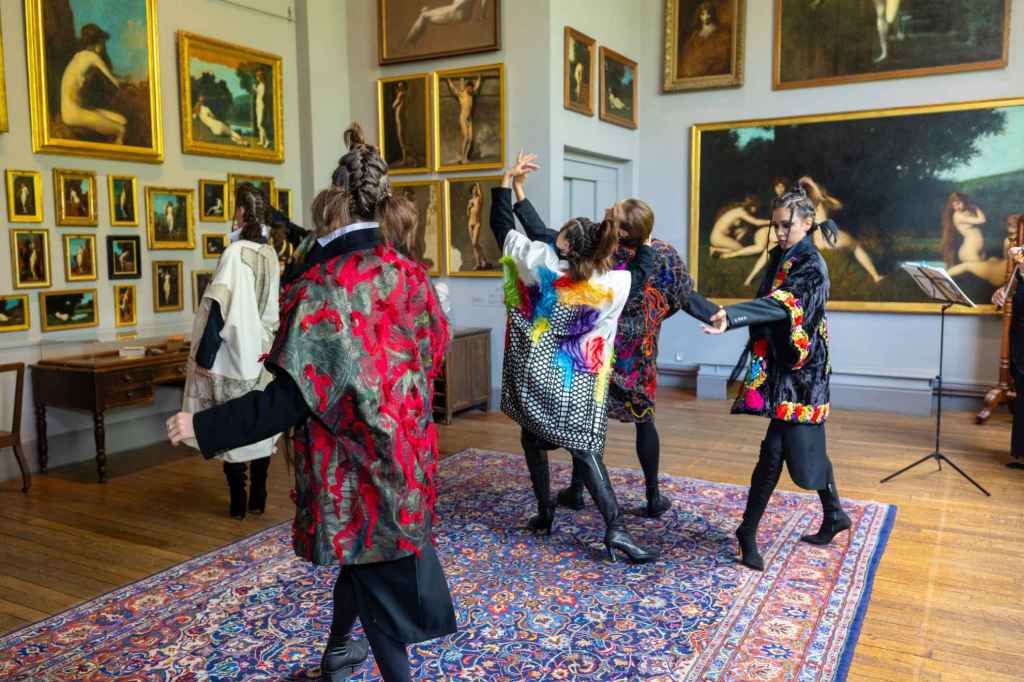
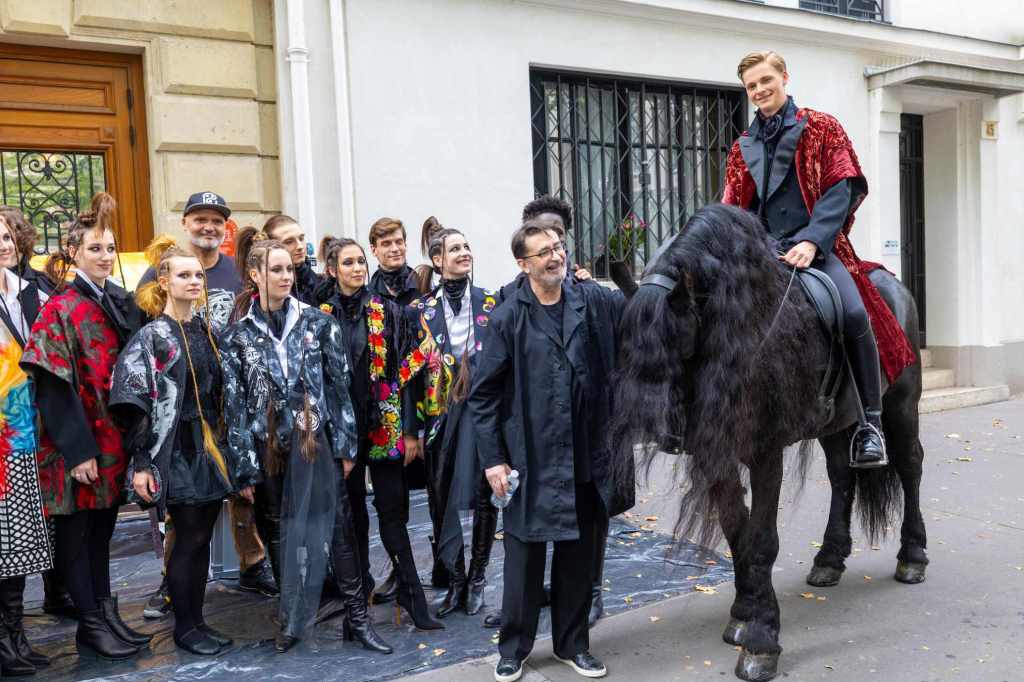
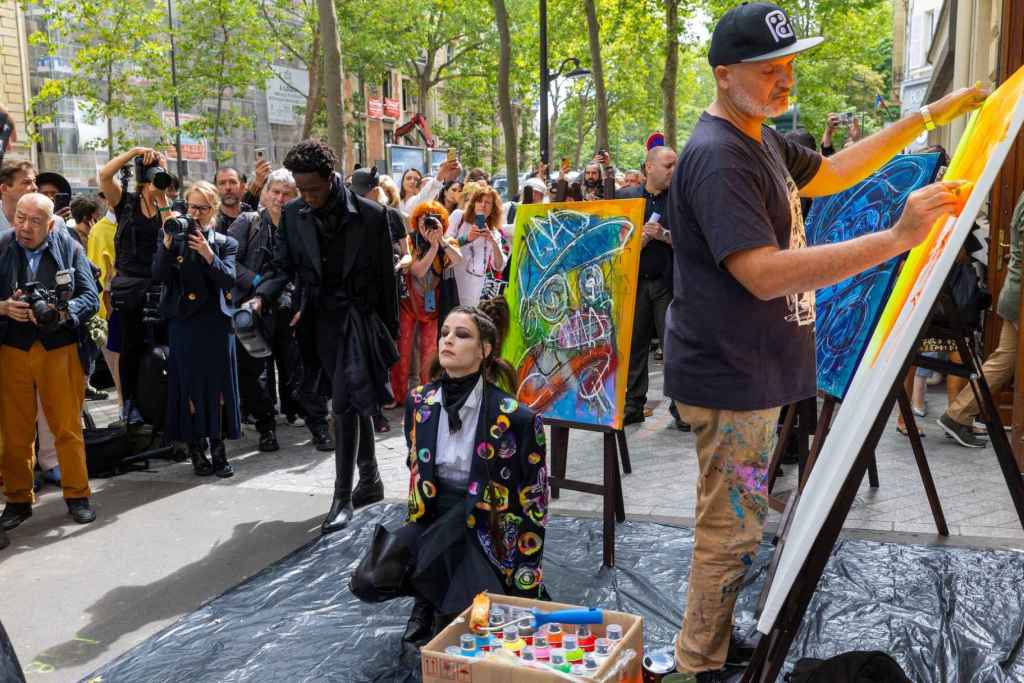
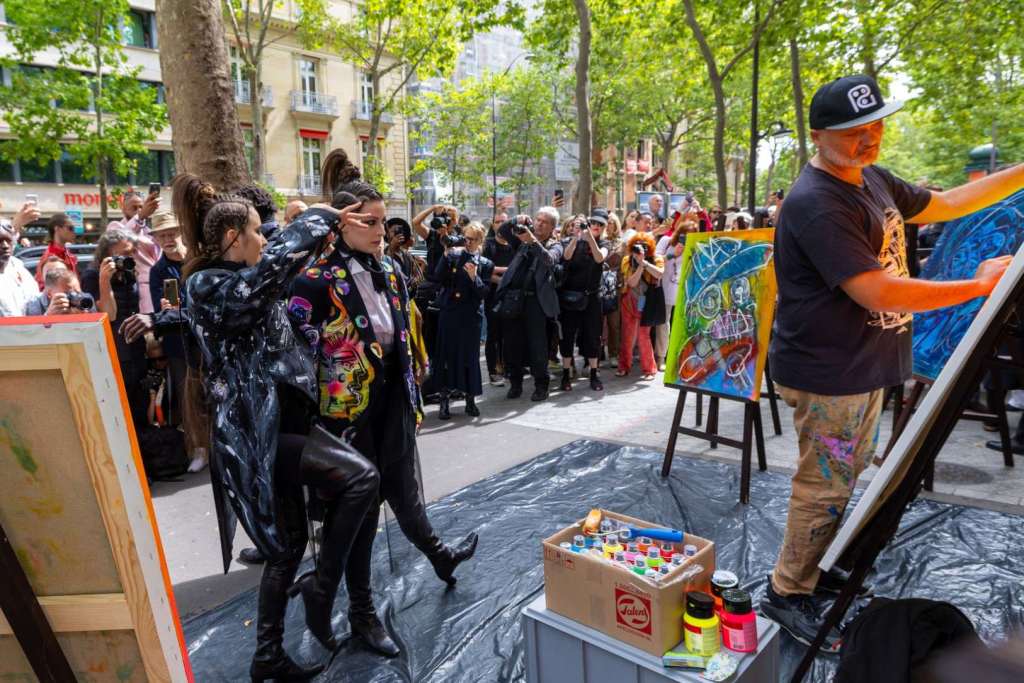
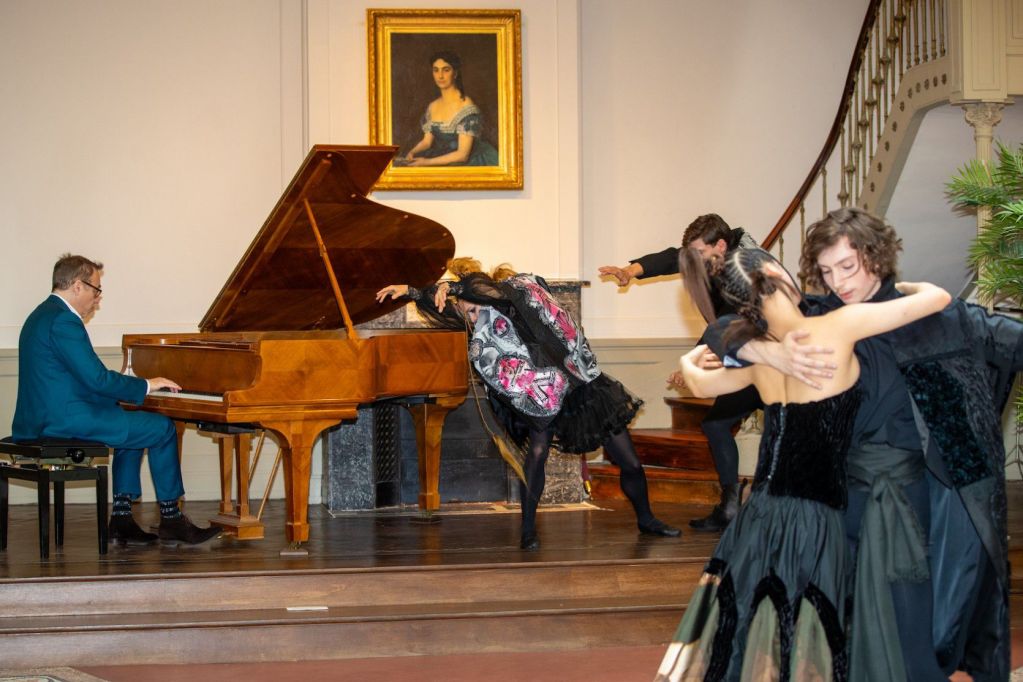
Because, as soon as you arrive, you will be welcomed by two rock’n roll ballerinas, equipped with a «today’s ghettoblaster» and by an «outrenoir» knight, on his beautiful steed, «our favorite Minos». Inside, you will meet dancers interacting with the works of the Museum.
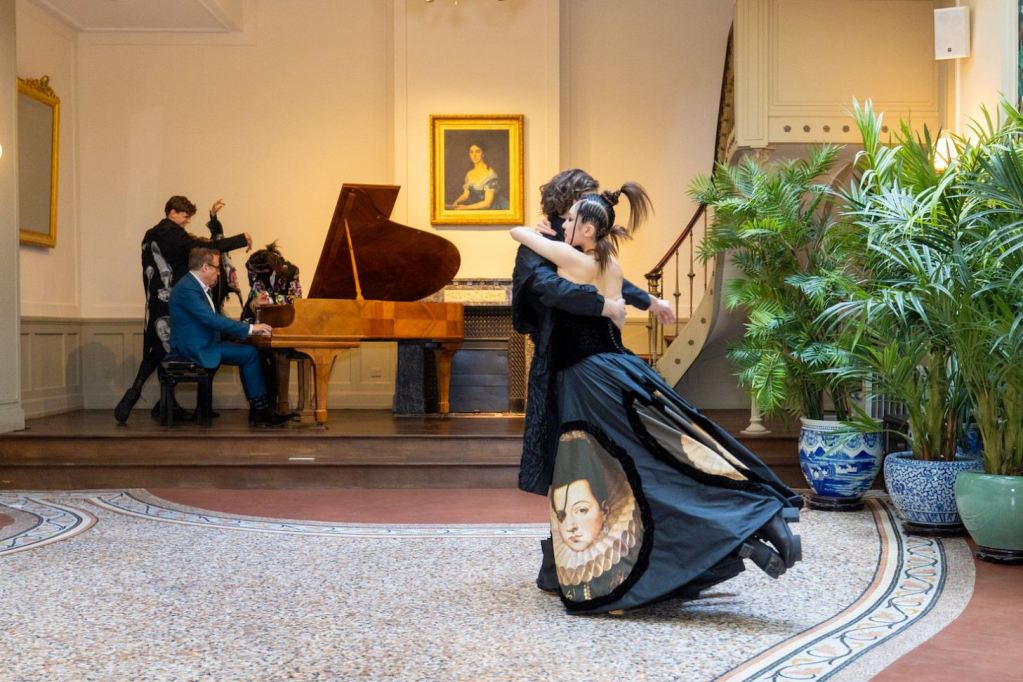
Music, which I consider essential to inspiration, will not be outdone, since Mr. Jean-François Zygel does us the honor and friendship of improvising this poetic, lively and cultural moment on the piano.
This season – Franck Sorbier FW23 Haute Couture, couture is displayed as a pinnacle of insolent paintings.
Frank Sorbier
Franck Sorbier Fall Winter 2023 – 2024 Haute Couture Collection – Descriptives
WOMEN Collection
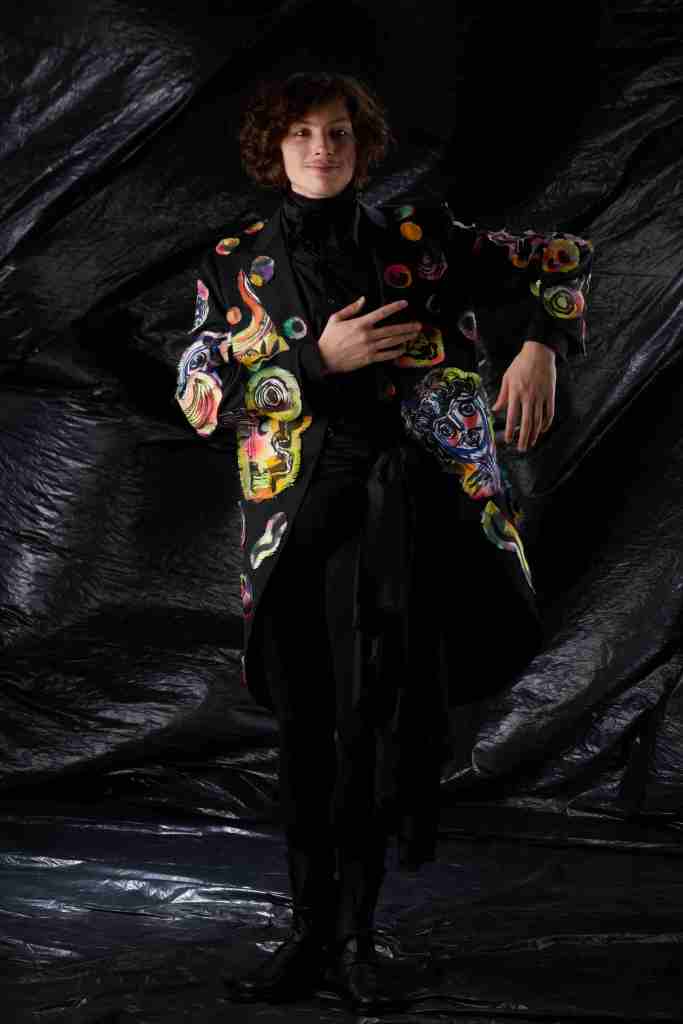
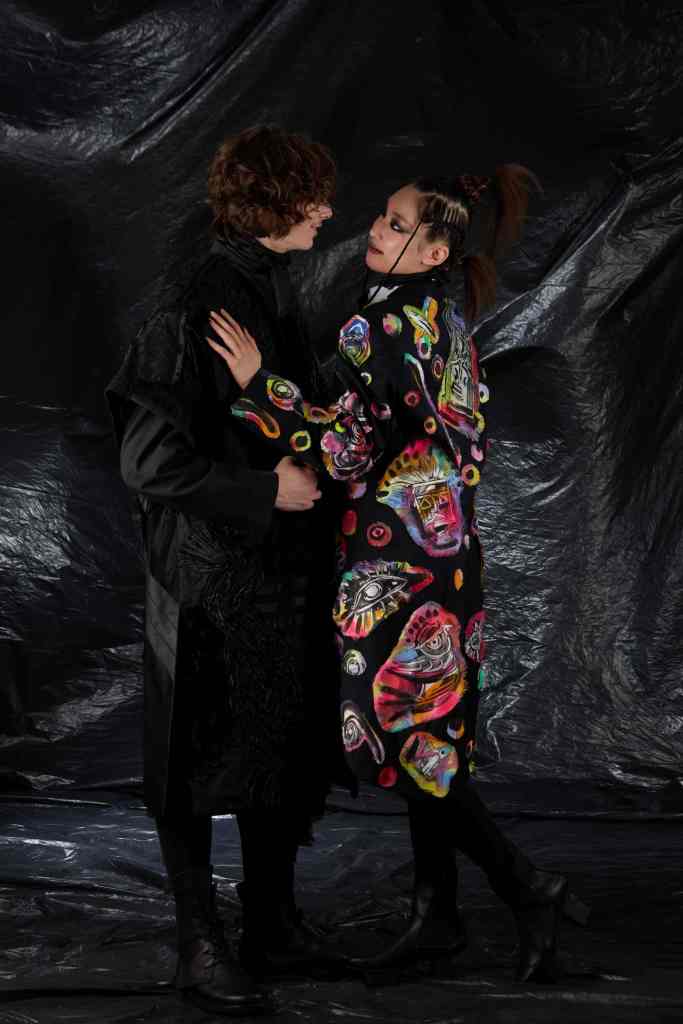
“Street” frac
On a black wool background, application of a playful universe of colored and fluorescent silk sable. Frayed, drawn and painted patterns by Isabelle Sorbier.
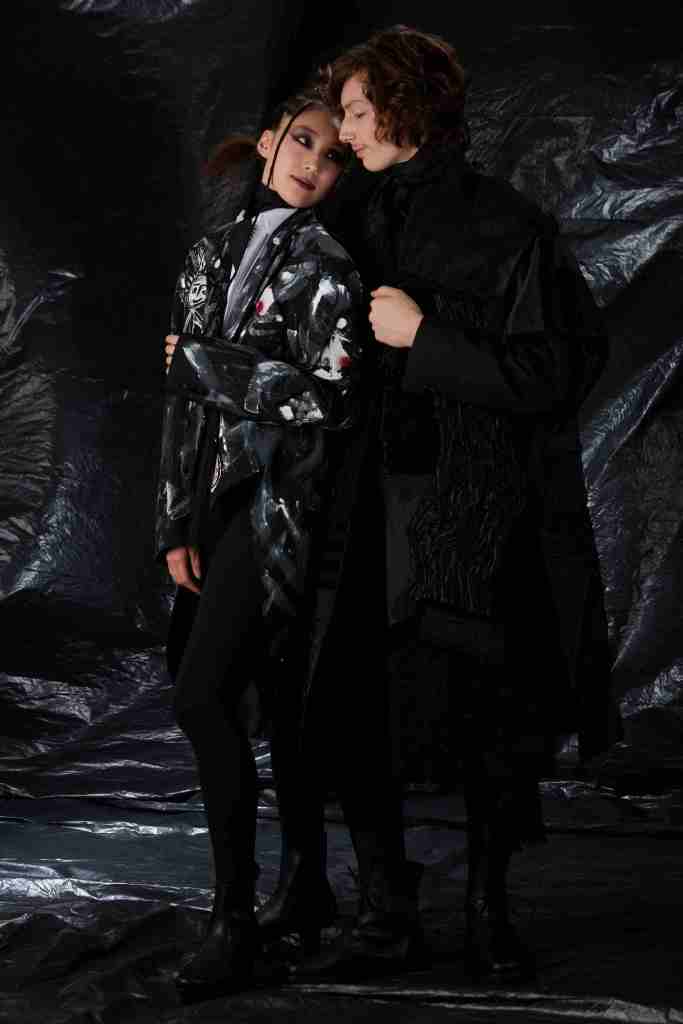
“Urban” frac
On a black wool background, graffiti and white drippings with graffiti application on black sable.
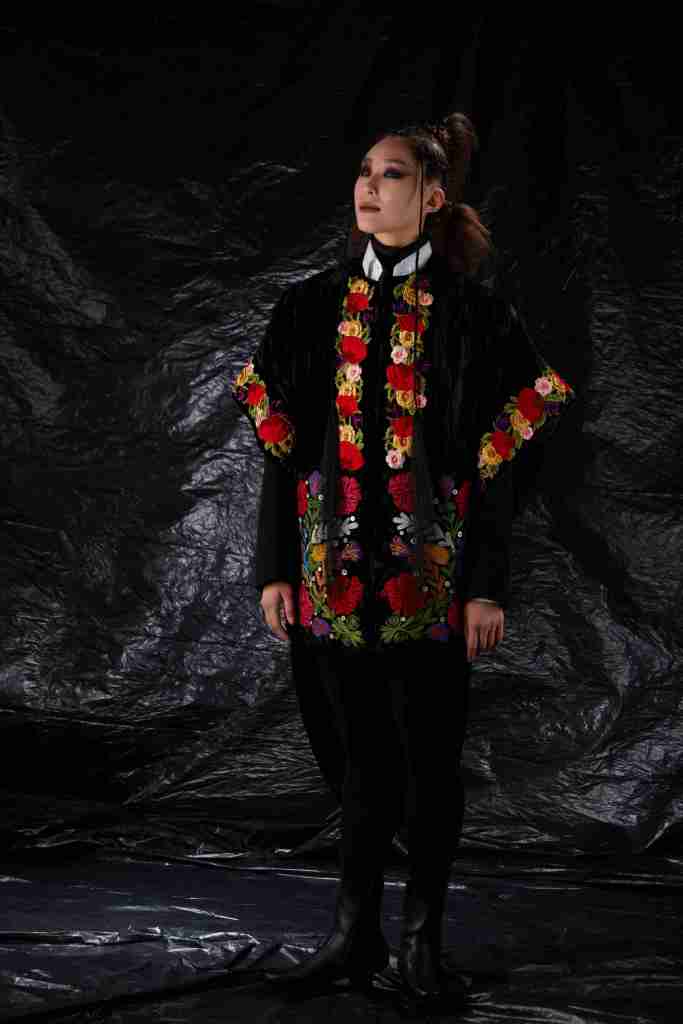
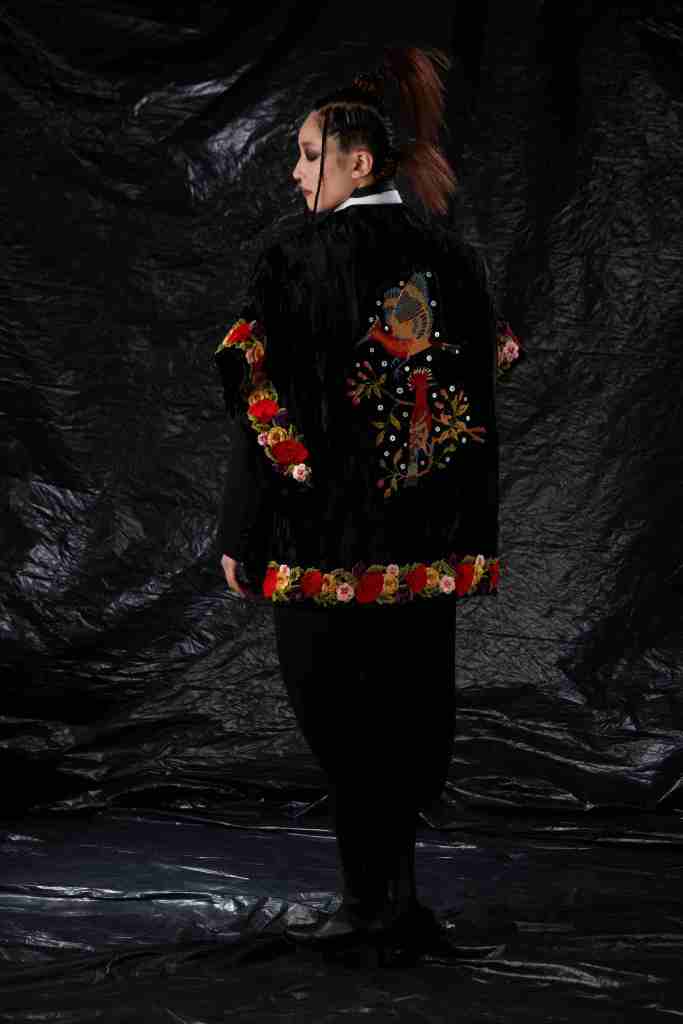
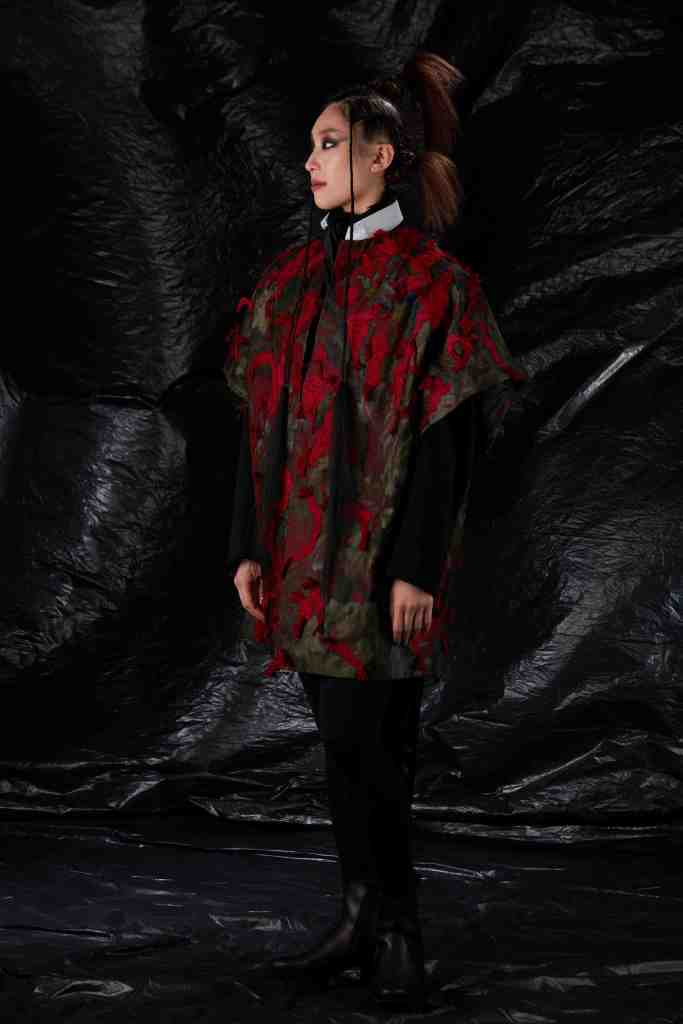
Kaftan “Globetrotter”
Application of Suzani embroidery, sixties cross-stitch tapestries, re-embroidered with mother-of-pearl buttons and flower embroidery in red, green, pale pink, Naples yellow and violet on crumpled black-red changing viscose silk velvet.
Kaftan “Buildings”
Application of black geometric guipures by Monsieur Beauvillain and draped multicolored organza clouds. Small balls stitches like bubbles on natural silk white sable.
Kaftan “Zippelius”
Plate 19th reprinted in photography on cotton satin and veiled with a black silk organza, over-embroidered and topstitched with burgundy canvas cotton threads. Shoes Trippen.
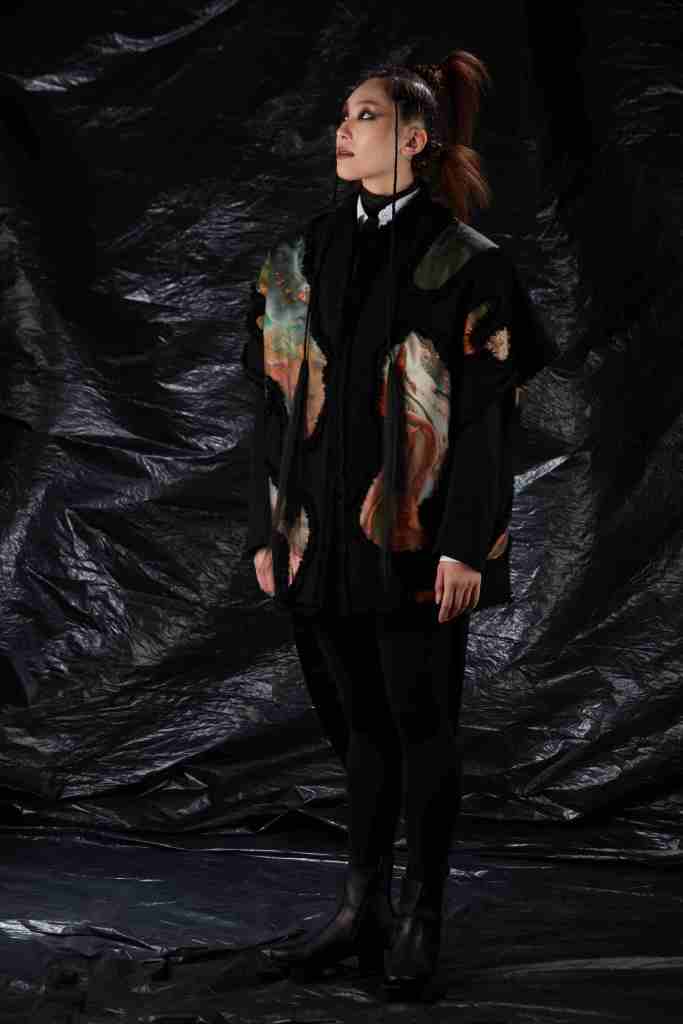
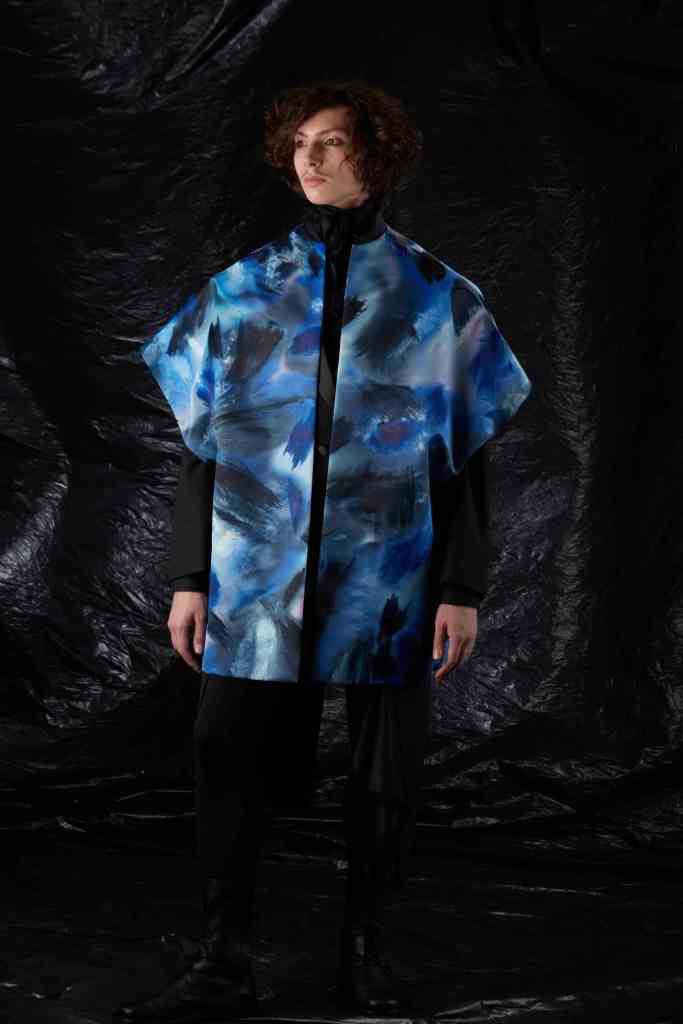
Kaftan “Abstraction”
Superposition of watercolor blues and parma, re-masted with deep blue and black blue brushstrokes and brush strokes on silk duchess satin. Hand painted by Isabelle Sorbier.
Kaftan “Reliure”
Cut-out of silk twill in a “vat paper” style, bordered with frayed bias binding on canvas in crepe wool thread.
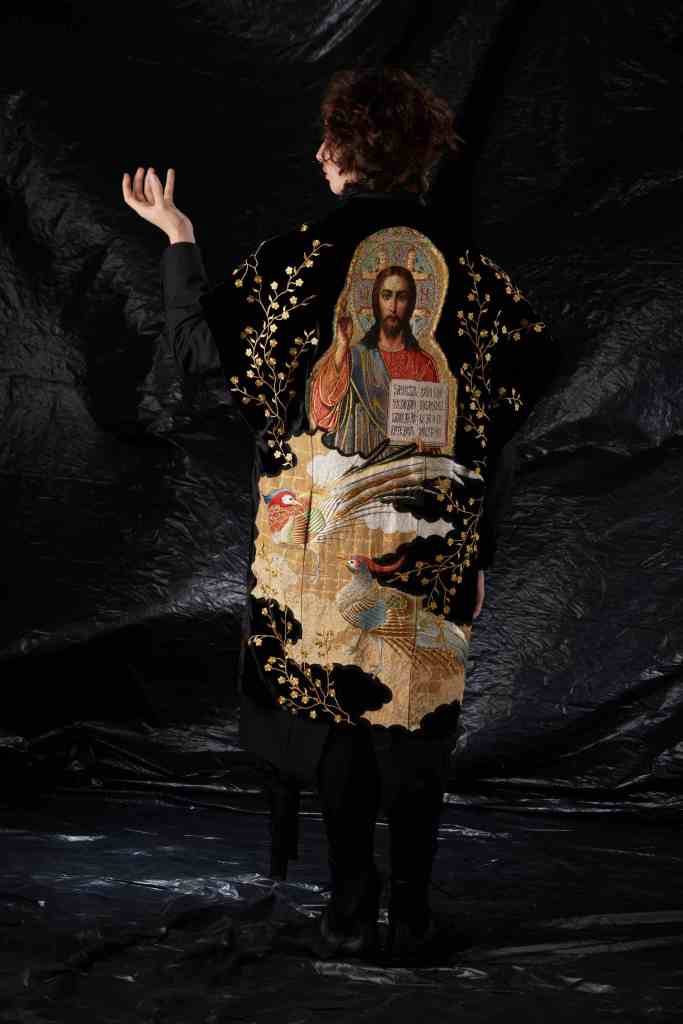
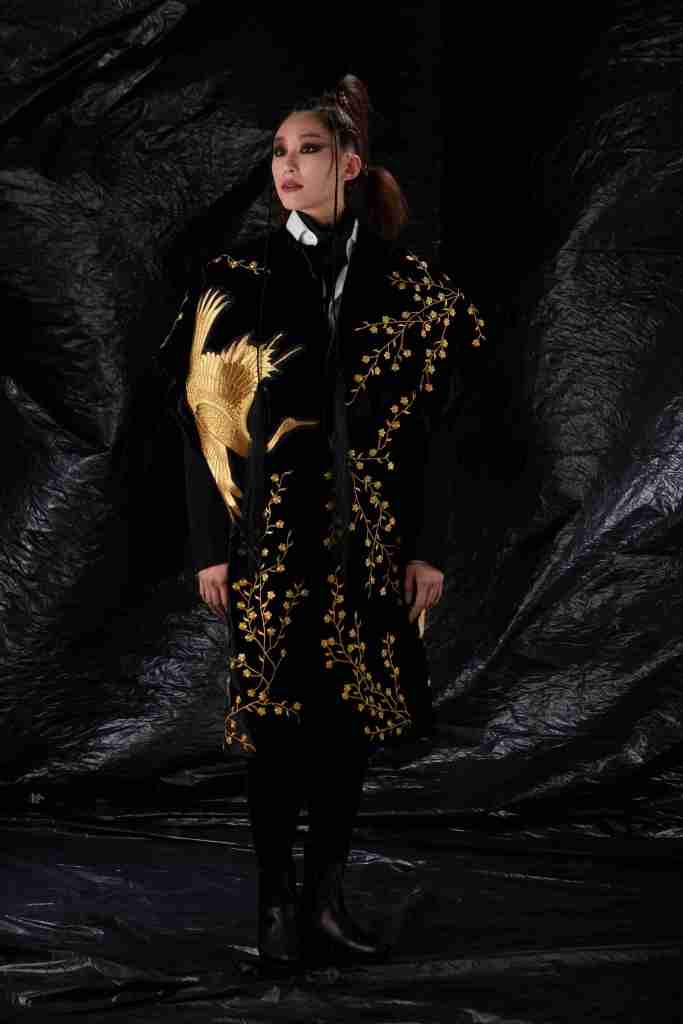
Kaftan “Christus Sanctus Spiritus”
Application of a “Byzantine Christ” tapestry, gold and silver embroidered birds, taken from antique Japanese kimonos and gold floral branches on black silk and viscose velvet. Shoes Trippen.
Kaftan “Cubiste”
Still life with guitar, Declercq Passementiers fabric cut-outs, tailored canvas and old scalloped embroidery on an ecru silk canvas background.
Kaftan “Arsenic”
Frame of old lace on black silk tulle on the back and panel in front of faded red matted with black on silk duchess satin and ivory white lace stucco. Shoes Trippen
Caftan “New Revolution”
Application of cut, woven and frayed photographic negative portraitTrippe woven and frayed black, white and dark magenta graffiti on natural white silk sable. Graffiti by Isabelle Sorbier. On black and white tutu.
Dress “Pirate”
Ball gown, application of a Renaissance portrait in Grain de Couleur printing on silk twill. Shoes Trippen.
MEN Collection
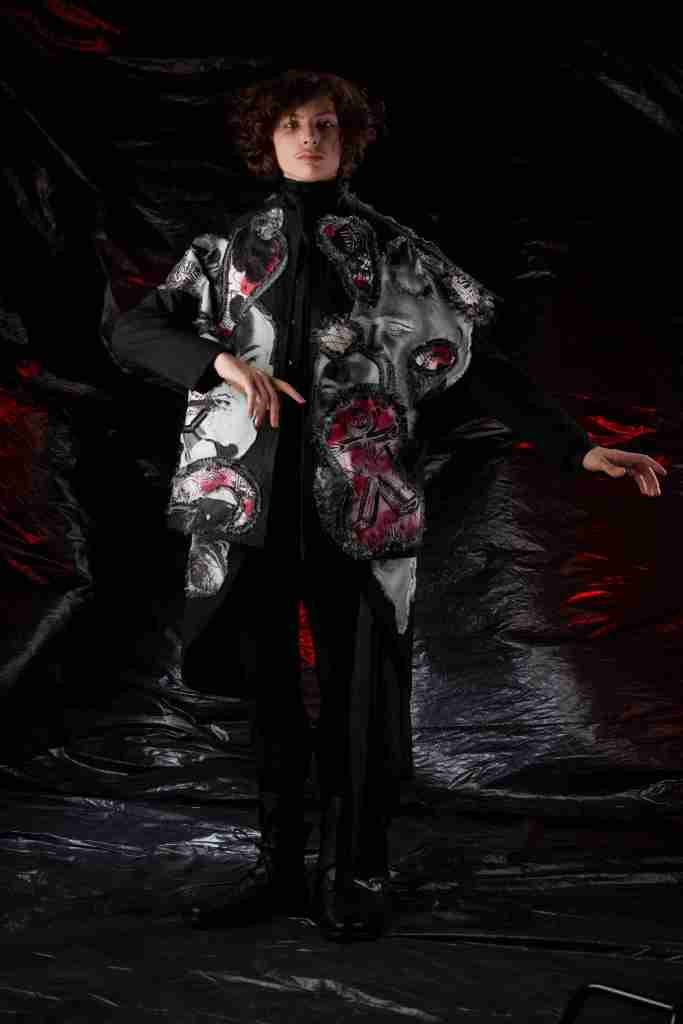
Kaftan “Révolution culturelle”
Application of cut, woven and frayed photographic negative portraits and woven and frayed black, white and dark magenta graffiti on natural white silk sable. Graffiti by Isabelle Sorbier.
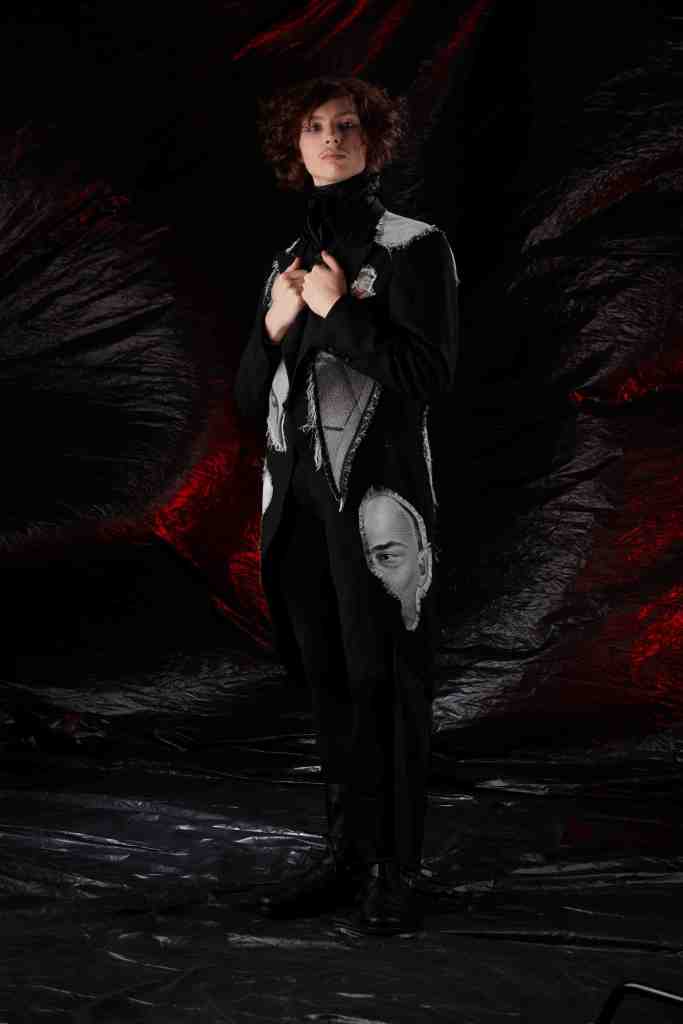
Frock coat « Révolution culturelle »
Frock coat with applications of cut-out, woven and frayed photographic negative portraits. Shoes Trippen.
Kaftan “Outrenoir”
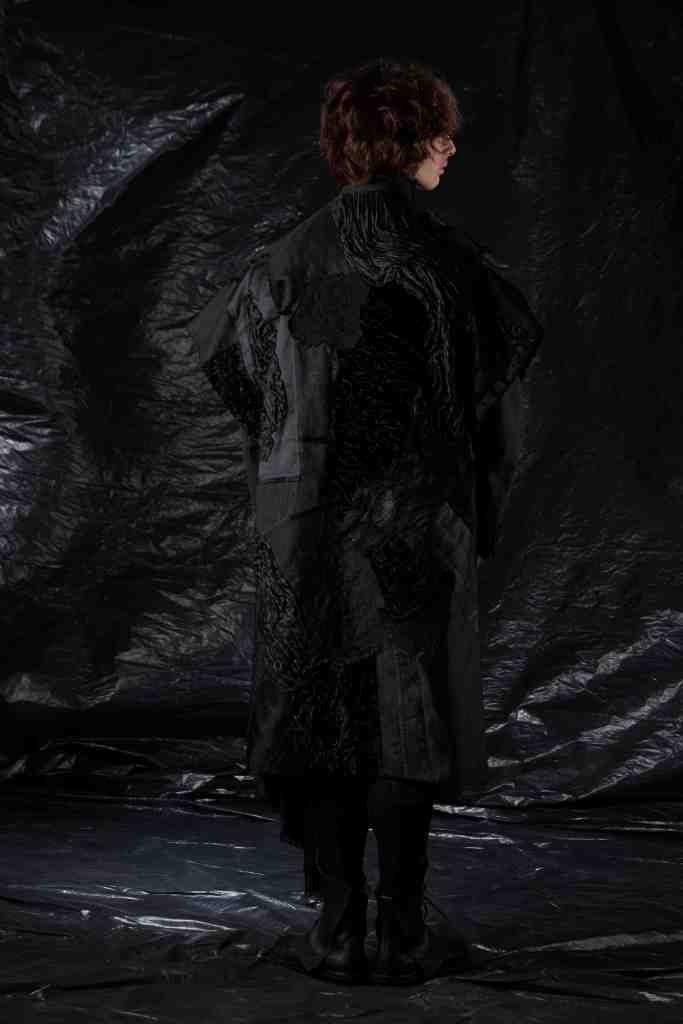
Black in all its states, in all its materials, in all its reliefs: a contemporary landscape. Shoes Trippen.
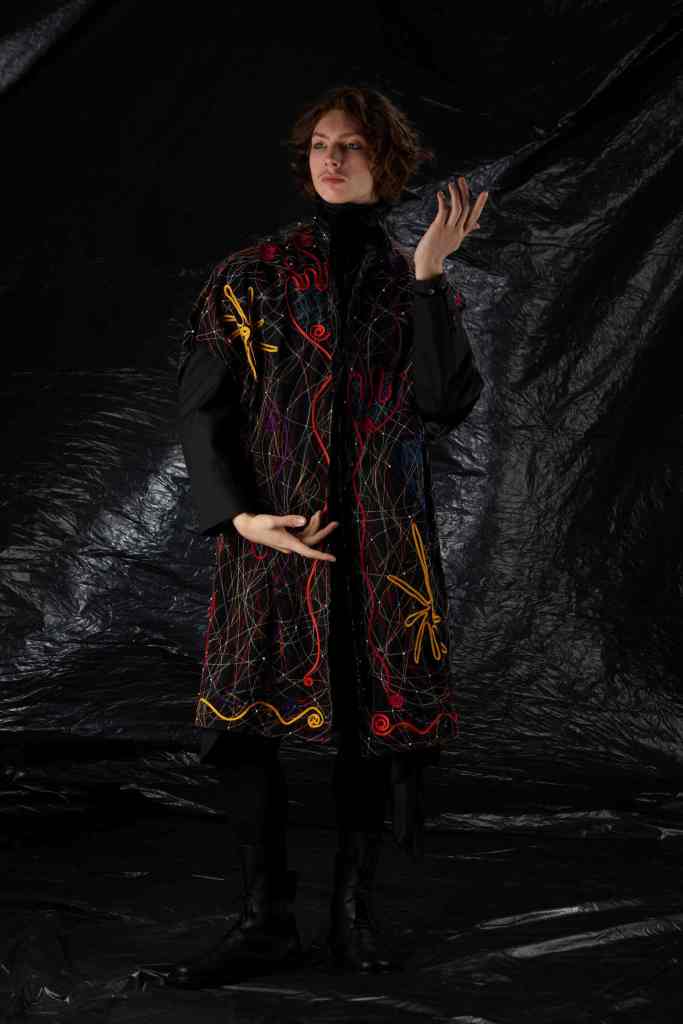
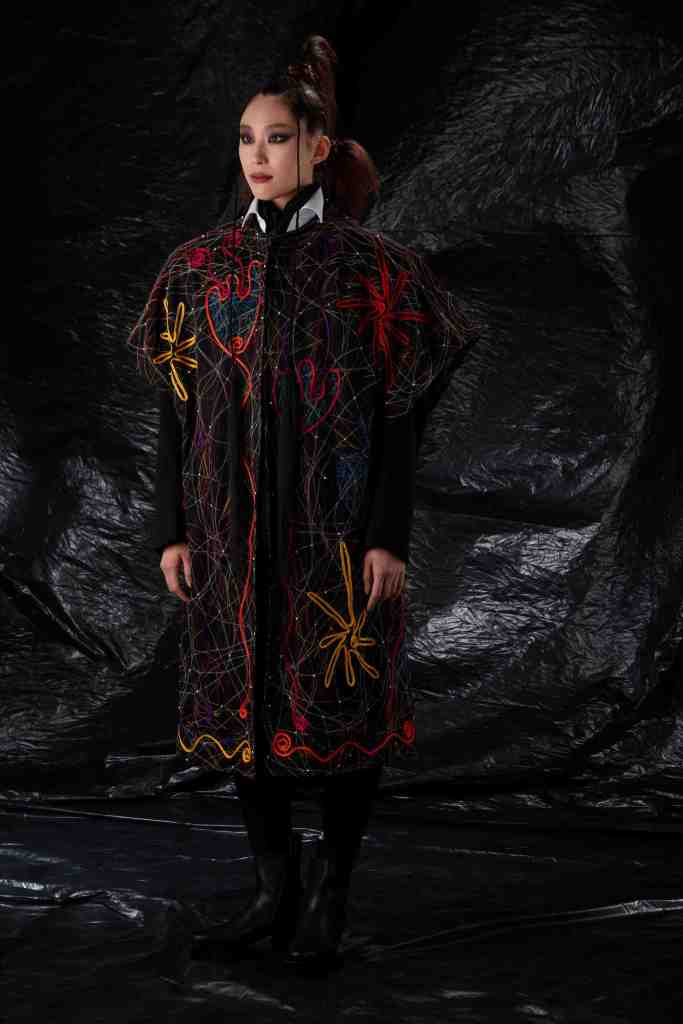
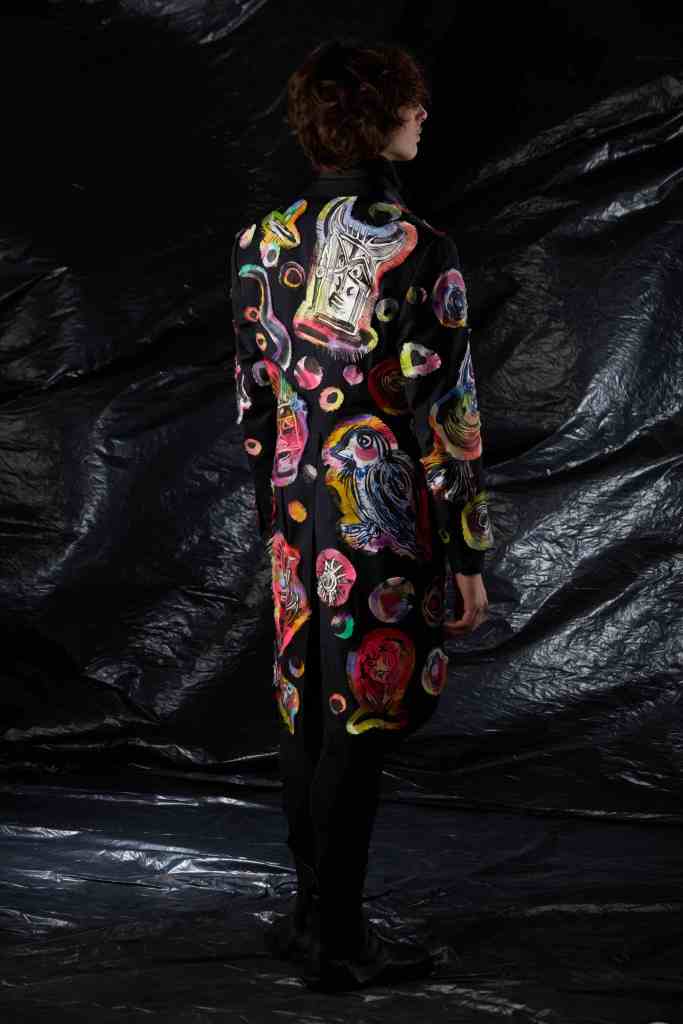
Kaftan “Gribouillis”
Multicolored stitching and stylized figurative motifs «the Lady with the bird, the heart and the stars» in cotton laces from the Société Choletaise de Fabrication on wool fault. Shoes Trippen.
Kaftan “Sécession”
Burgundy viscose silk velvet tagged, draped, wrinkled and folded.
Tags by Isabelle Sorbier.










Franck Sorbier FW23 Couture Collection – Event and Show



All imaged Franck Sorbier Fall Winter 2023 – 2024 Haute Couture Collection by Franck Sorbier Maison
Photographer Bruno Le Page, Laurent Stephane Montfort, 189Photography