Antonio Marras FW24 / Fall Winter 2024 at Milan Fashion Week
A little story for inspiration Antonio Marras FW24
ELEONOR of ARBOREA, JUDICISSA
Princess of Sardinia in Medieval times
Eleanor, who lived between the mid-1300s and early 1400s, was the last indigenous ruler of the island capable of uniting under one flag the various Sardinian populations, who for the first time recognised themselves as a “nation” and defeated the Aragonese. Her name is closely linked to the Carta de Logu, the extraordinary legal text in the Sardinian language setting out the rules of civil and criminal law valid for the kingdom of Arborea, which remained in force until 1827.
The Carta de Logu dealt with all aspects of the lives of its subjects, from fire, the island’s atavistic problem, reserving heavy fines for arsonists and providing firebreaks, to land-owning and crimes, explicitly repudiating the ancient barbarian rule that spilled blood could be wiped away by gold, and a life could be repaid with a purse of coins. At least in these cases, the rich and the low class were finally equal.
Article 21 – concerning rape – is particularly fundamental and enlightened, and establishes two principles that are extraordinarily advanced even compared to our modern legislation.
The former states that marriage is only considered reparative if it is to the liking of the offended woman (“si est sença maridu e plaquiat assa femina”), and in any case does not completely extinguish the crime, as the offender is still required to pay the State (“su Rennu”) a fine. If, on the other hand, the woman does not accept him as a husband, the rapist must still provide for her future by marrying her off to another, and thus endowing her, in a manner befitting her social status, and with a man of her liking. The second principle concerns female virginity, which is not given fundamental importance. In fact, the punishment is the same whether the offender has forcibly taken a maiden, spinster or fiancée (“bagadja Io jurada”), or whether “ispulcellarit alicuna uirgini”.
Rarely, in antiquity, is an official deed so respectful of the will of a woman.
In Italian law, the “reparatory’” marriage that followed abduction and rape was only repealed in 1981, by Law 442.
The deleted Article – Article 554 of the Italian Criminal Code – stated: “ The marriage that the perpetrator of the rape offence contracts with the offended person extinguishes culpability”
The figure of Eleanor is shrouded in mystery.
We can imagine her in her favourite activity: hunting with falcons, riding through her lands, her inseparable falcon on her wrist ready to obey her as it soars through the air. An art practised by kings and queens.
Her court must have been no less opulent than that of Aragon and her wardrobe not unlike that of Queen Sybil, wife of King Peter.
In Sardinia, people used to dress “sa francesa” or “sa sardisca”.
We think of her as regal, rebellious, independent and innovative.
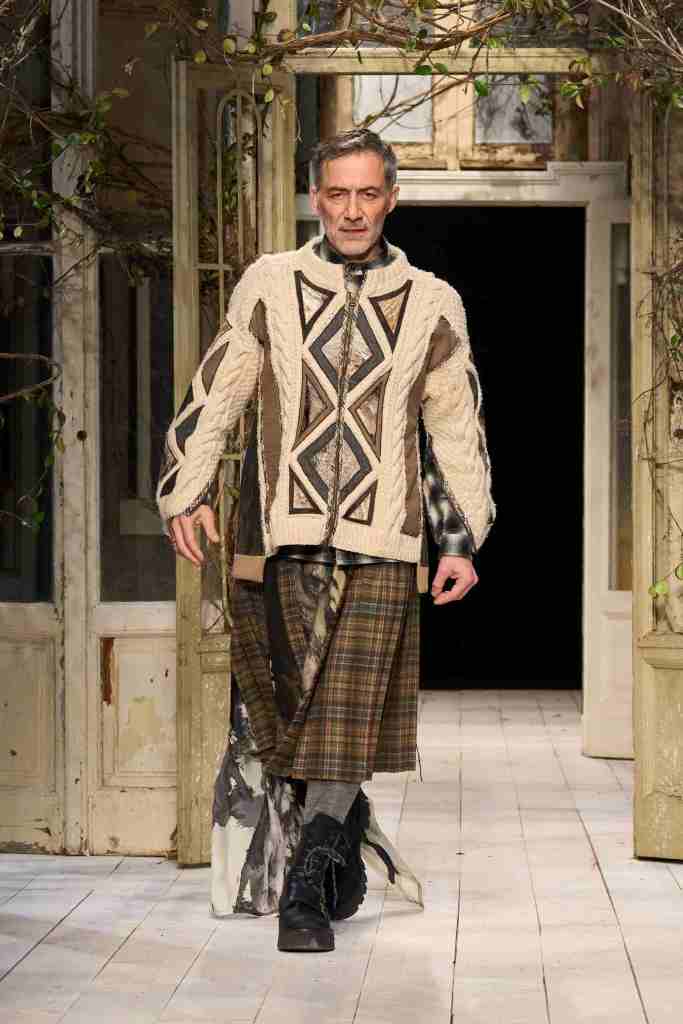
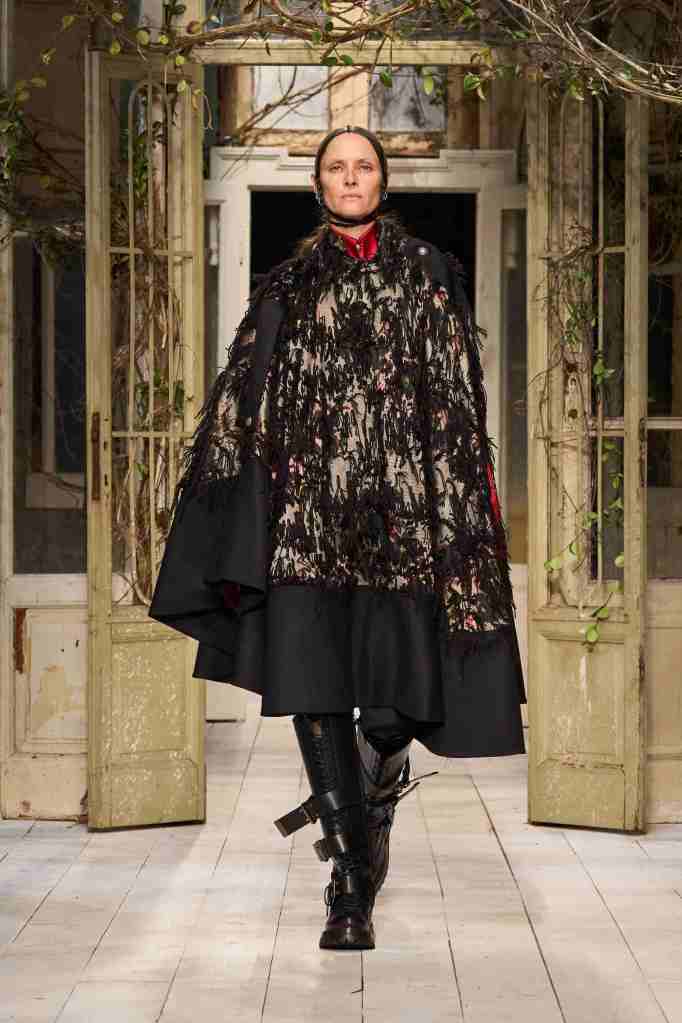
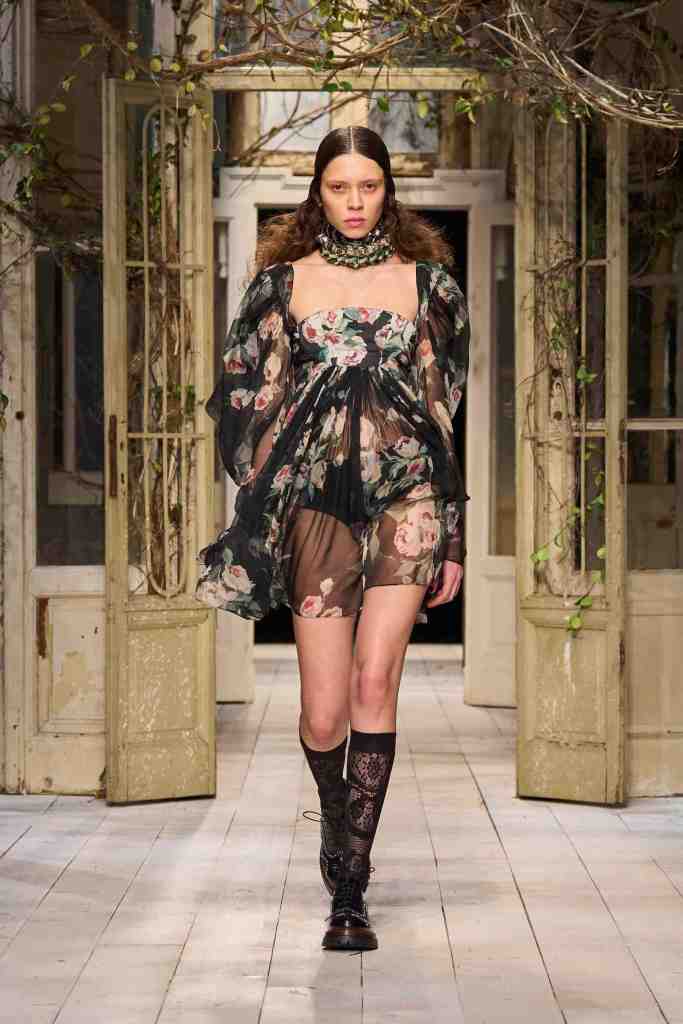
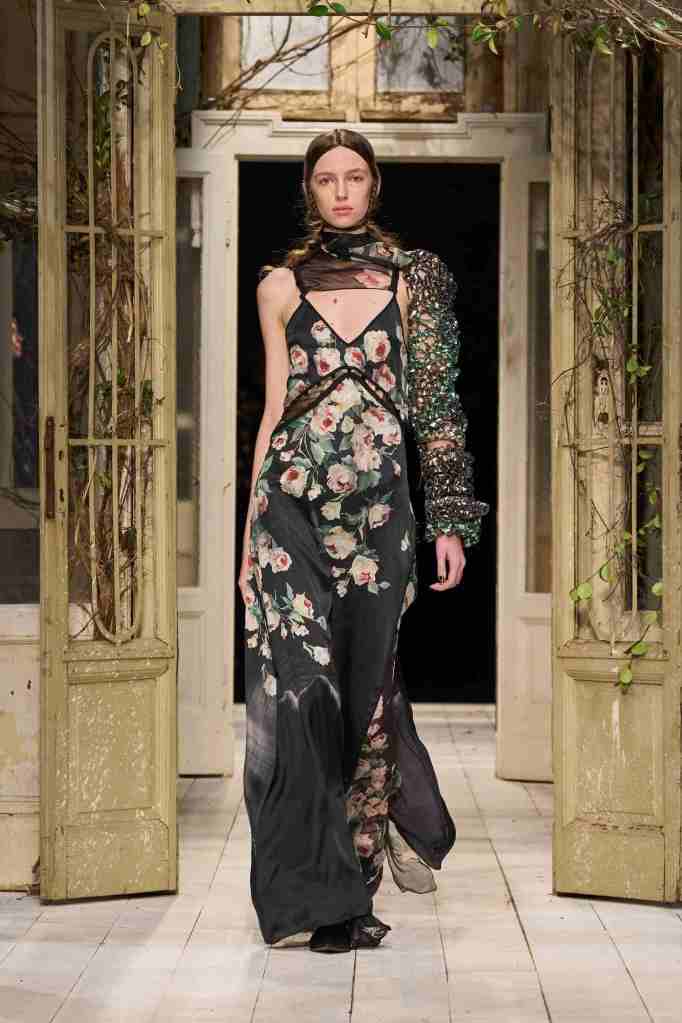
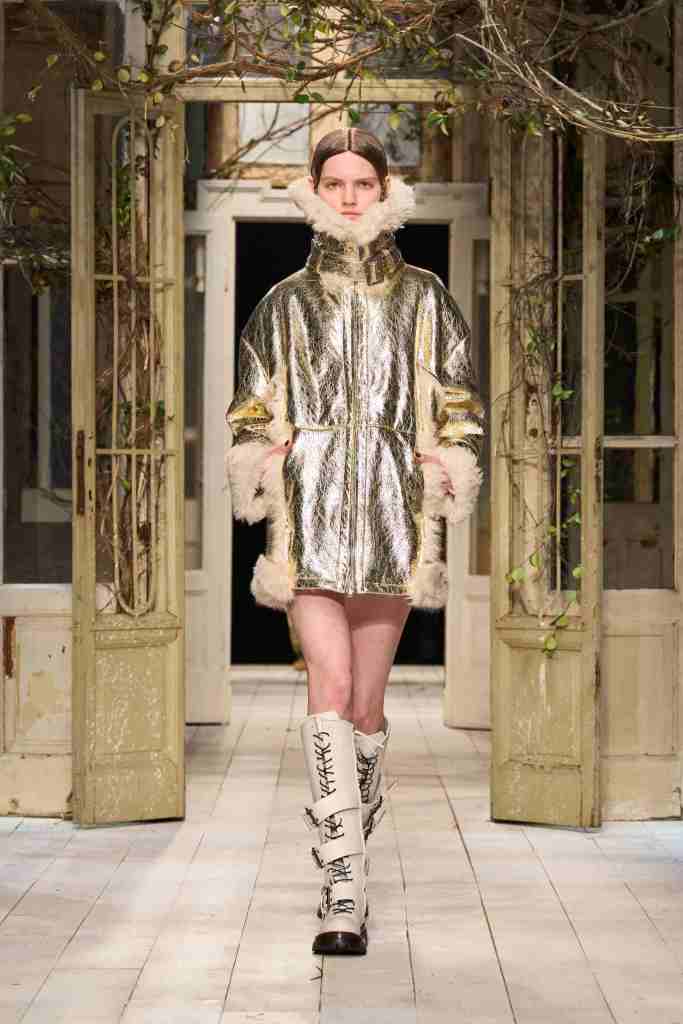
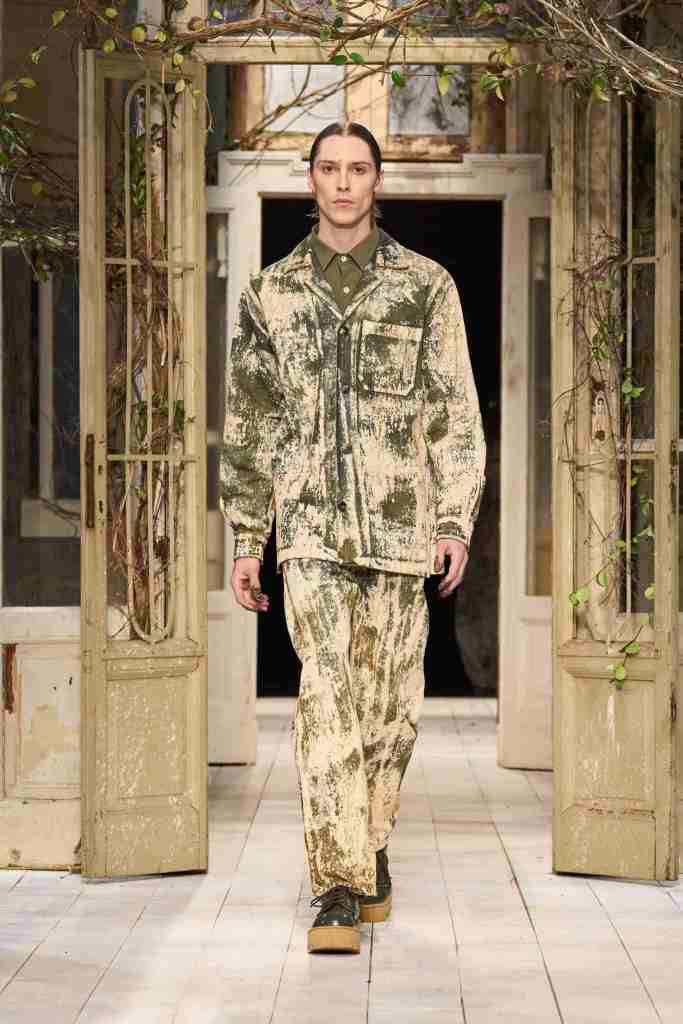
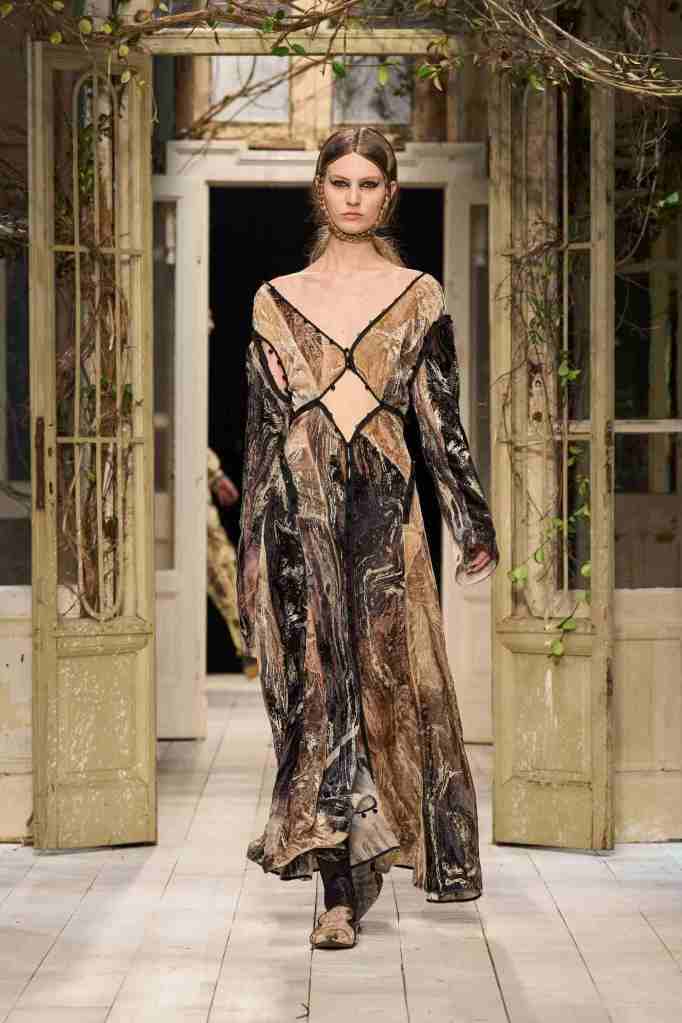
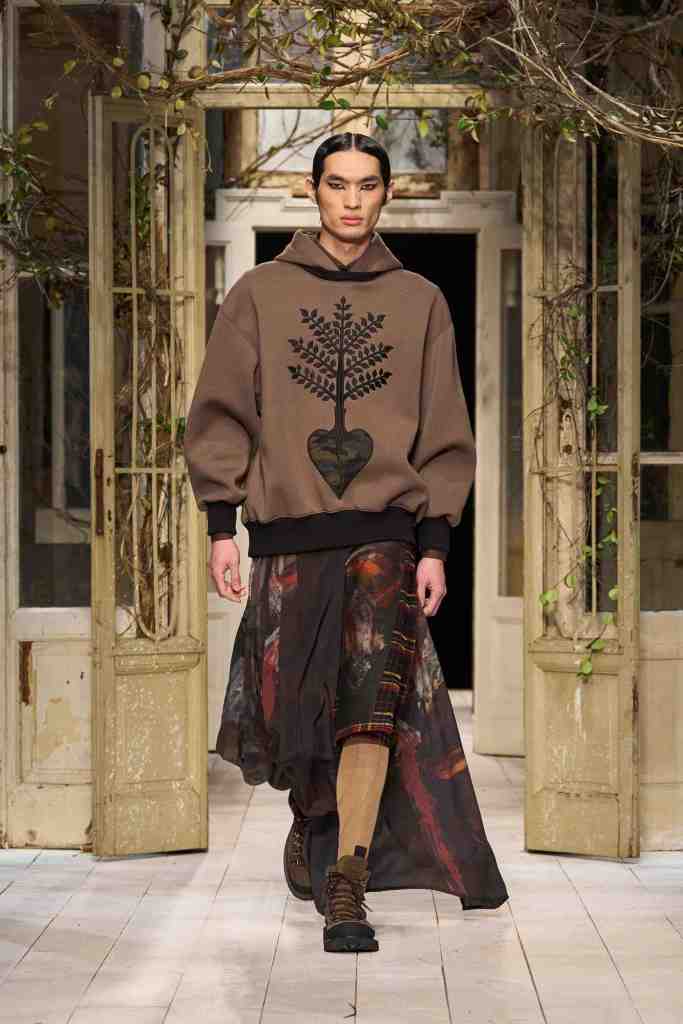
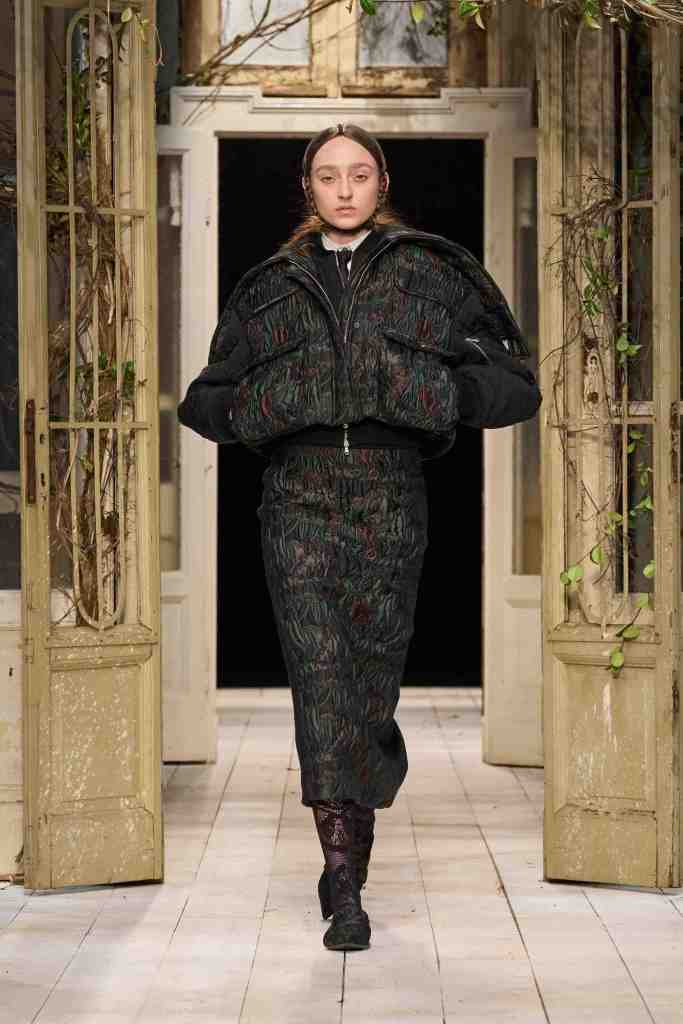
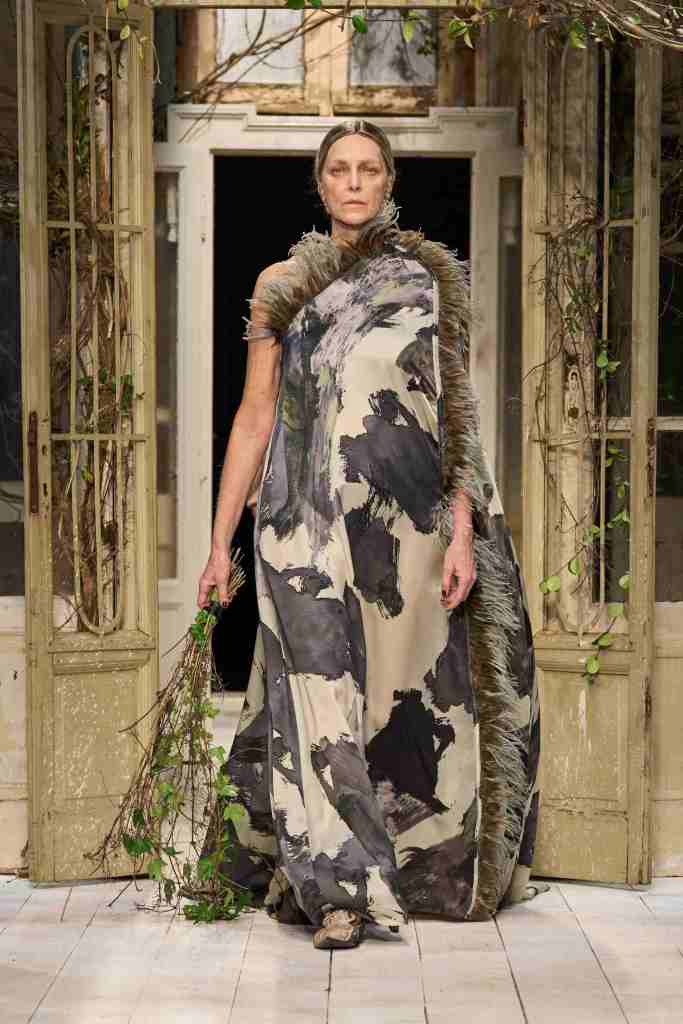
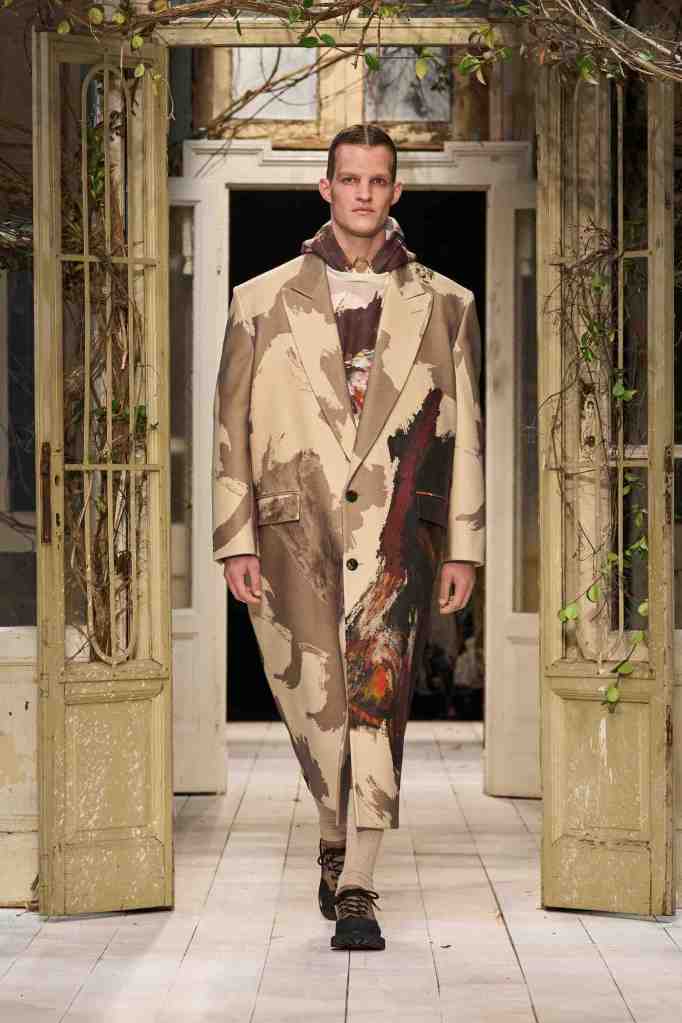
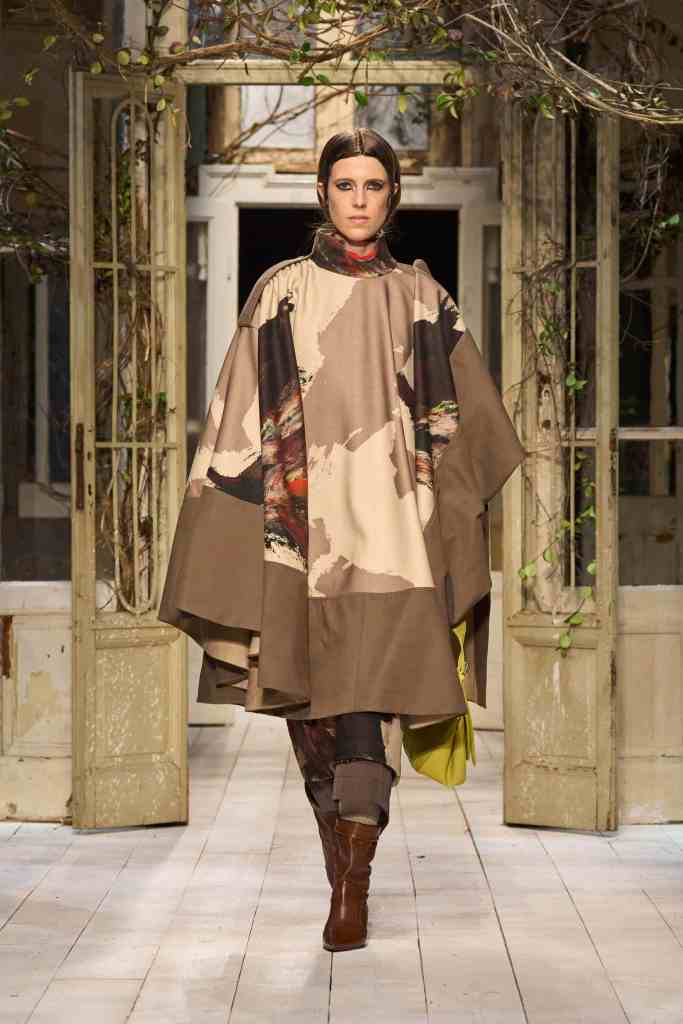
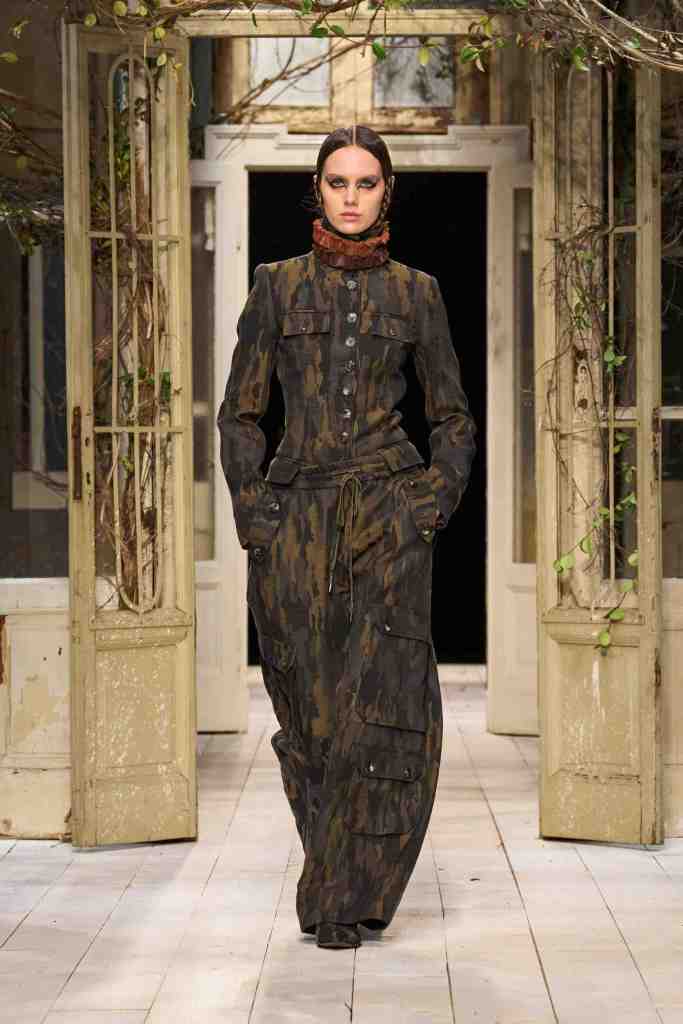
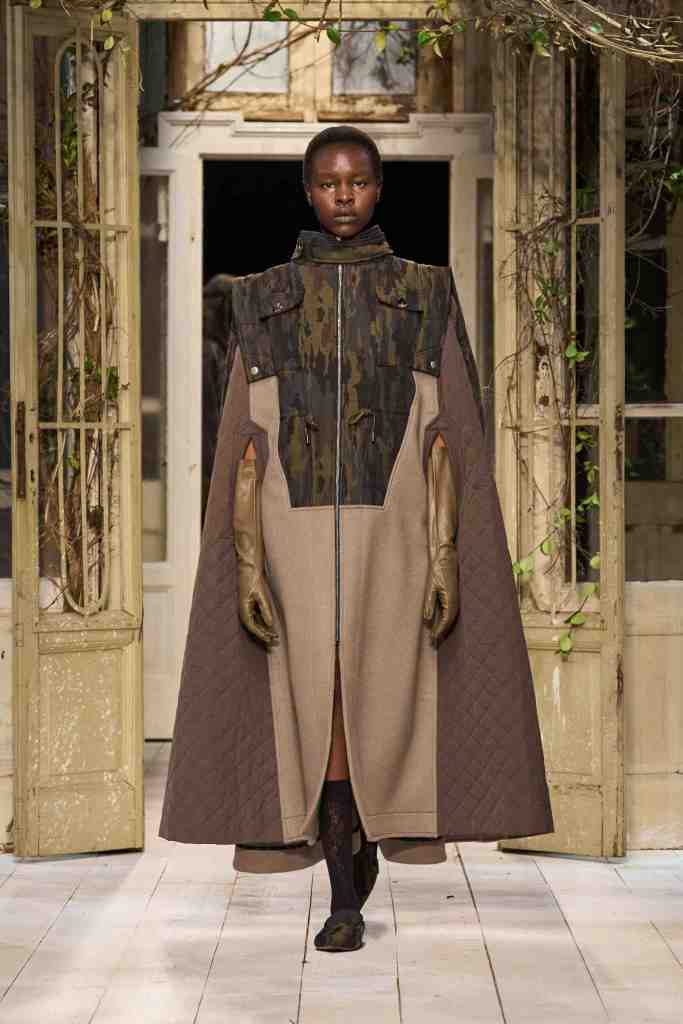
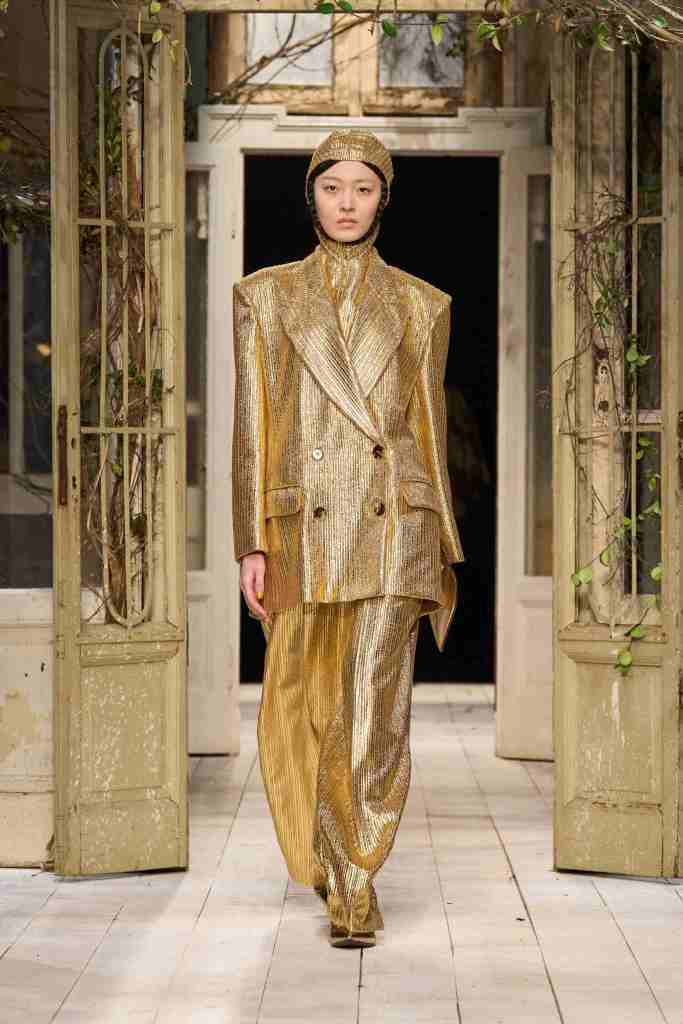
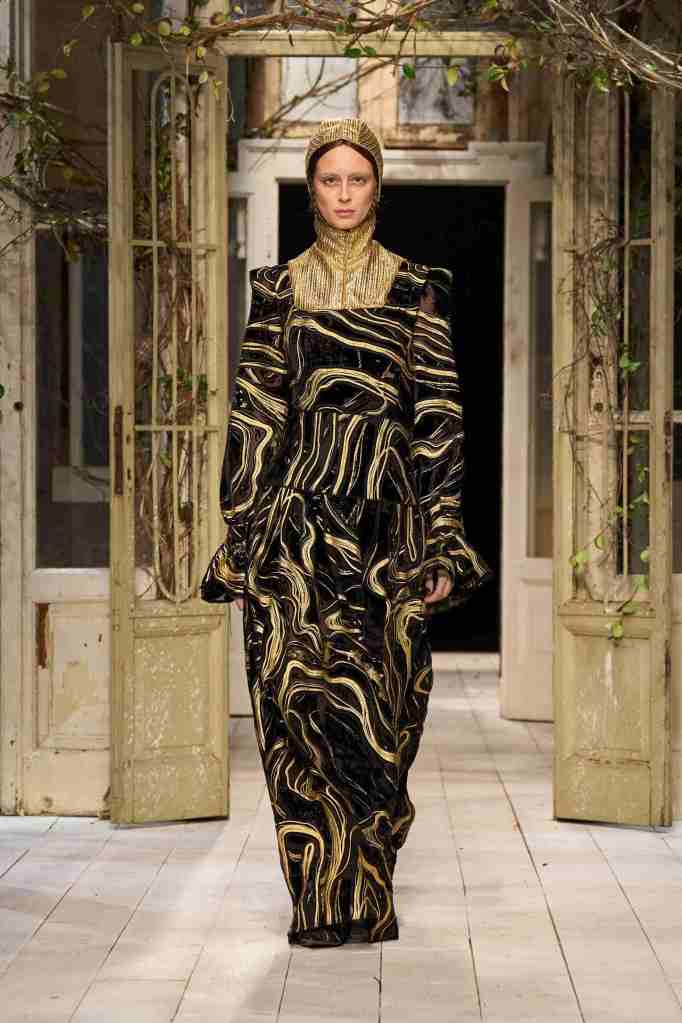
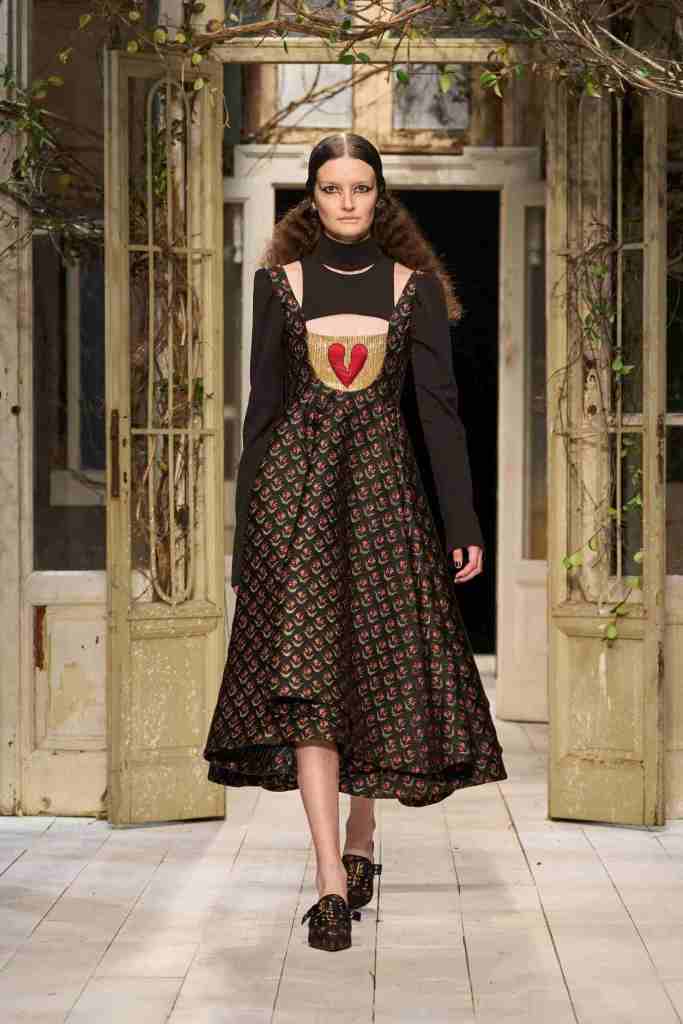
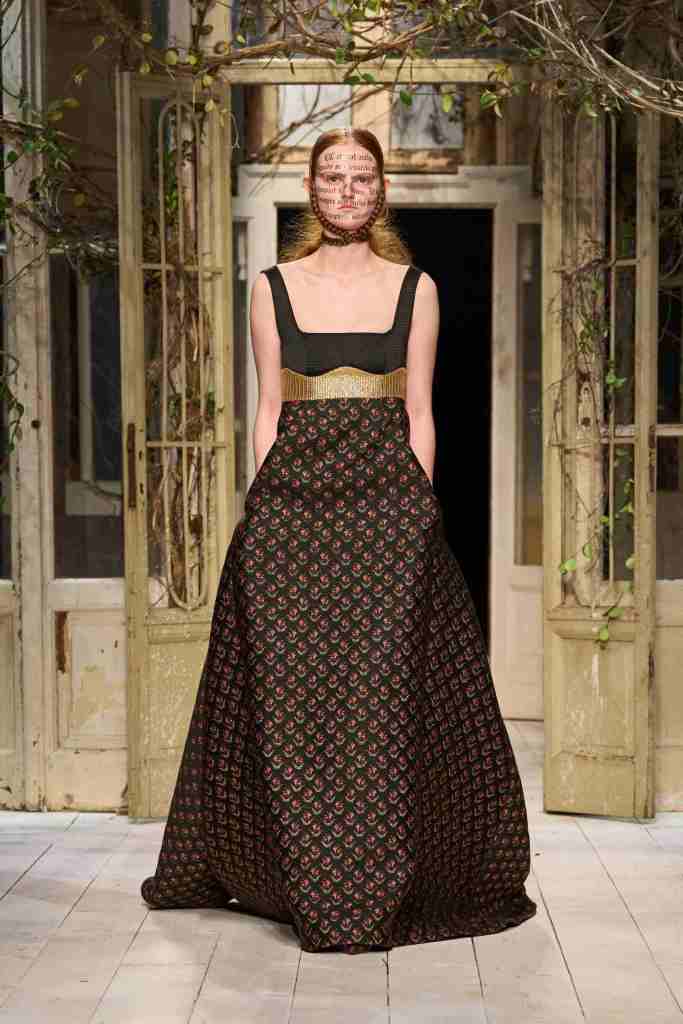
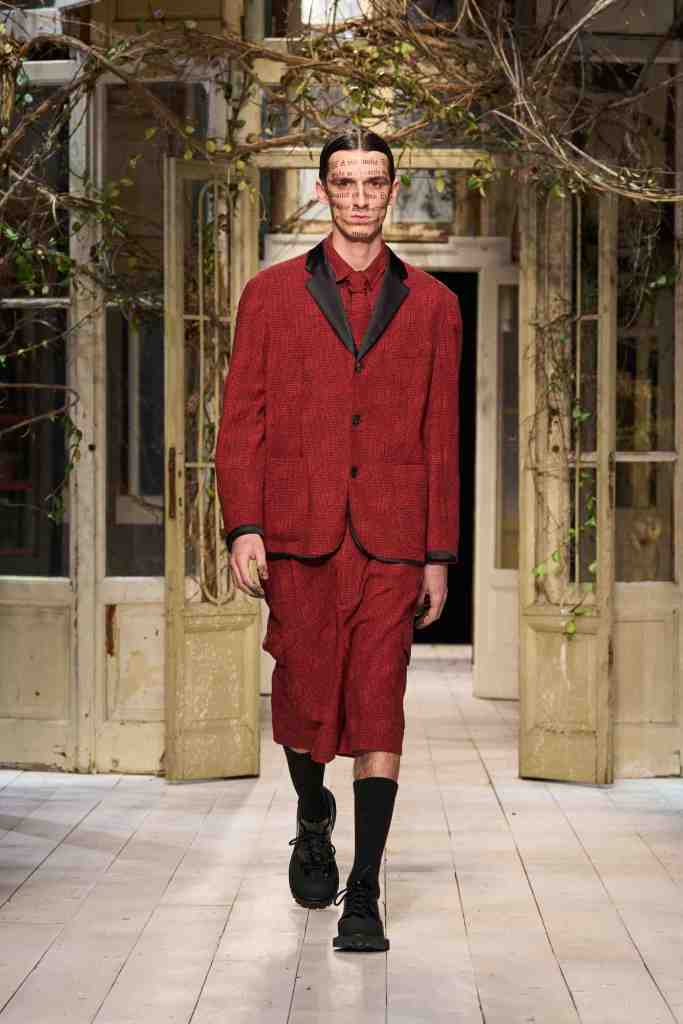
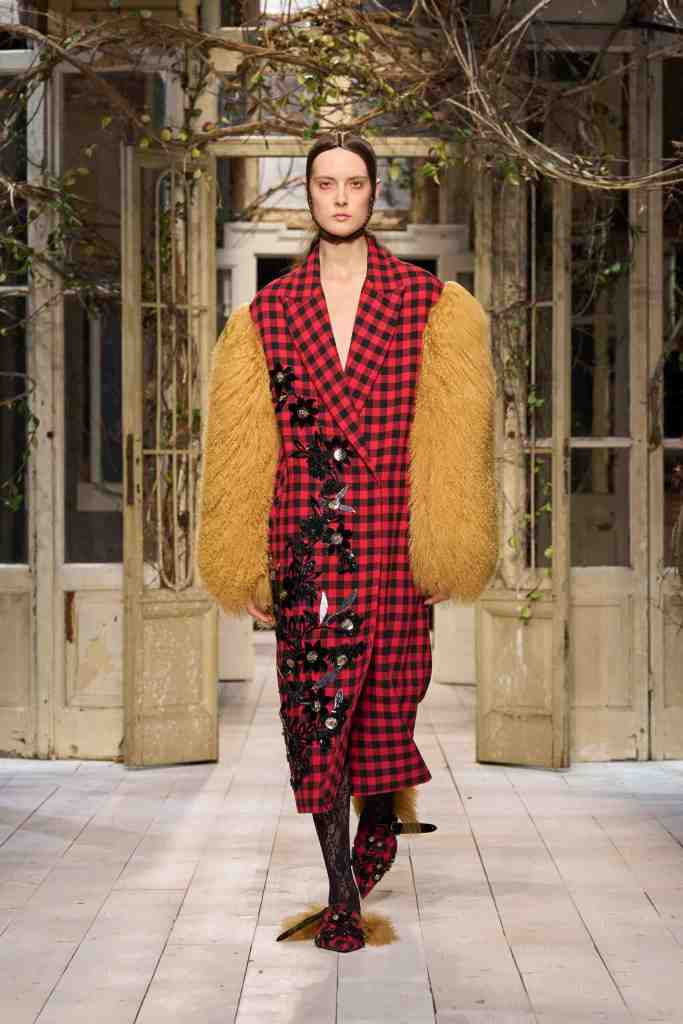
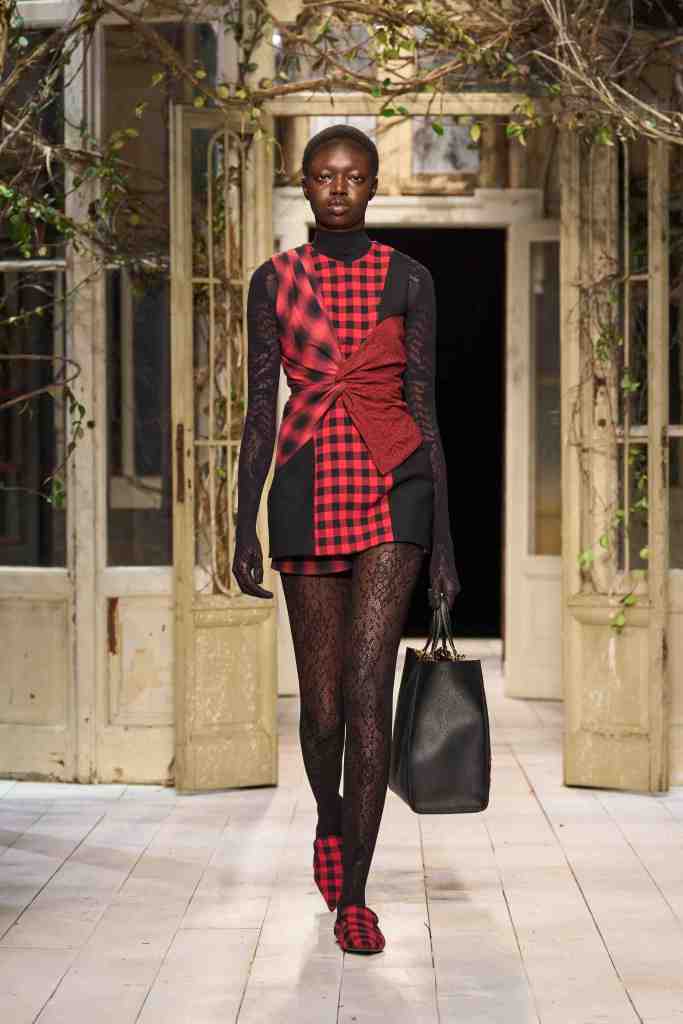
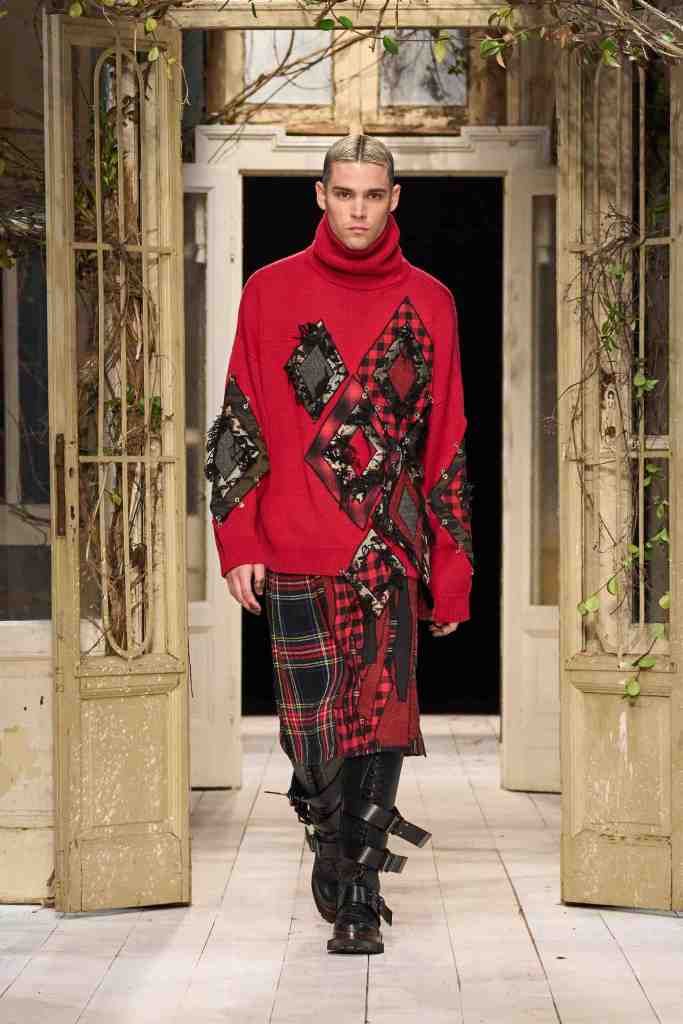
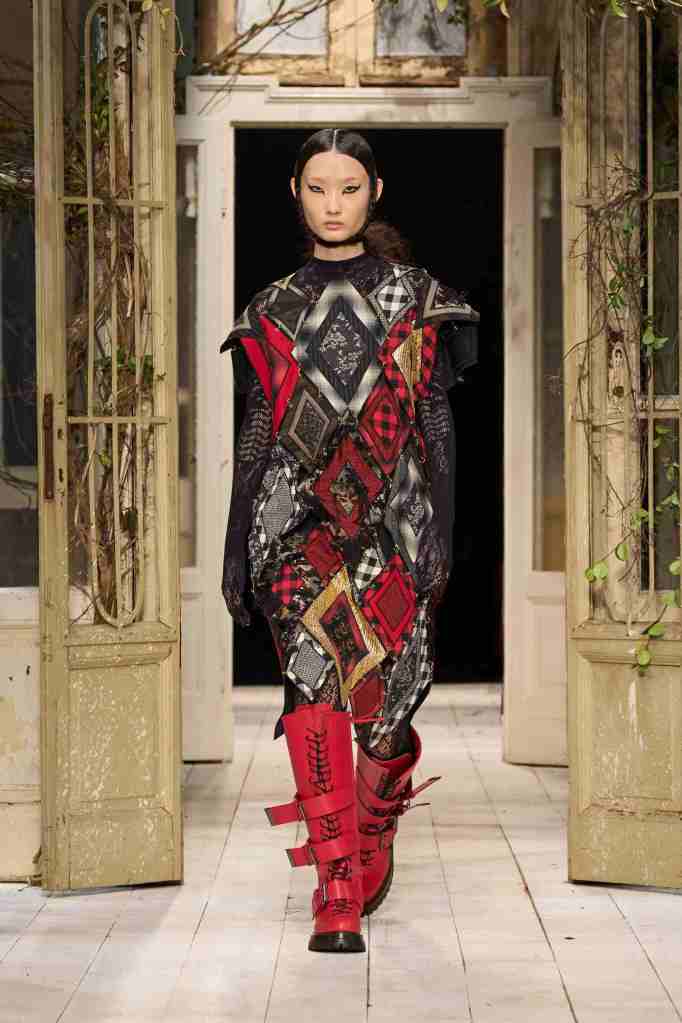
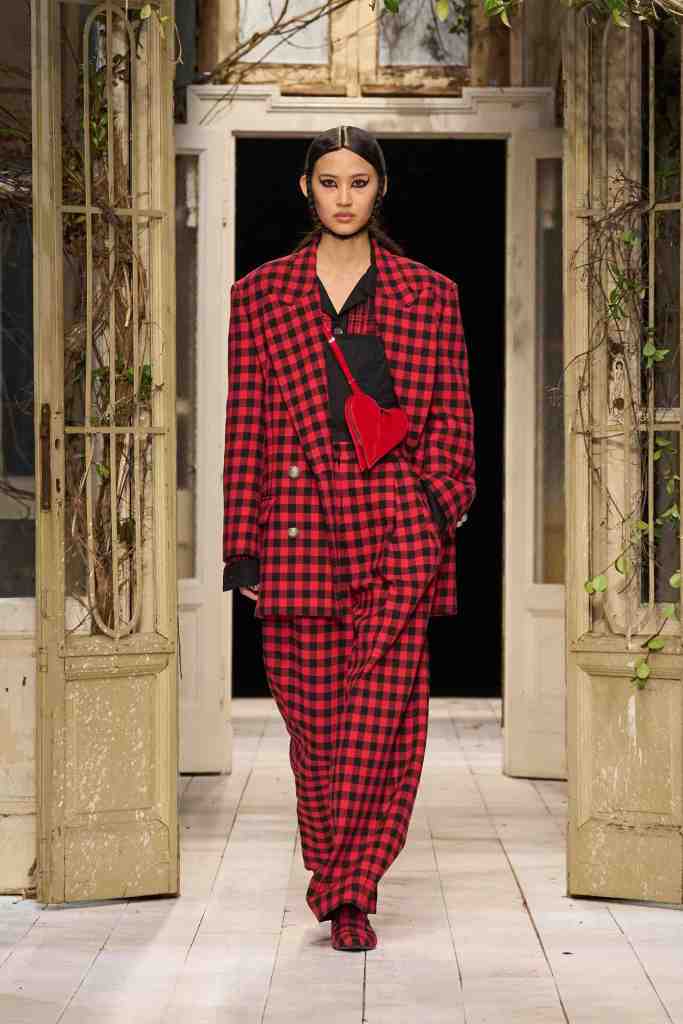
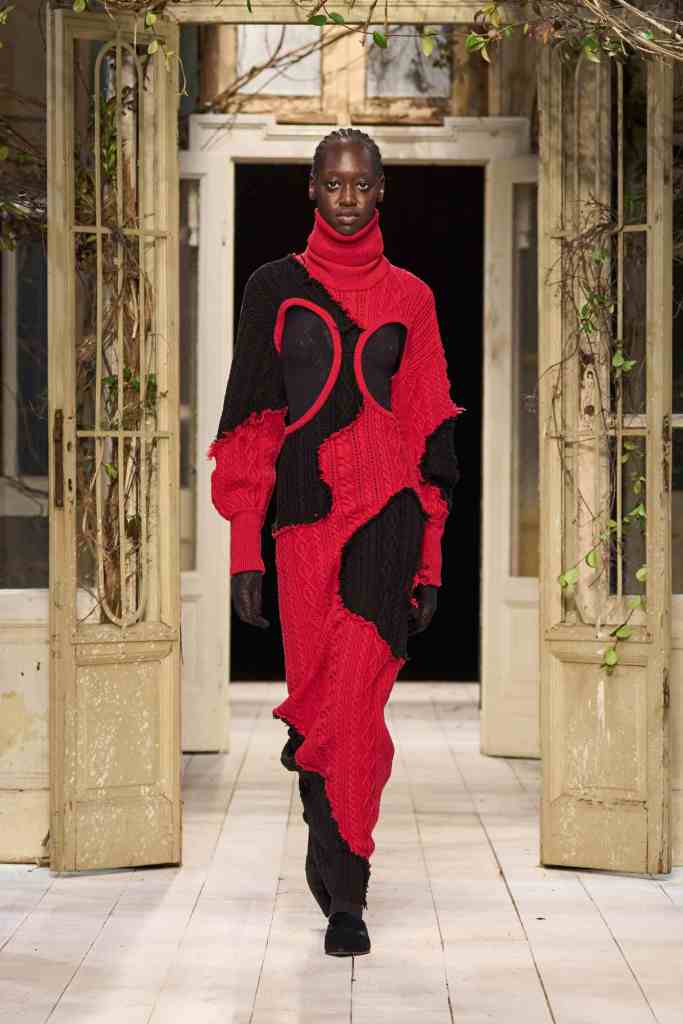
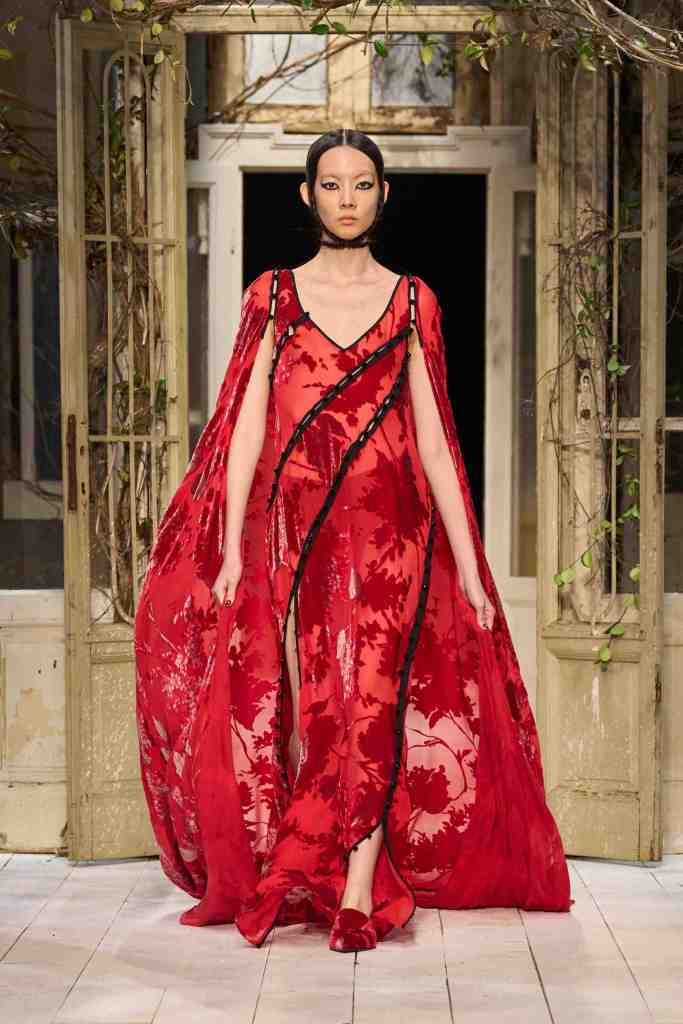
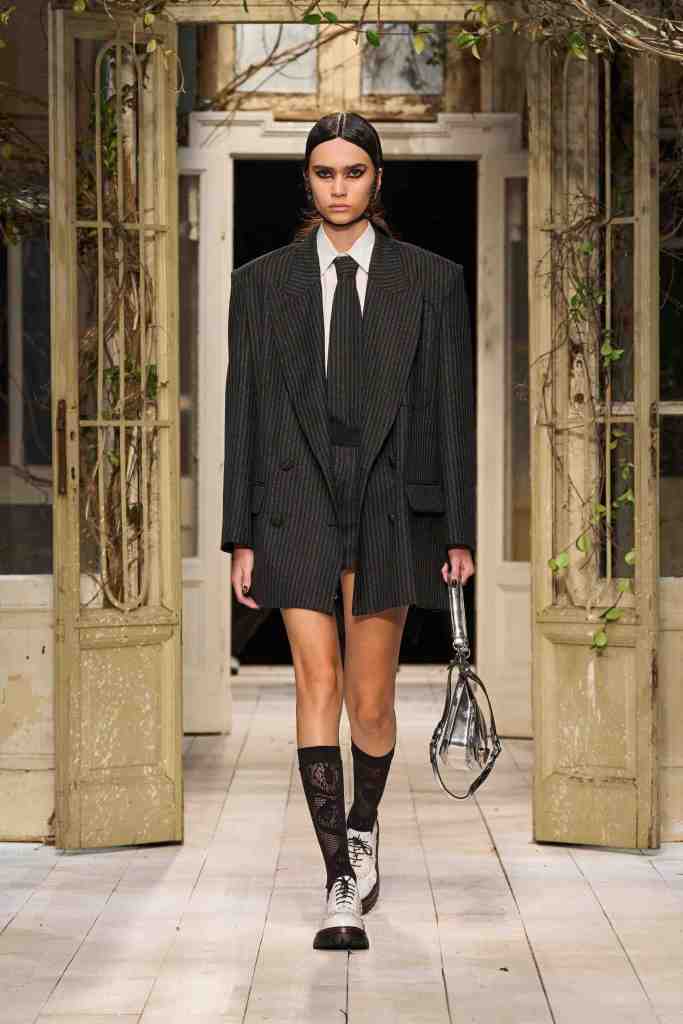
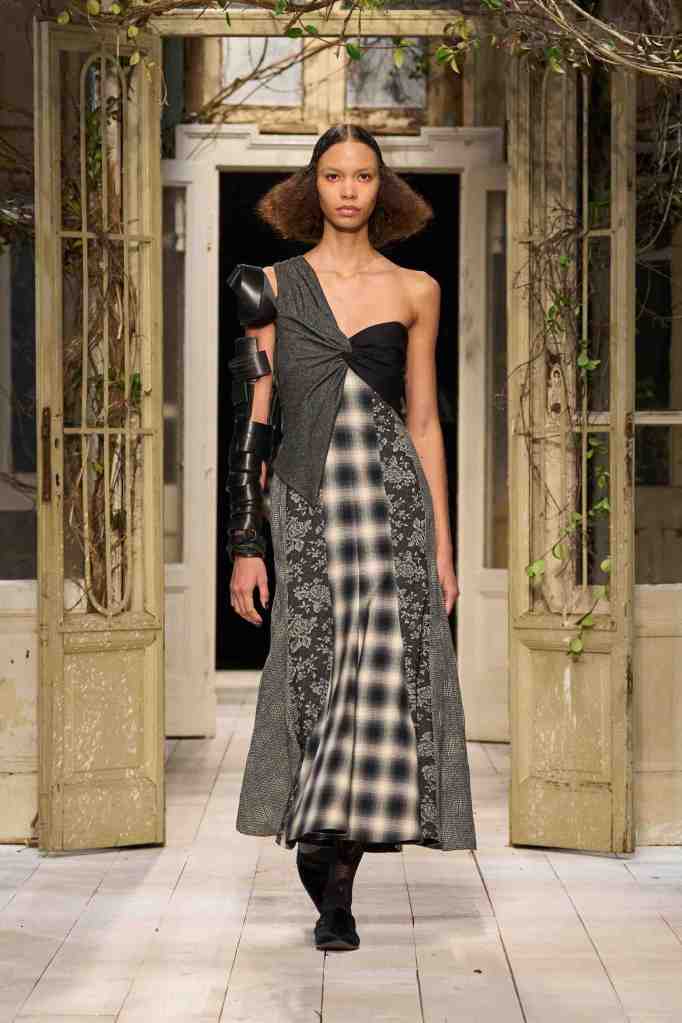
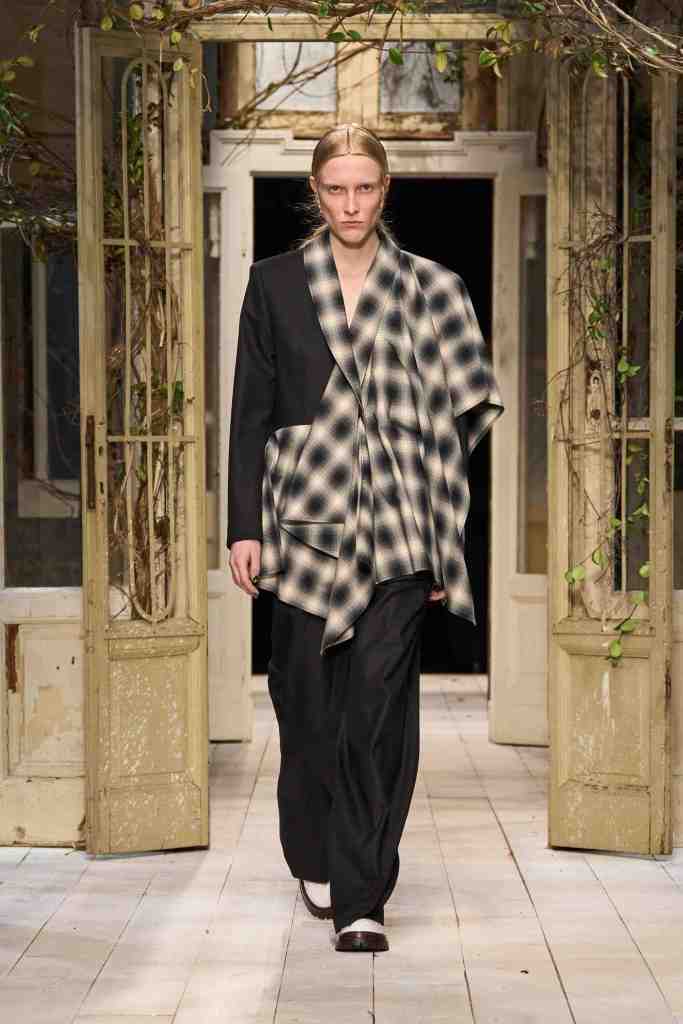
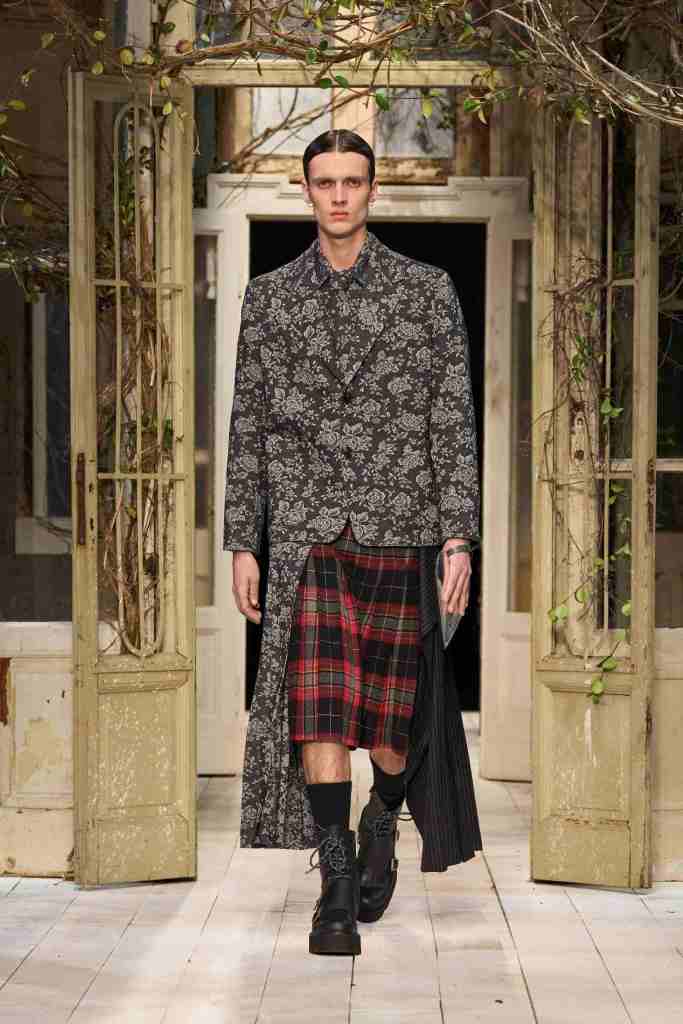
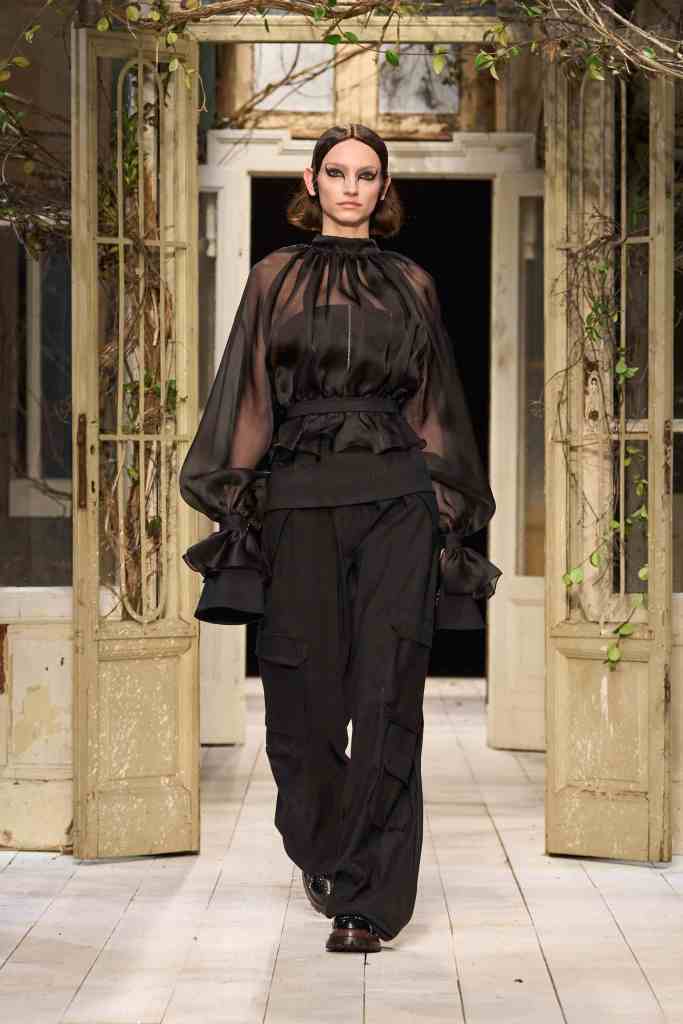
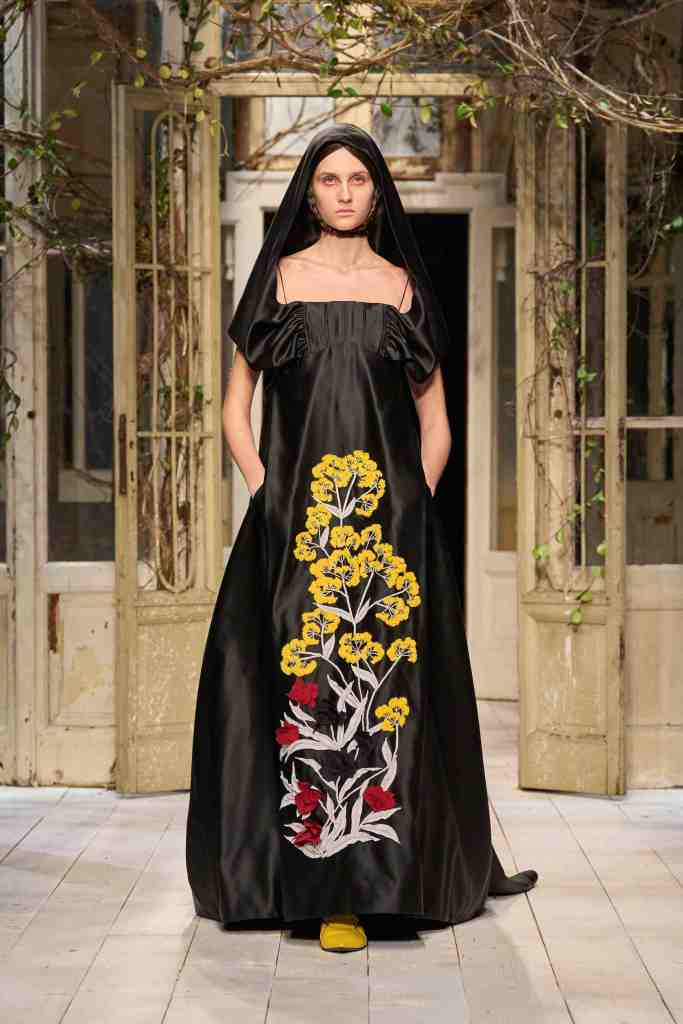
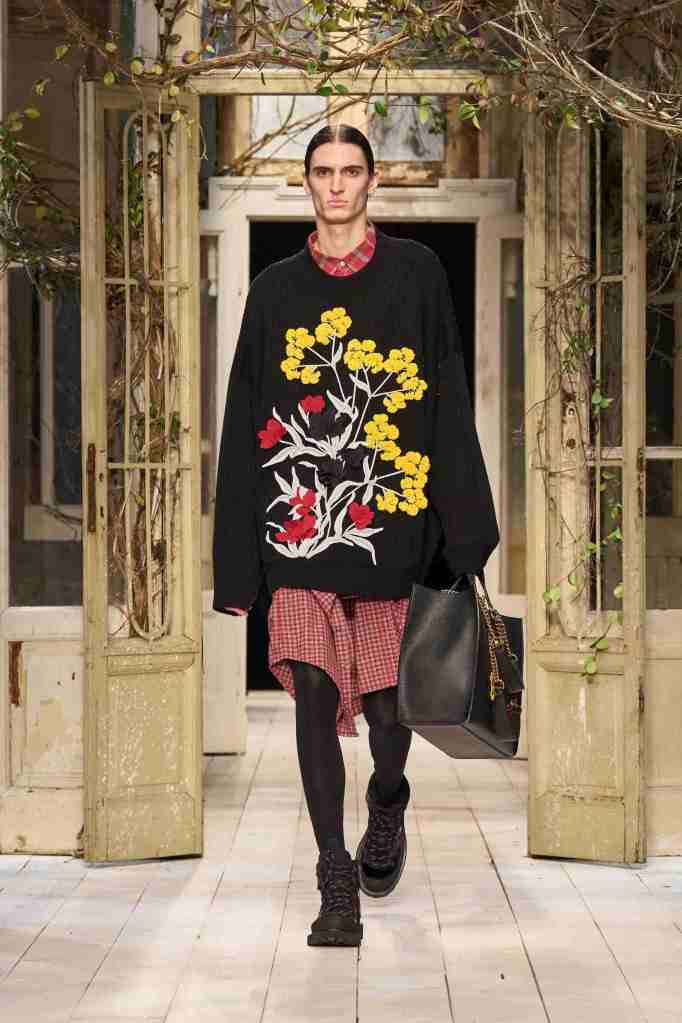
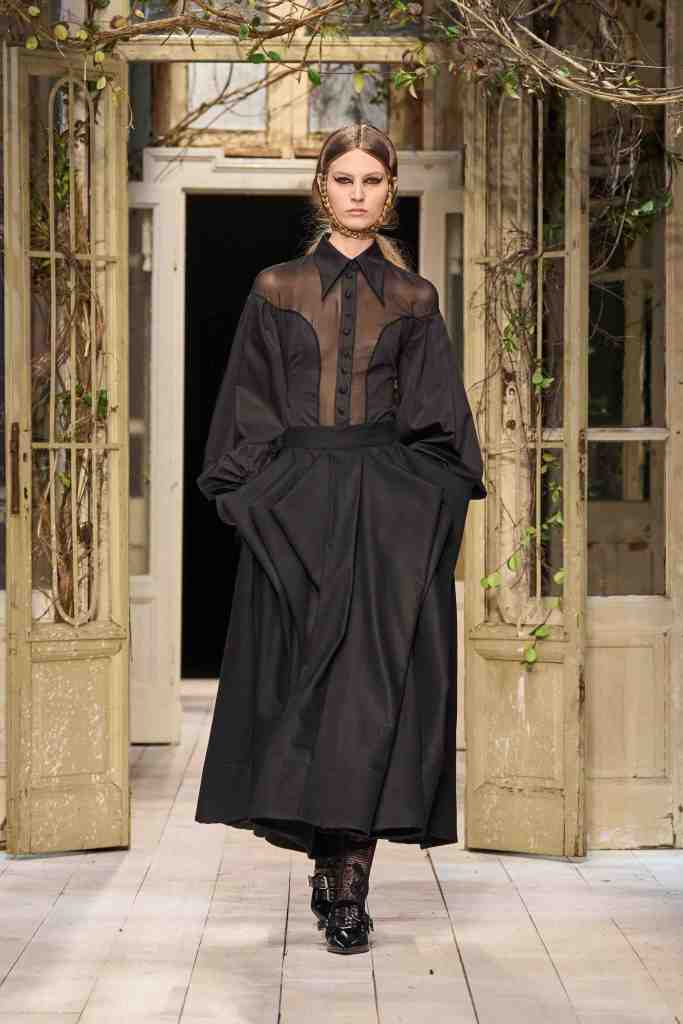
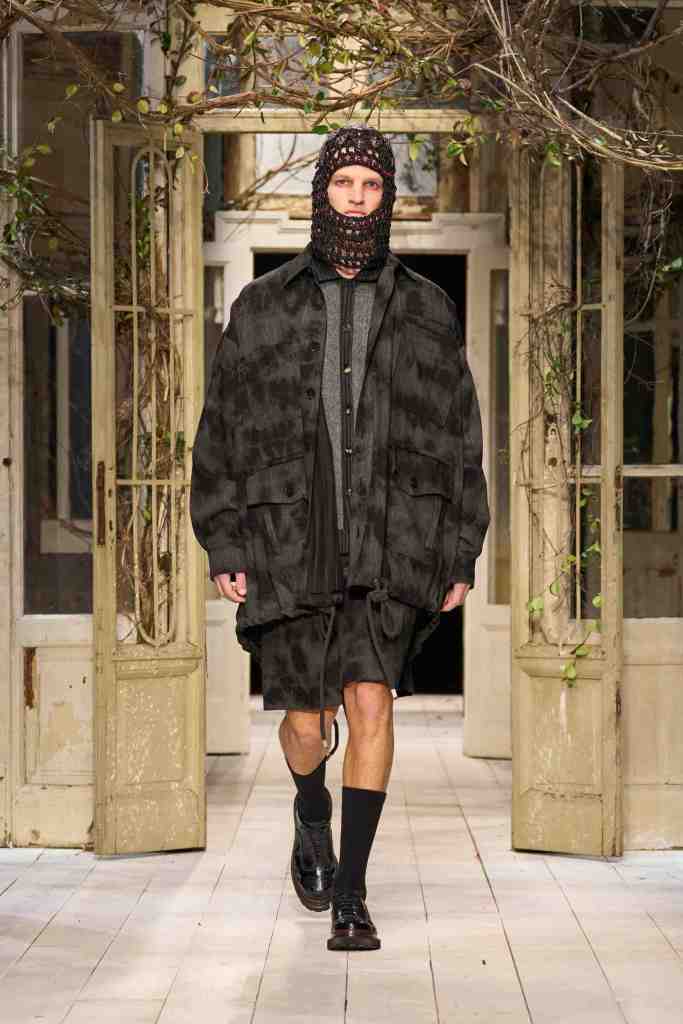
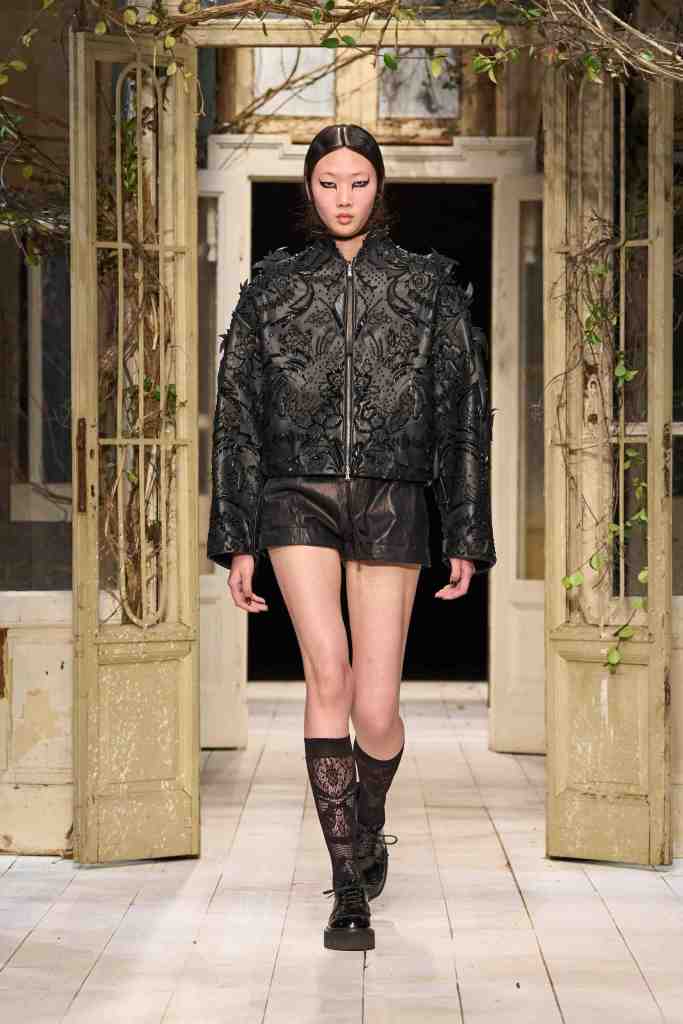
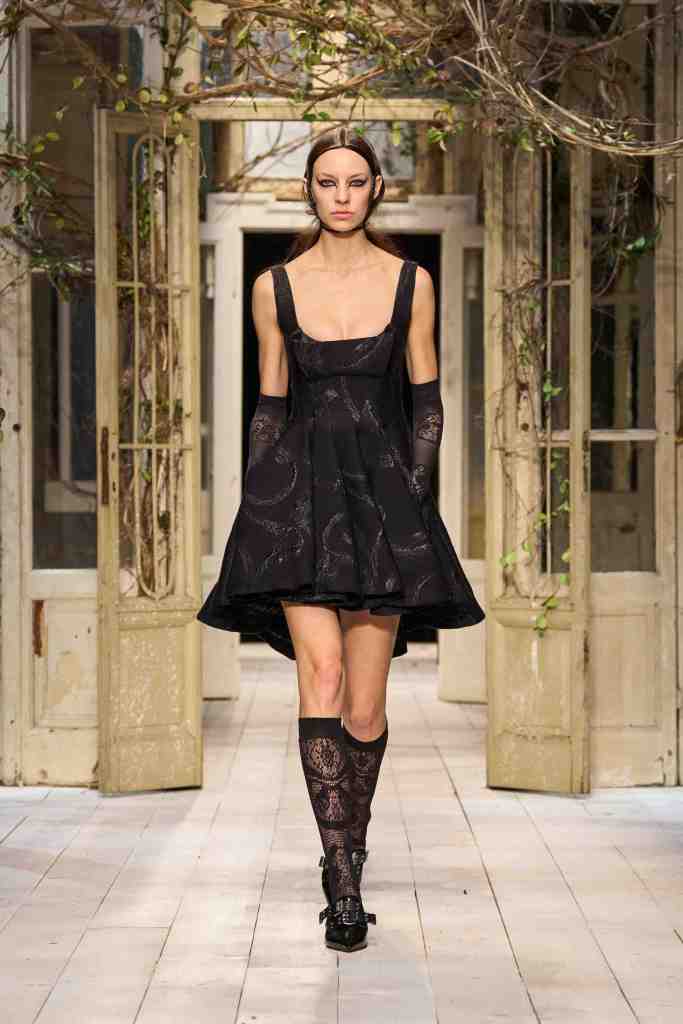
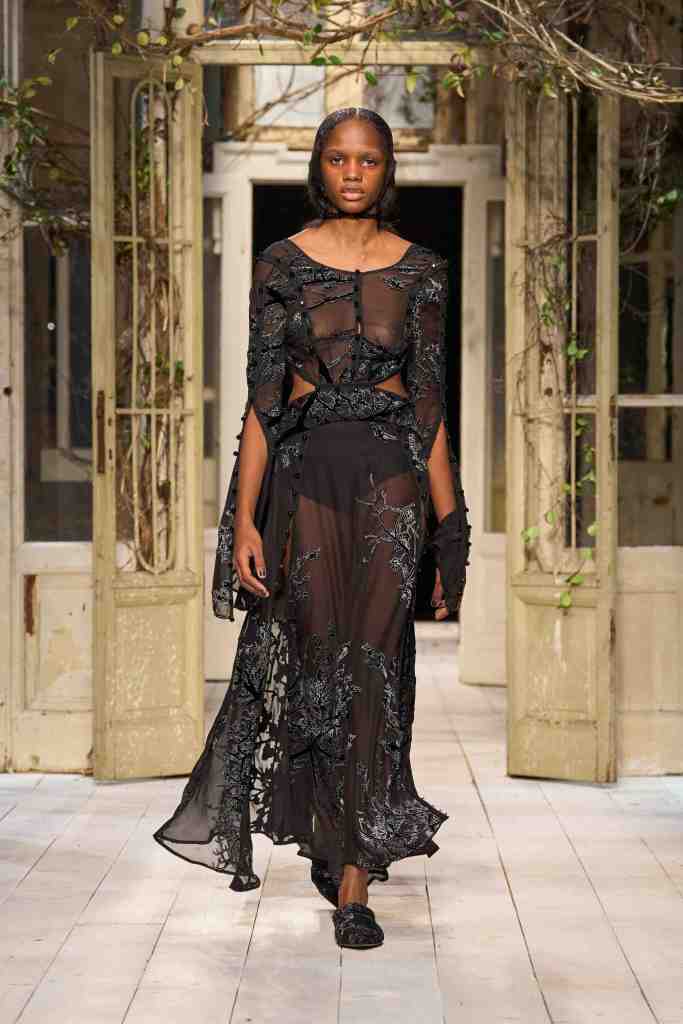
For her and the inhabitants of her kingdom, we imagined embroidered brocades, floral-patterned damasks, black and white or red and black checks, houndstooth, pinstripes, chevrons, camouflage, painted or gold-smeared wools, devoré velvets, flock, rose voiles, brushstroke chiffons, lace, embroidery, inlays and diamond-shaped patches. Glitter and dangling threads.
Opulent sheepskins and aged stretch leather and coloured or shiny leather, zips, broaches and buckles.
Decorated sweaters, landscape jacquards, knitwear paired with jet, argyle, braiding and inlays.
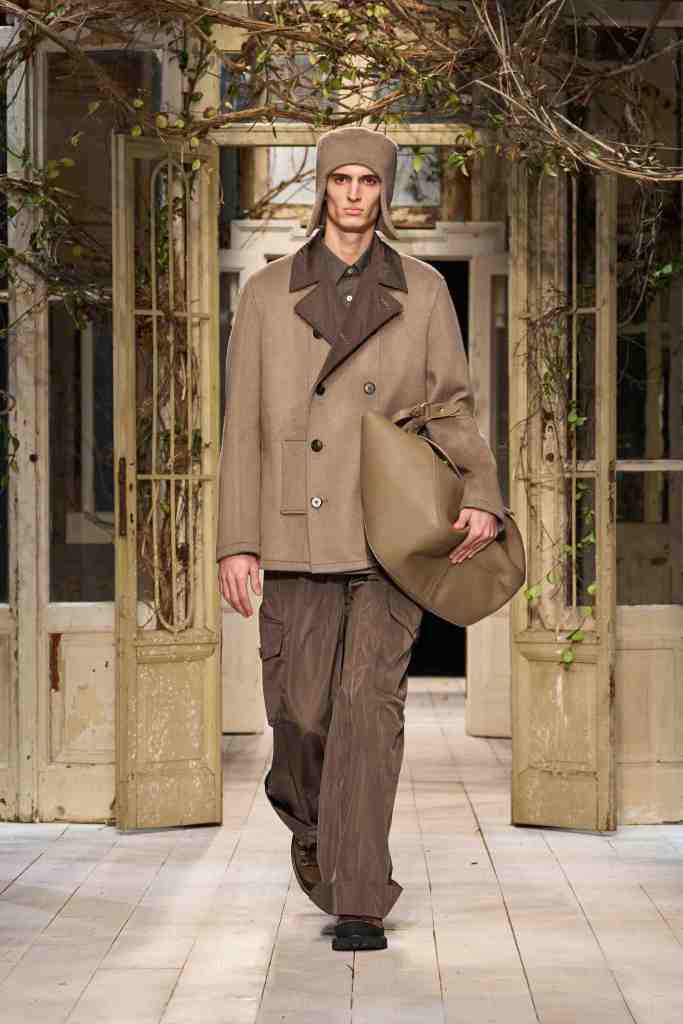
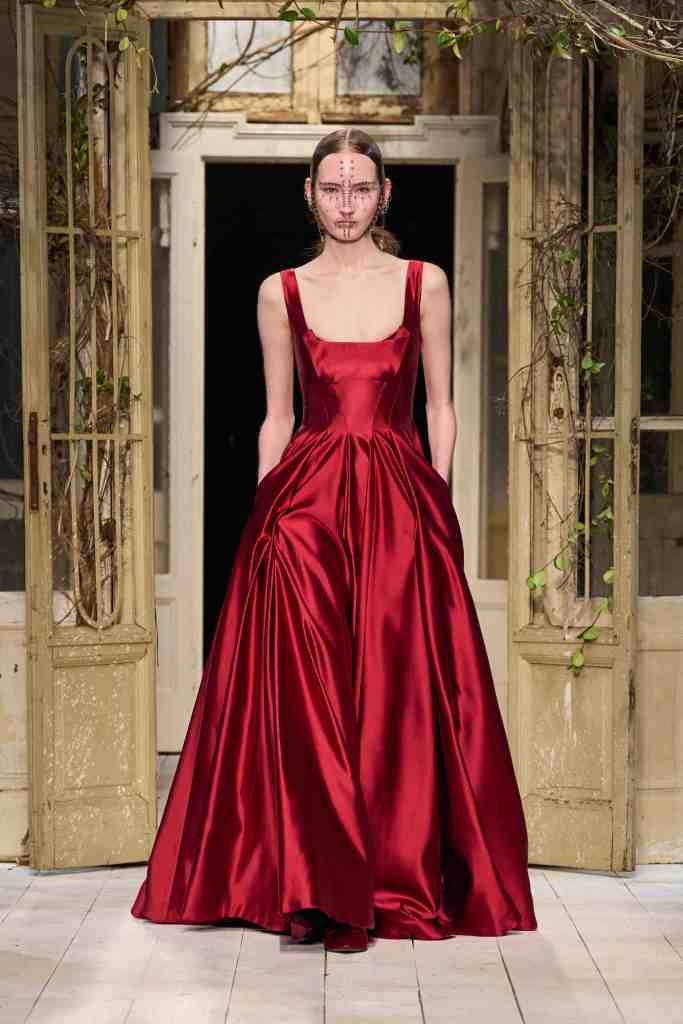
Slinky or bell-shaped dresses, striking outerwear, capes, oversize or minute jackets, cargo or high-waisted pants, bodices, draped skirts and many, many white shirts.
The colours are the greens of the undergrowth, yellow, red, gold and black.
Setting
A tower, like the many towers used in the Middle Ages to imprison wives, mothers, sisters or daughters who were rebellious, disobedient or simply refused to marry.
Antonio Marras FW24, Eleonor’s runway show is dedicated to Carmelo Tedeschi.
He was one of the first designers to join our workshop in Alghero.
Sicilian by birth, but a citizen of the world, after Alghero and Berlin he made Fez his home.
He worked leather as one works clay or bread, with skill and passion.
An artist, not just a designer.
His hands were the expression of his soul: generous, large, ductile, industrious, imaginative, ingenious, infinite.
This show features some the pieces he designed for Eleonor, unfortunately his last ones.
He had a sewing machine brought to his bedroom, which he continued, when he had the strength, to use with dedication.
To Carmelo we have a debt of beauty, kindness and awe.


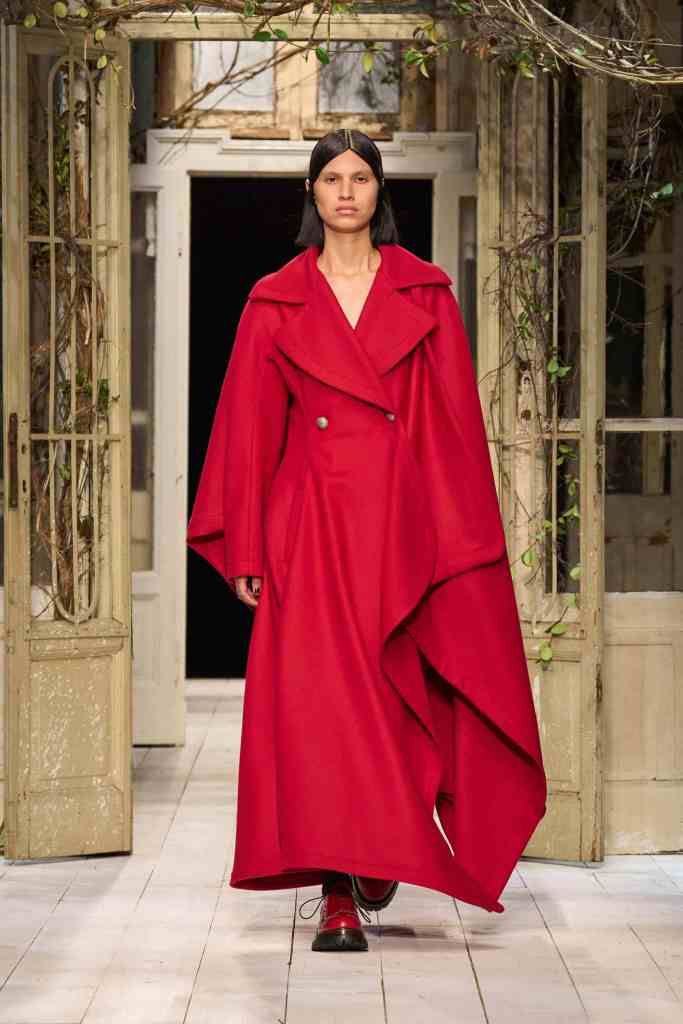
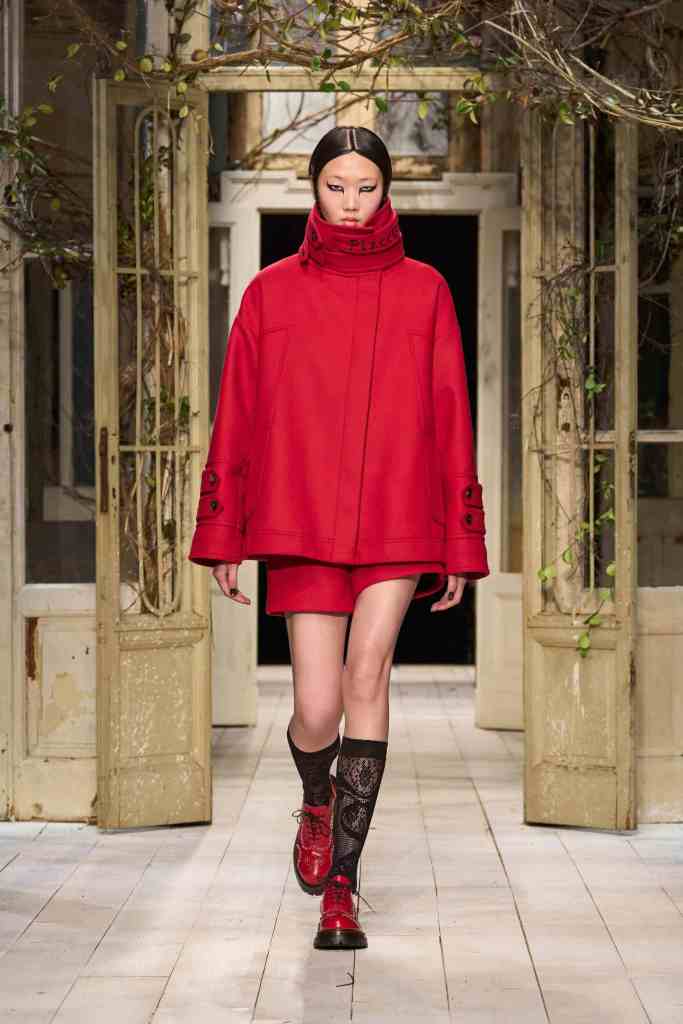


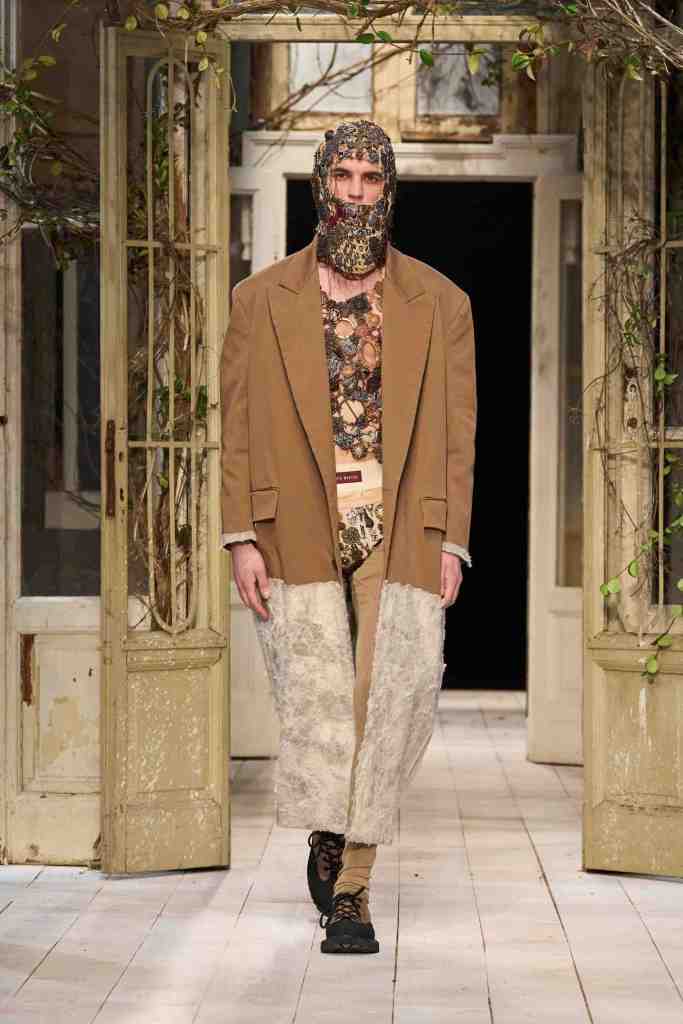
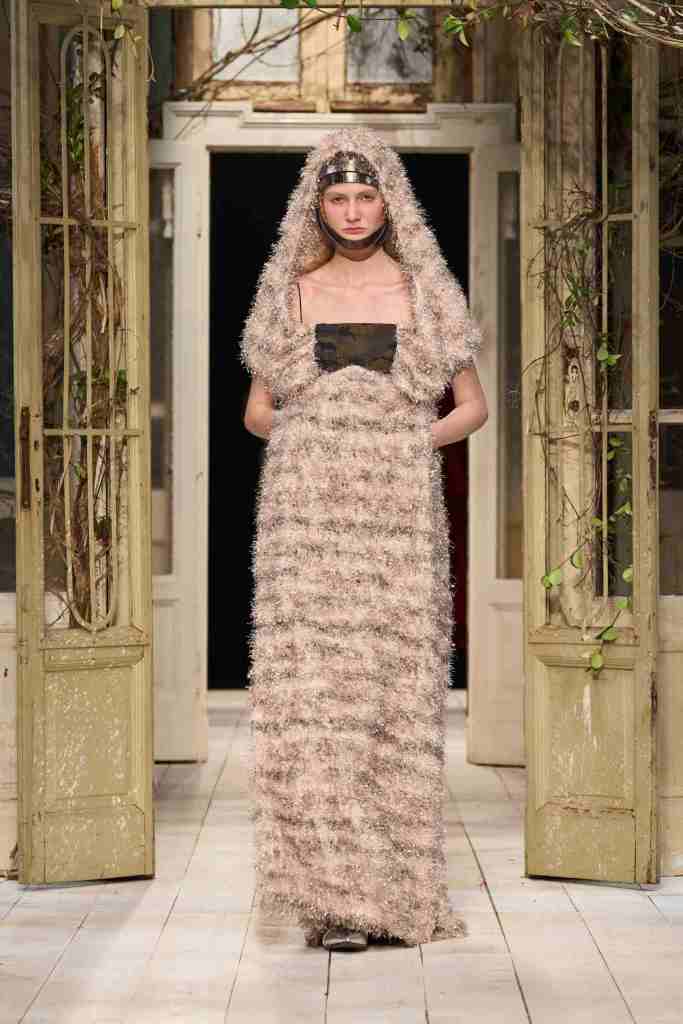











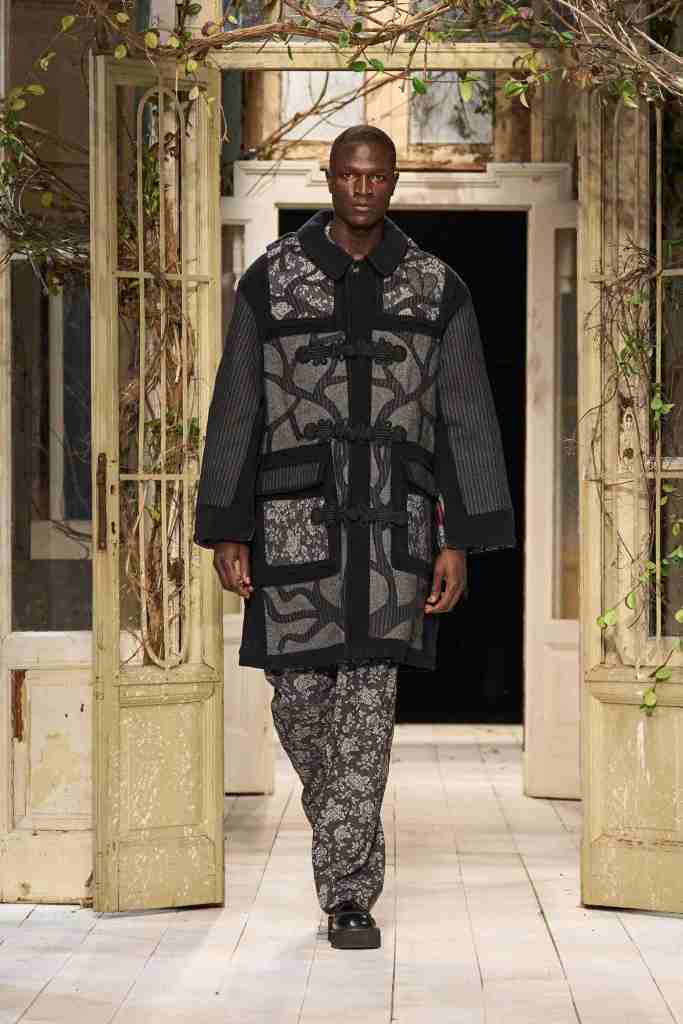
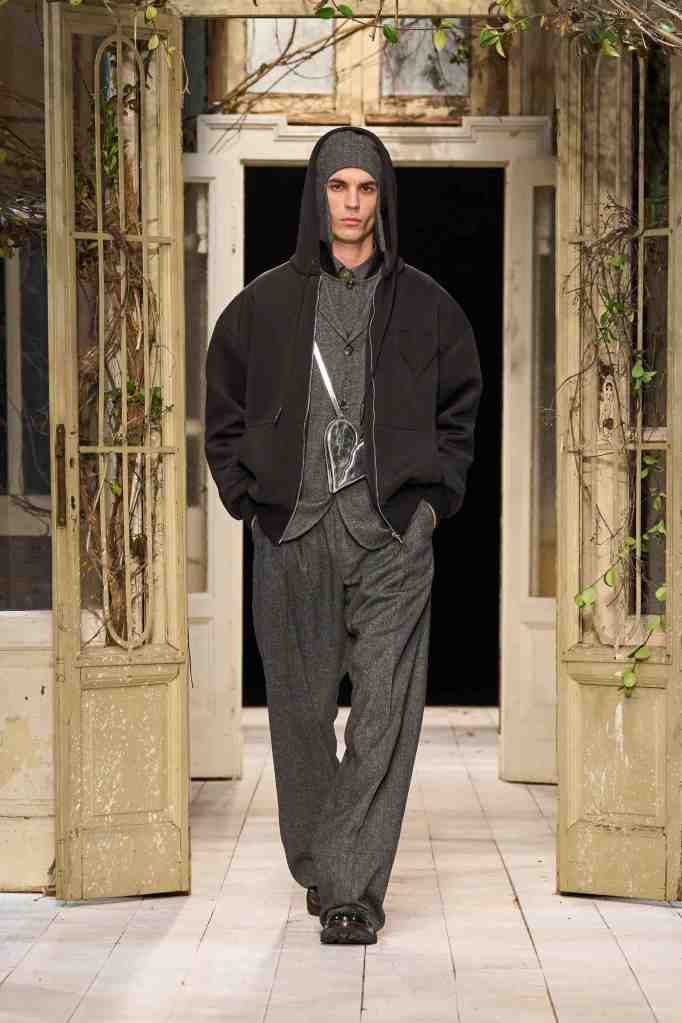
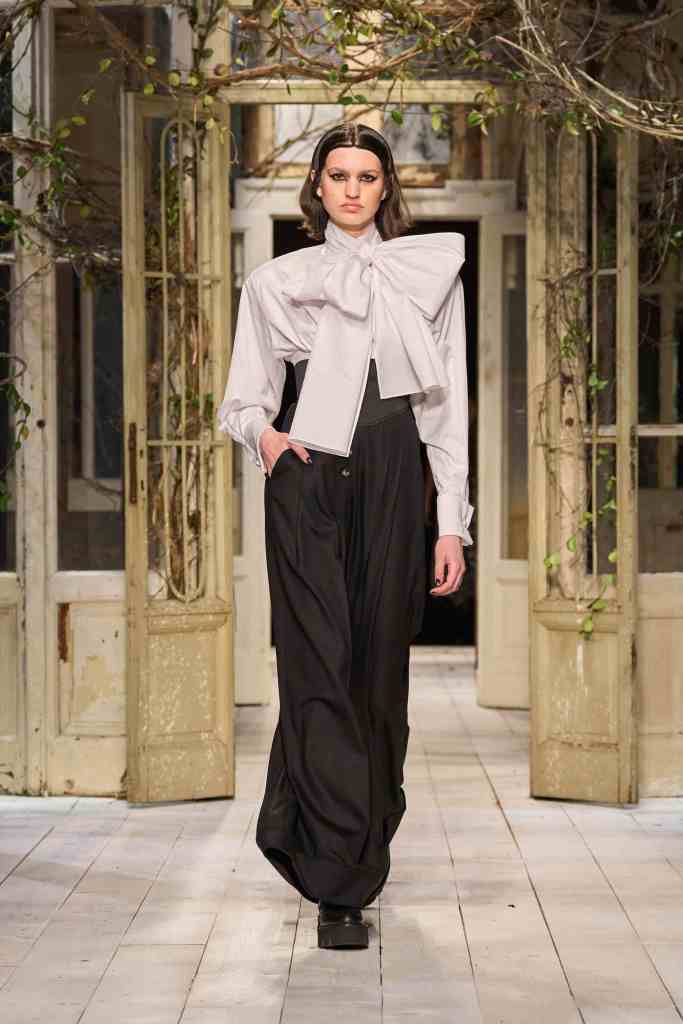

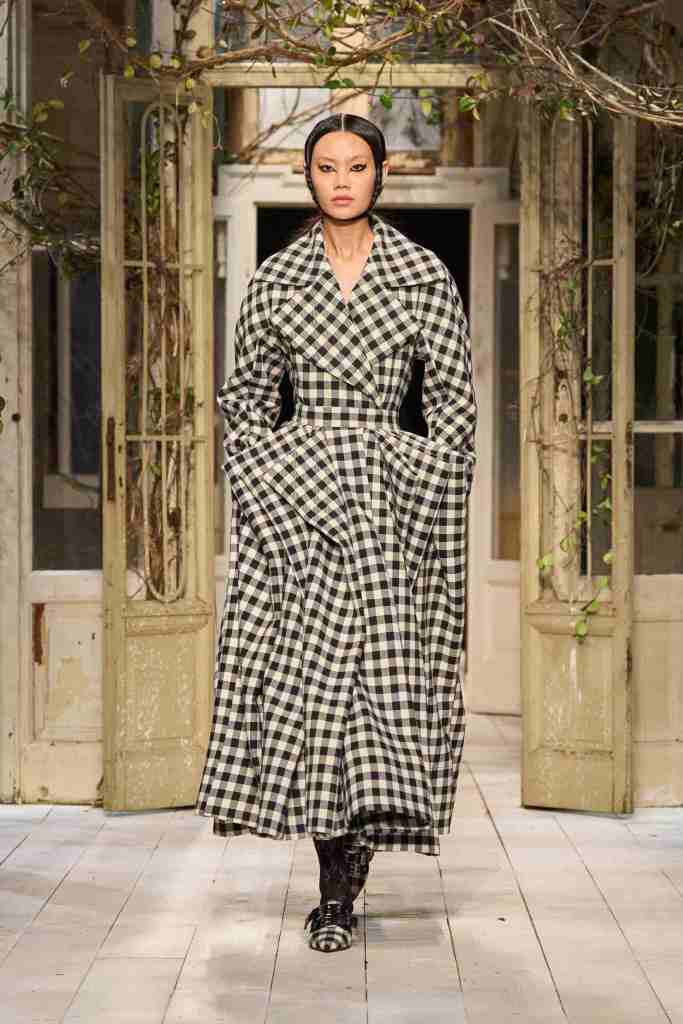



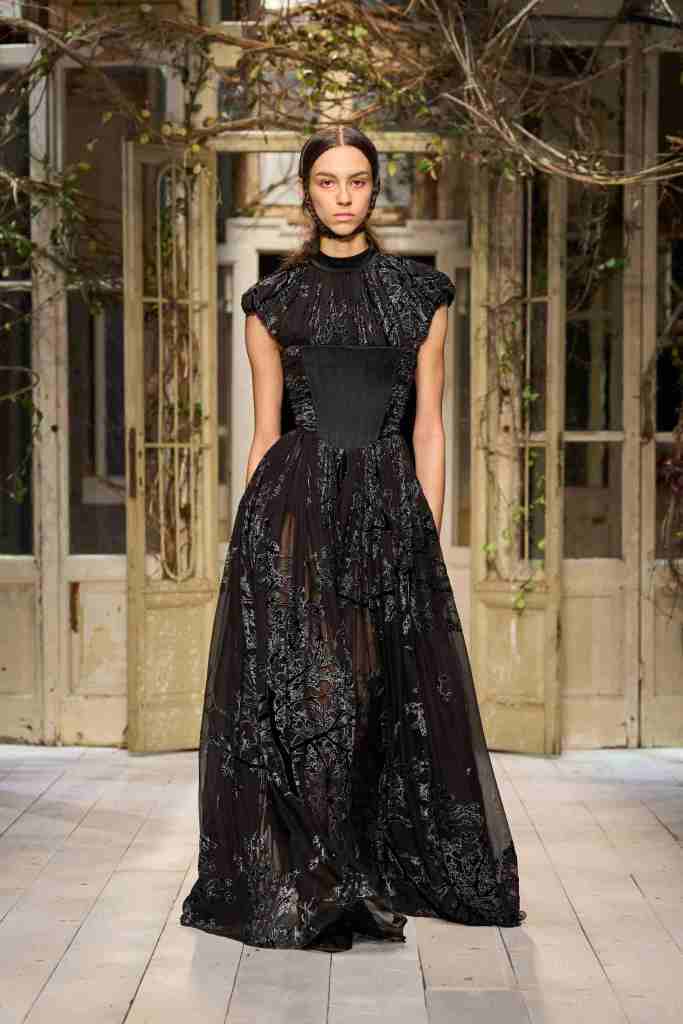

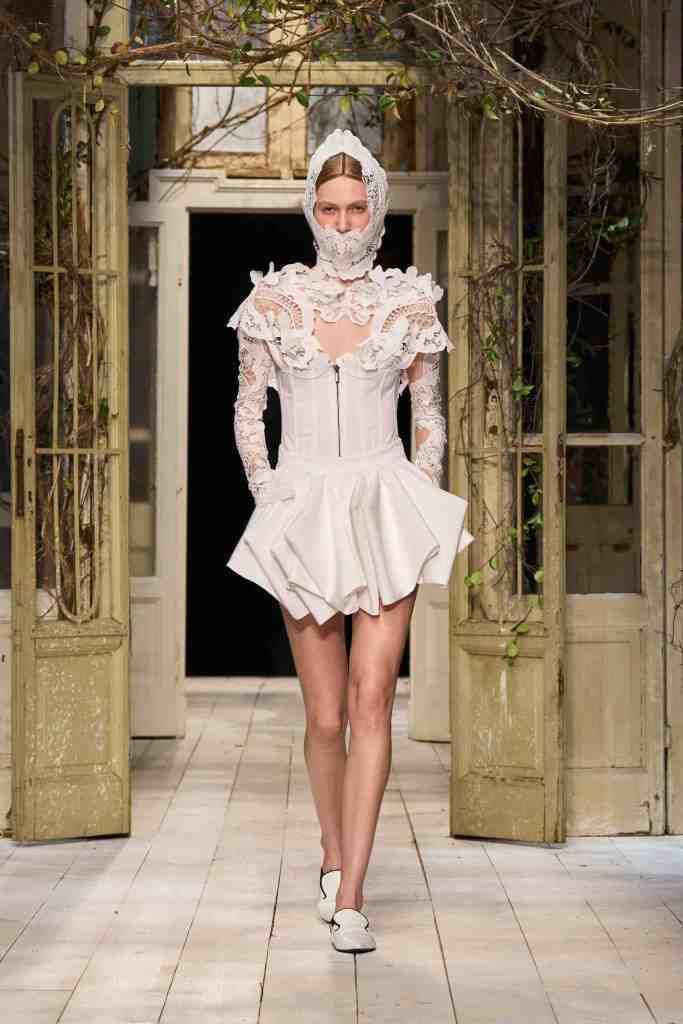

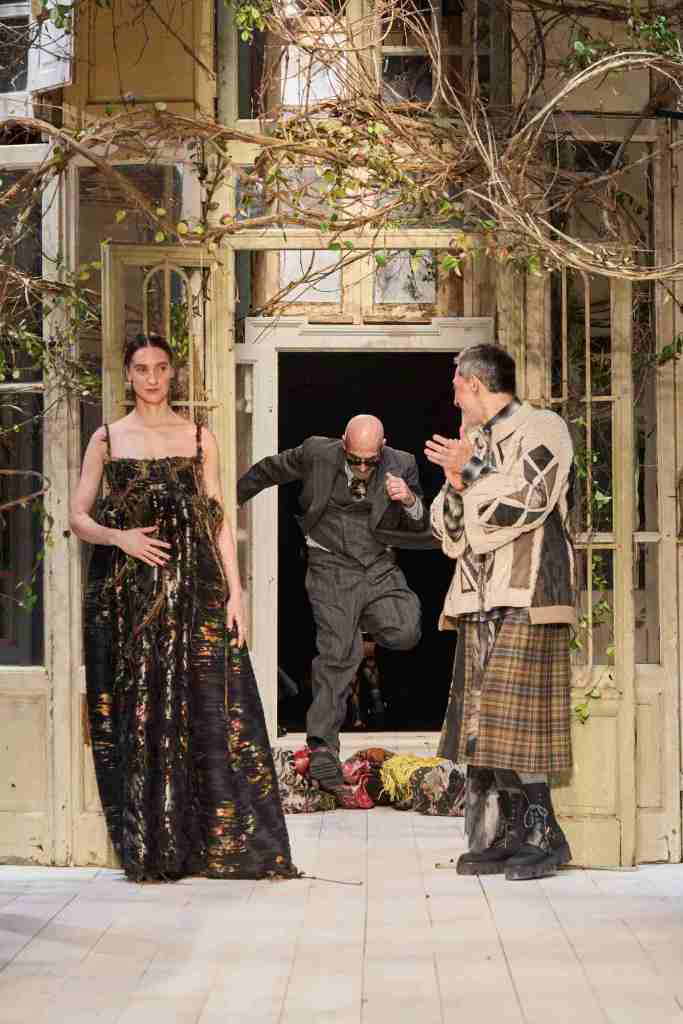
All images Antonio Marras FW24 by Antonio Marras
PR Agency Errani Studio