Valentino Fall/Winter 2026 / FW26 at Palazzo Barberini Rome
The Baroque palace of Palazzo Barberini can be read as an architectural space defined by tension rather than harmony. Behind its symmetrical façade lies a constant friction between stability and movement, echoing the philosophical opposition described by Friedrich Nietzsche between the Apollonian (order, clarity, and hierarchy) and the Dionysian—ecstasy, fluidity, and the dissolution of boundaries. The building appears composed and rational, yet within it unfolds a dynamic interplay of forces that resist a single, unified interpretation.
This tension becomes evident in the palace’s interior, particularly in the Great Hall where Pietro da Cortona painted the monumental ceiling fresco The Triumph of Divine Providence. The illusionistic painting seems to tear open the ceiling, dissolving the rigid geometry of the architecture into a swirling sky filled with movement and light. In this moment, the ordered structure of the building confronts a pictorial force that expands beyond its limits, embodying what Georg Simmel described as life exceeding the form that attempts to contain it.
The palace’s internal contradictions are further embodied in the architectural dialogue between Gian Lorenzo Bernini and Francesco Borromini, both of whom designed staircases within the same building. Bernini’s staircase expresses clarity and hierarchy through monumental scale and linear movement, guiding the body along a stable and predictable path. Borromini’s elliptical staircase, however, introduces instability through curved geometry and shifting spatial perception, forcing the body to continuously renegotiate its orientation. Together they reveal the palace not as a harmonious unity, but as a field of competing spatial ideas.
This dialectic between order and instability resonates strongly with contemporary fashion. Like architecture, clothing structures space around the body and mediates the relationship between discipline and desire, conformity and individuality. Fashion theorists such as Walter Benjamin and Bradley Quinn have noted that garments function similarly to architecture: they shape identity and organize how bodies appear and move within social space. In both fields, meaning emerges not from perfect harmony but from the coexistence of opposing forces.
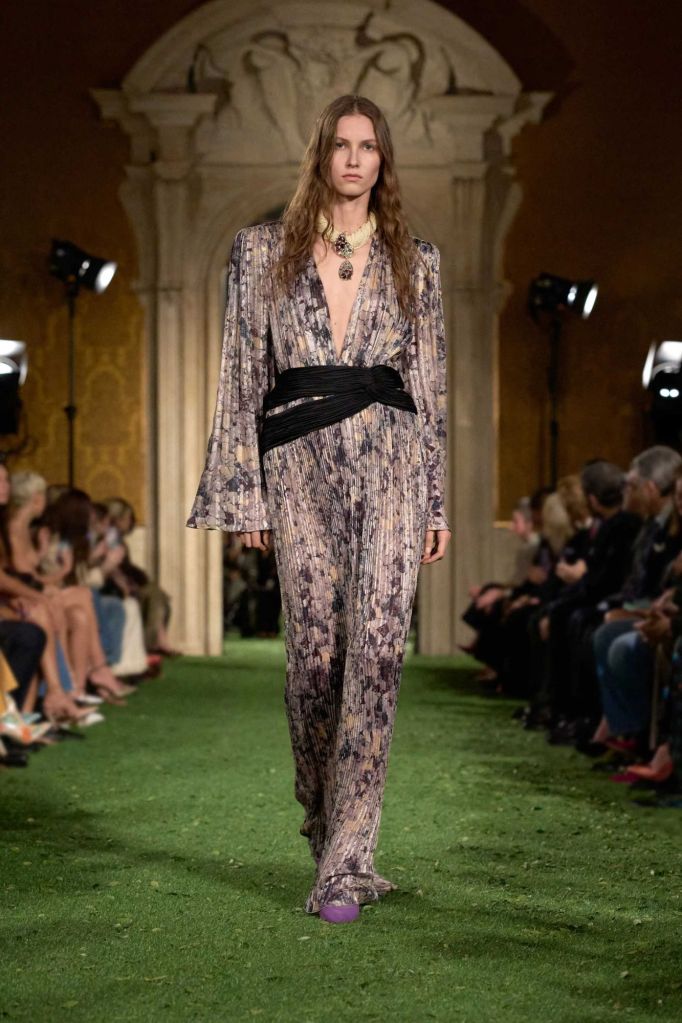
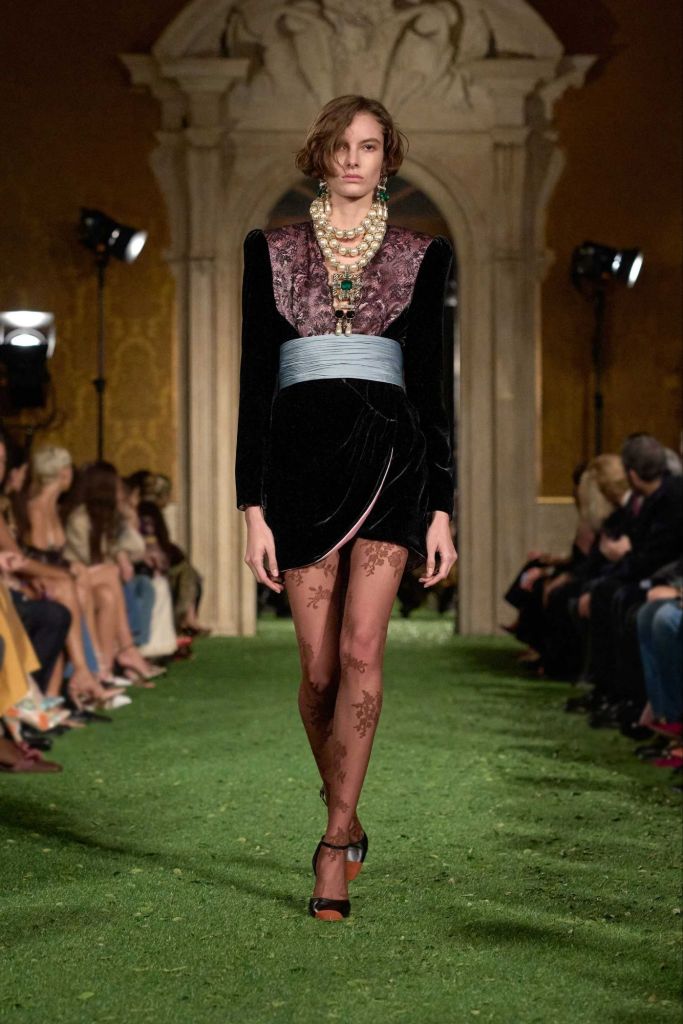
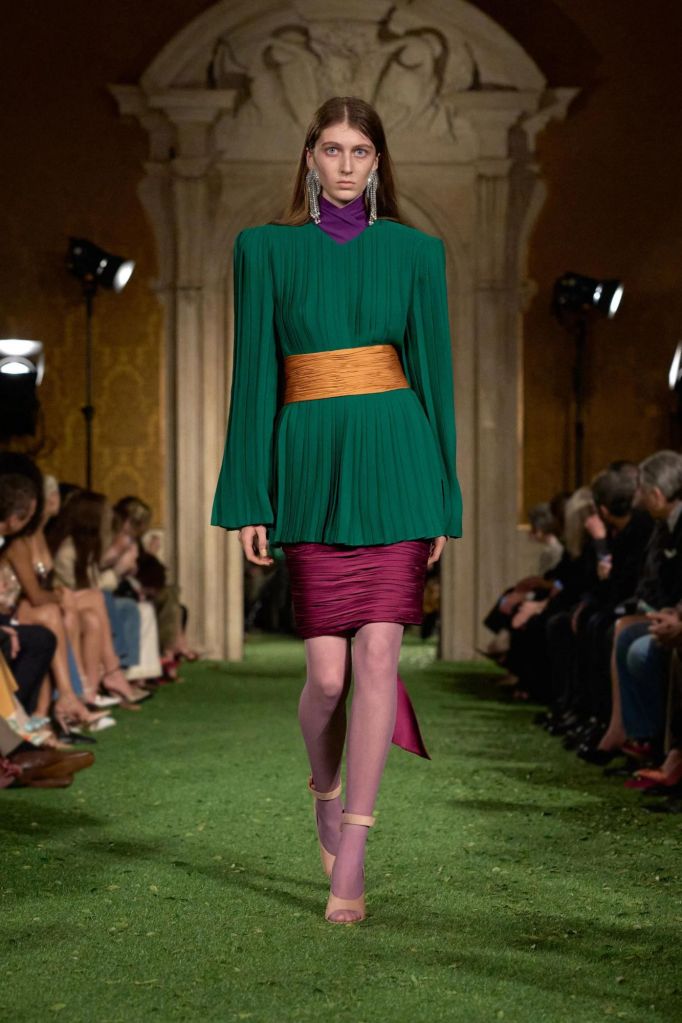
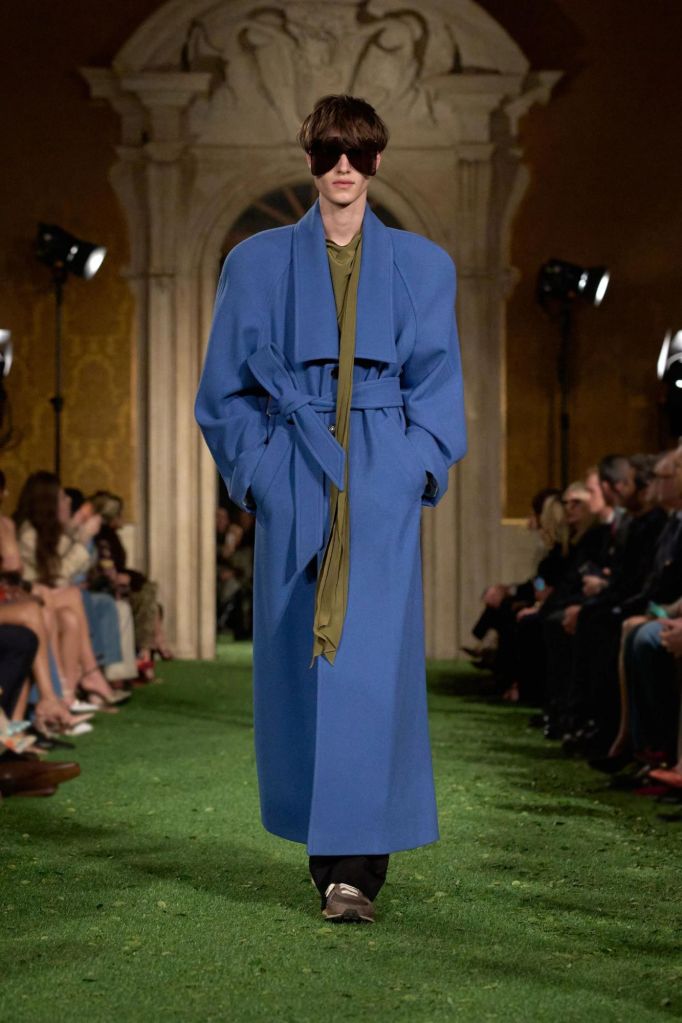
These ideas formed the conceptual foundation for Valentino FW26 / Fall/Winter 2026 – 2027 collection “Interferenze” by Alessandro Michele for Valentino, presented inside Palazzo Barberini in March 2026. The show marked a symbolic return to Rome for the house founded by Valentino Garavani, emphasizing the deep historical connection between the brand and the city. Michele’s collection explored theatrical maximalism through sculptural silhouettes, dramatic textures, and a palette of jewel tones and earthy colors, creating garments that oscillated between historical reference and contemporary experimentation.
Valentino FW26 / Fall/Winter 2026 runway presentation transformed the palace into an active participant in the show rather than a mere backdrop. Flowing dresses, fur-trimmed garments, sheer lace tights, and reinterpreted formal elements—such as the unexpected use of the cummerbund as a central accessory—created a visual dialogue between structure and excess. In this setting, the models moved through a space already charged with architectural contradictions, reinforcing the theme of interference between order and deviation. The result was a collection that mirrored the palace itself: an unstable equilibrium where discipline and transgression coexist, generating new meanings at the intersection of stone, body, and fabric.










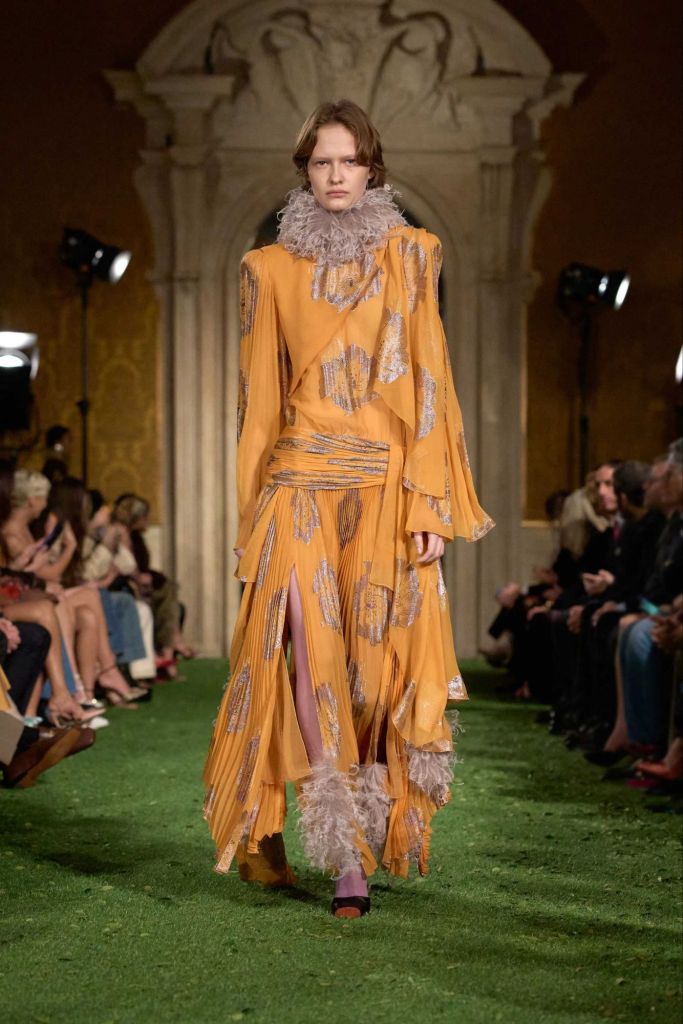
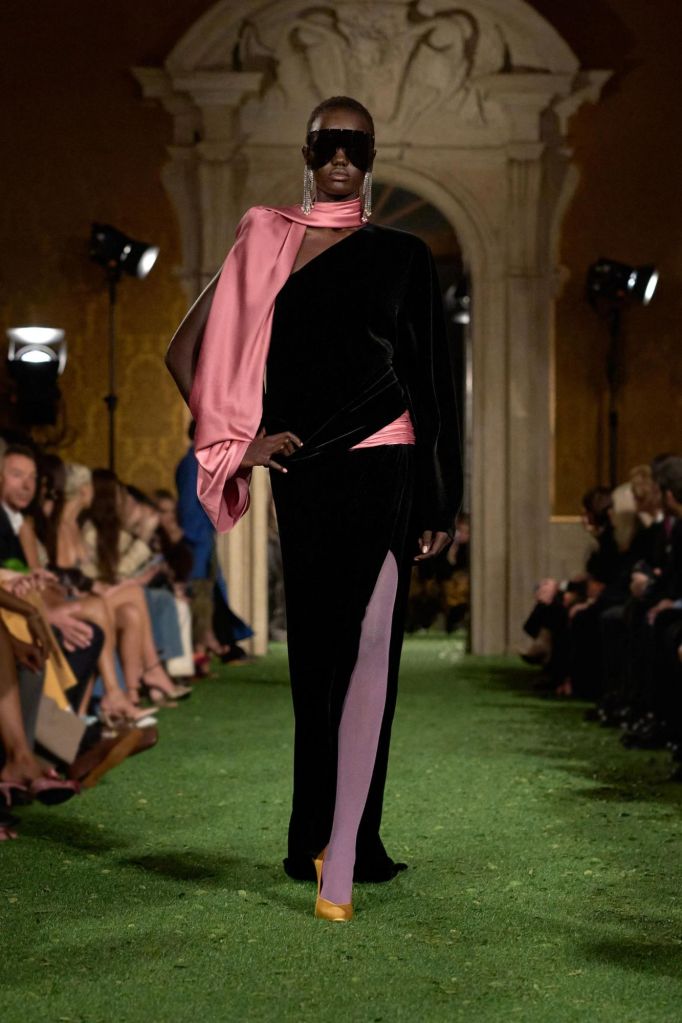


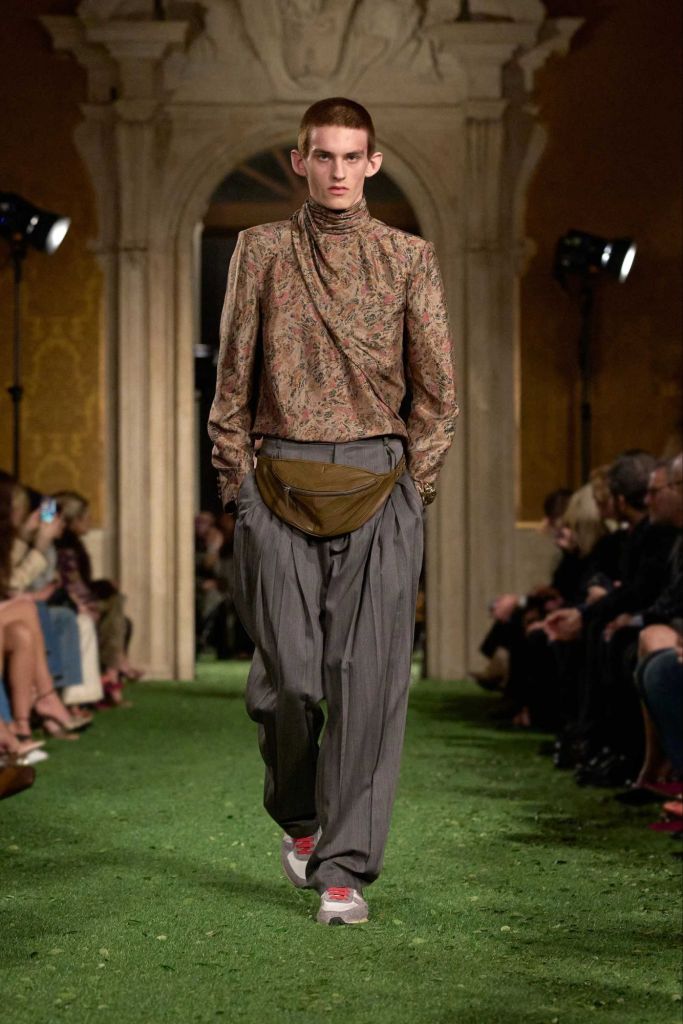


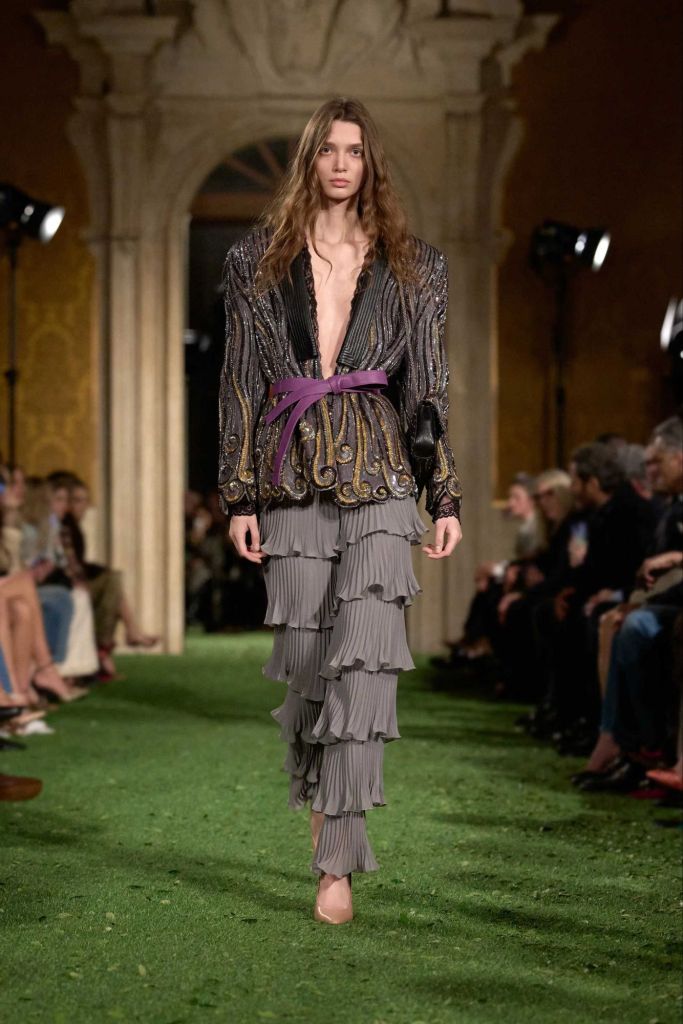


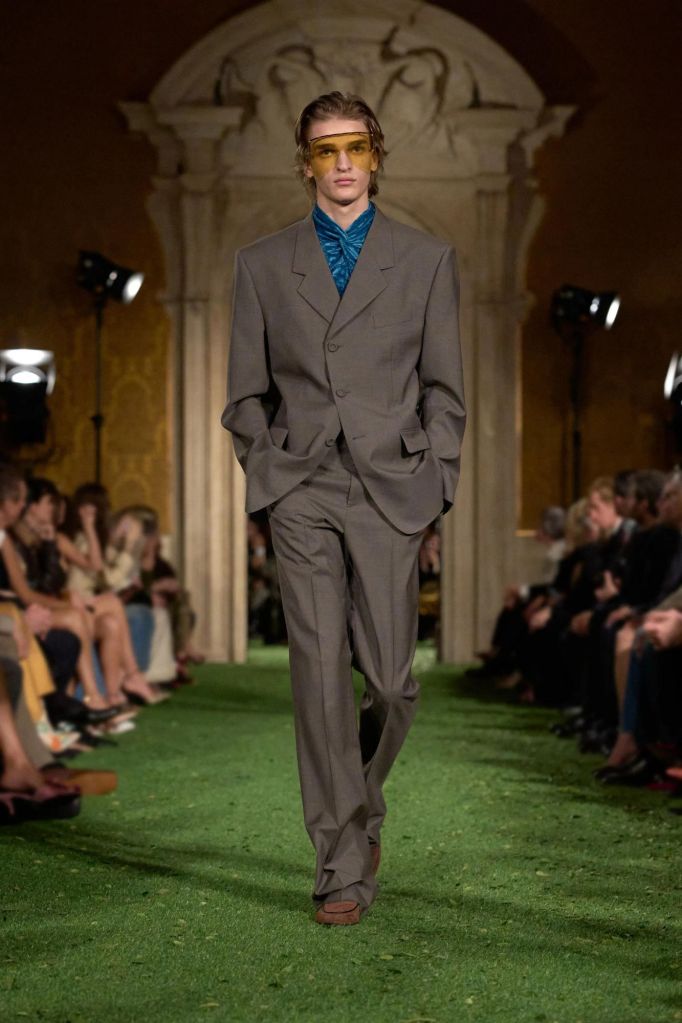

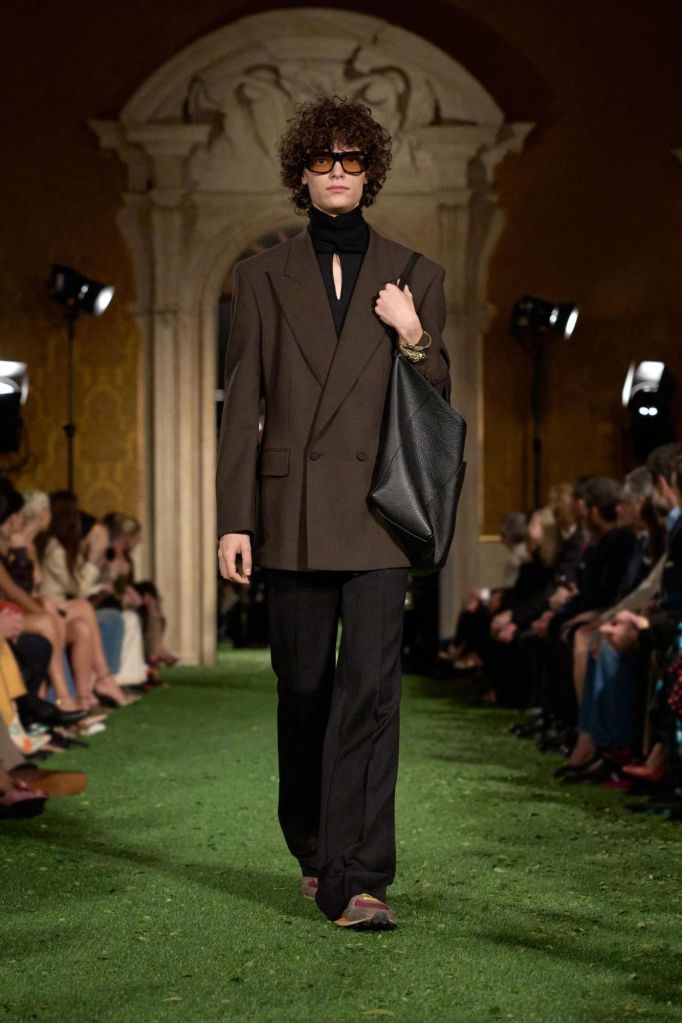

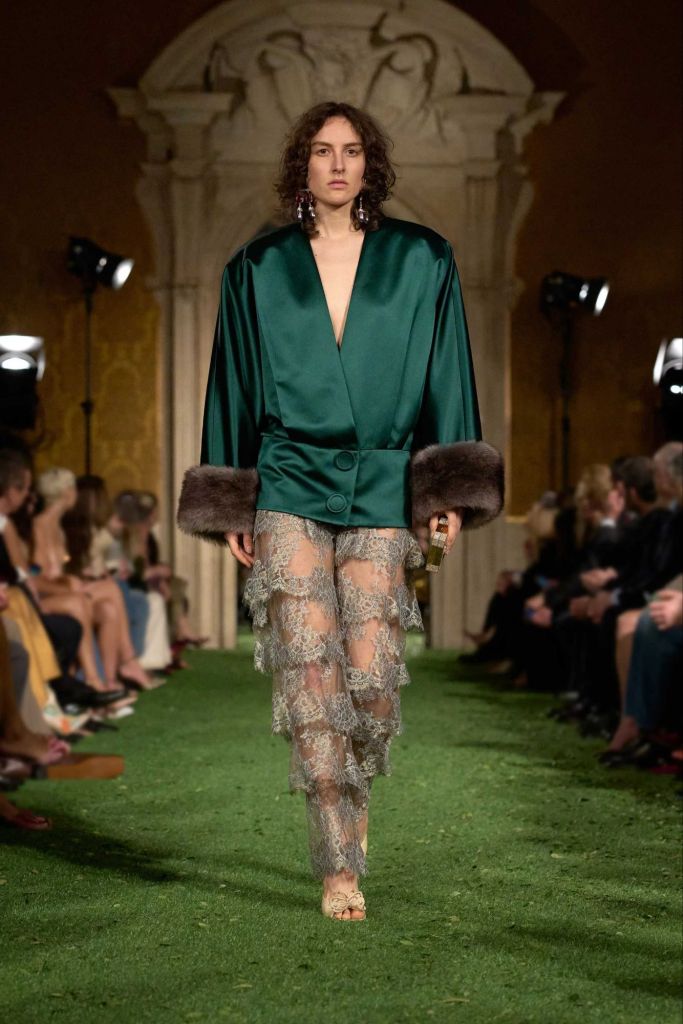


All images Valentino FW26 / Fall/Winter 2026 by the brand.