Jean Paul Gaultier Haute Couture Fall/Winter 2026-2027 / FW26 at Paris Haute Couture Week
Jean Paul Gaultier Haute Couture FW26 / Fall/Winter 2026-2027 explanation:
TECH COUTURE. This first Couture collection by Duran Lantink for Jean Paul Gaultier is built on a dialogue between the haute couture craftsmanship, the tradition of historical forms, and their reinterpretation through new technologies.
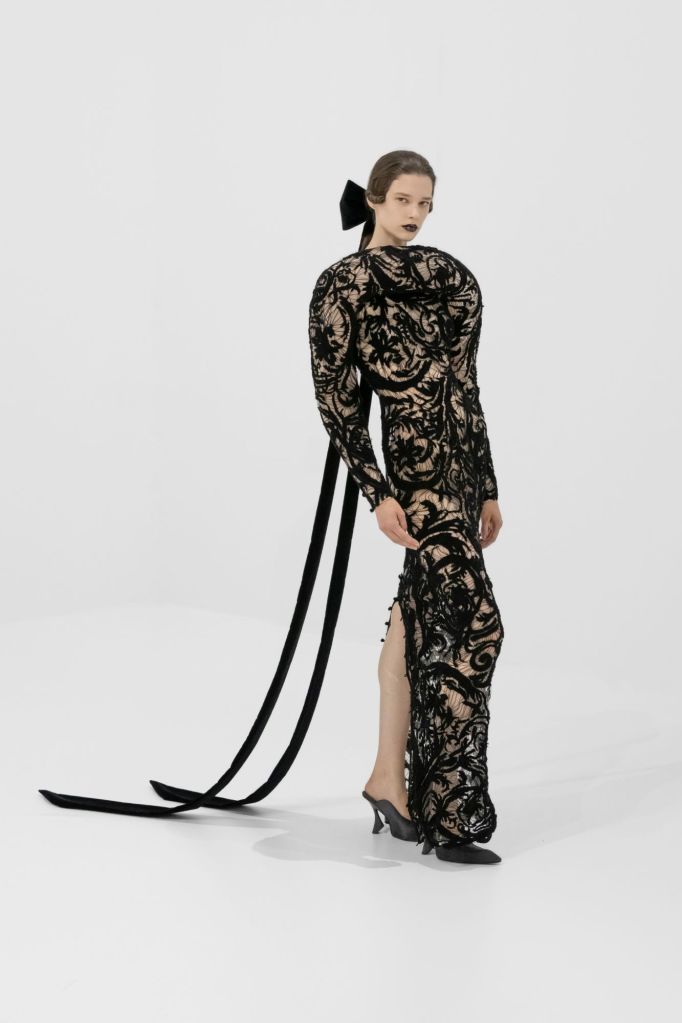
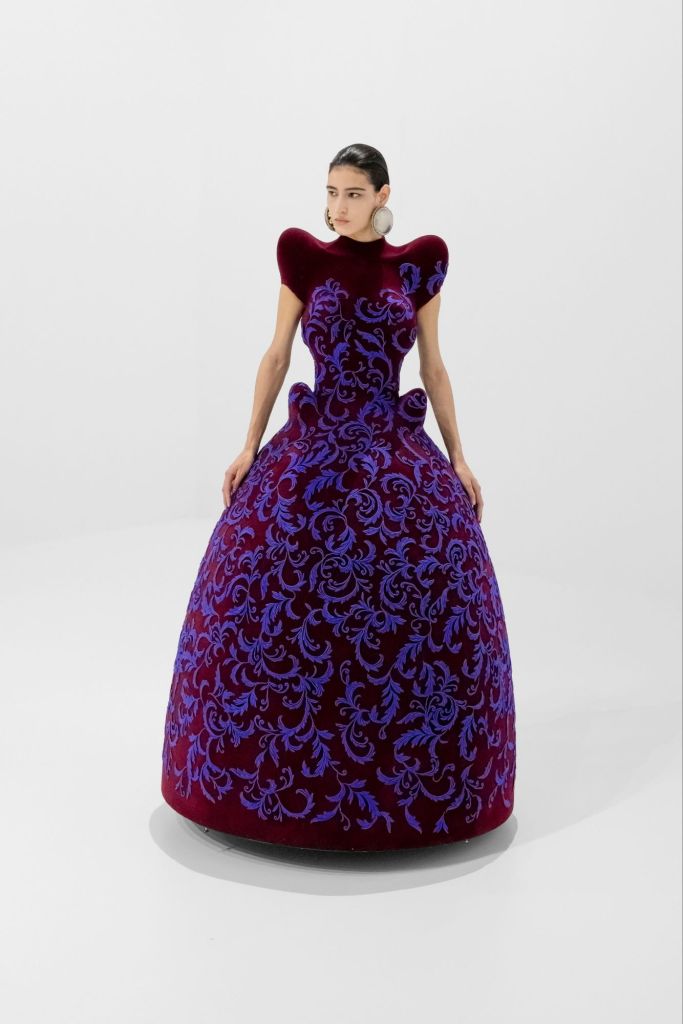
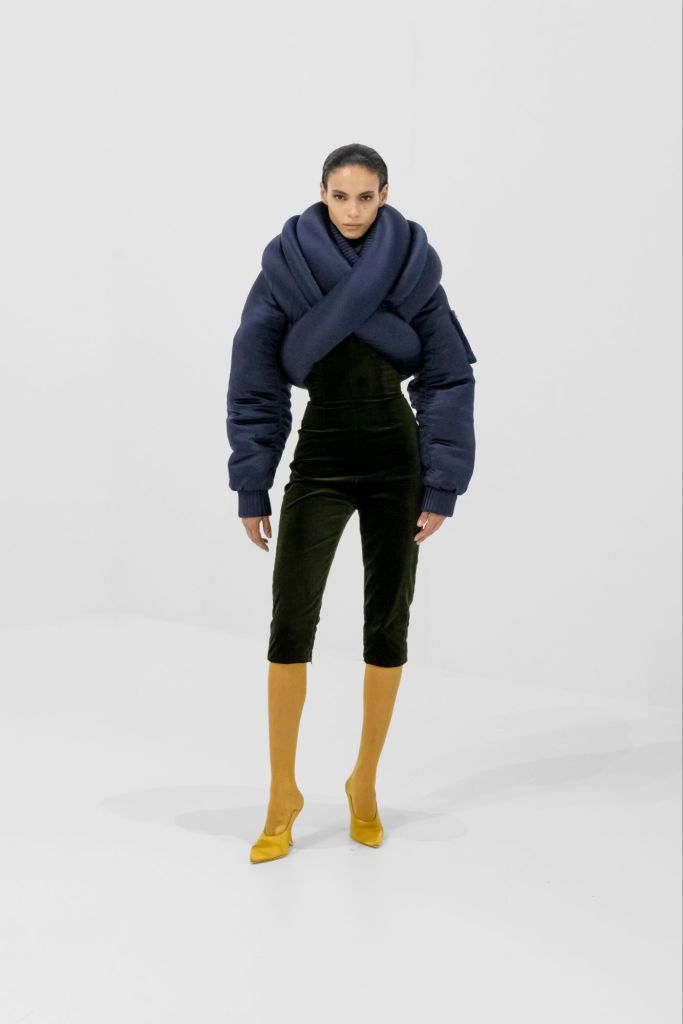
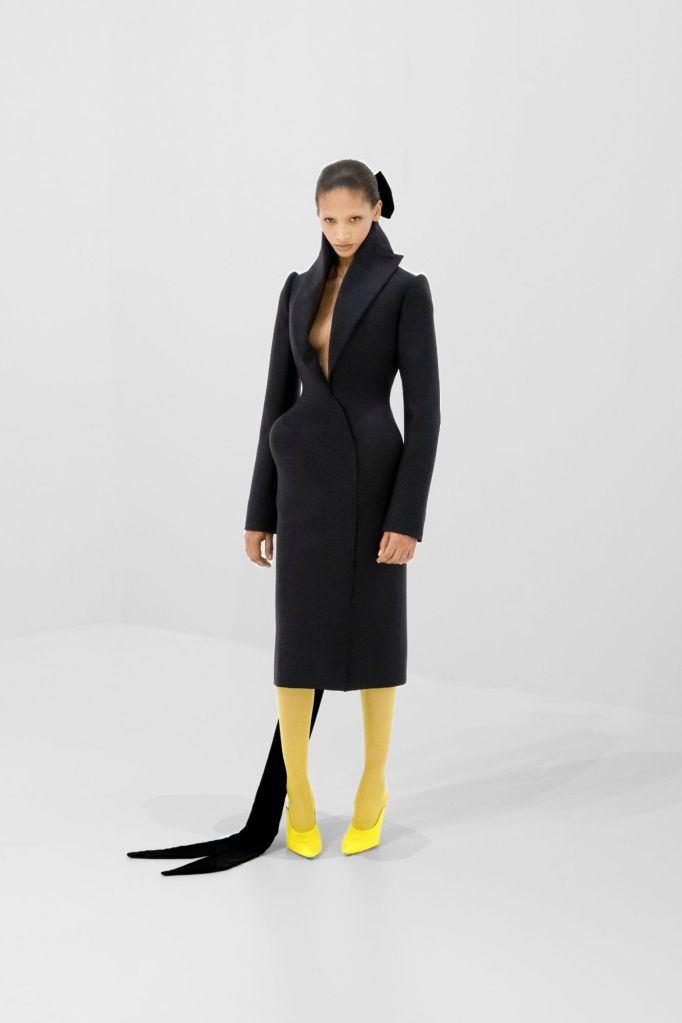
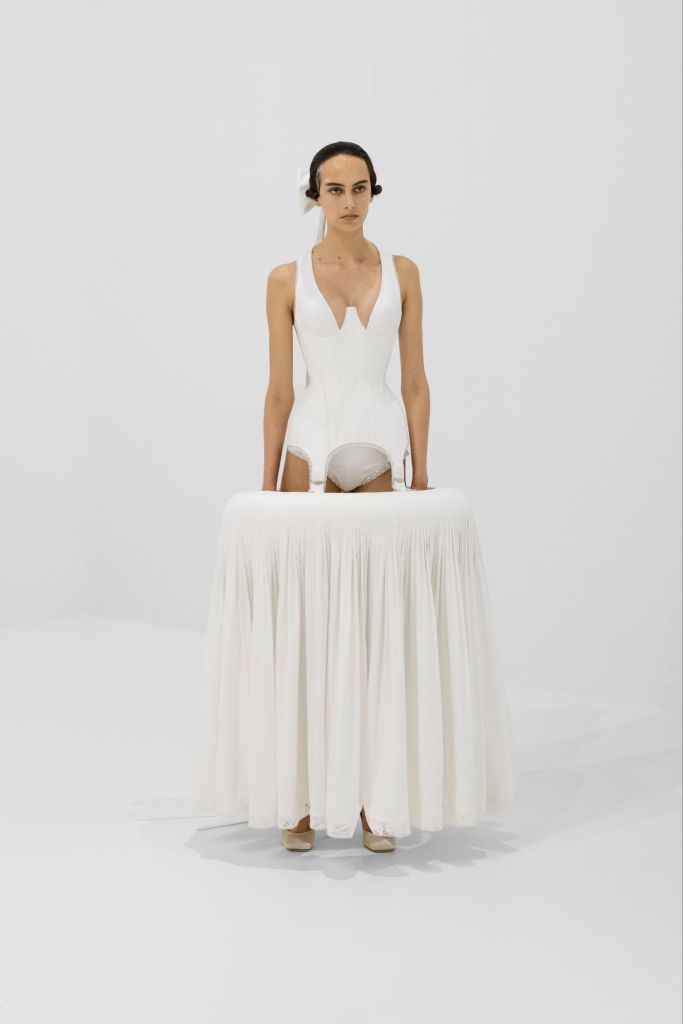
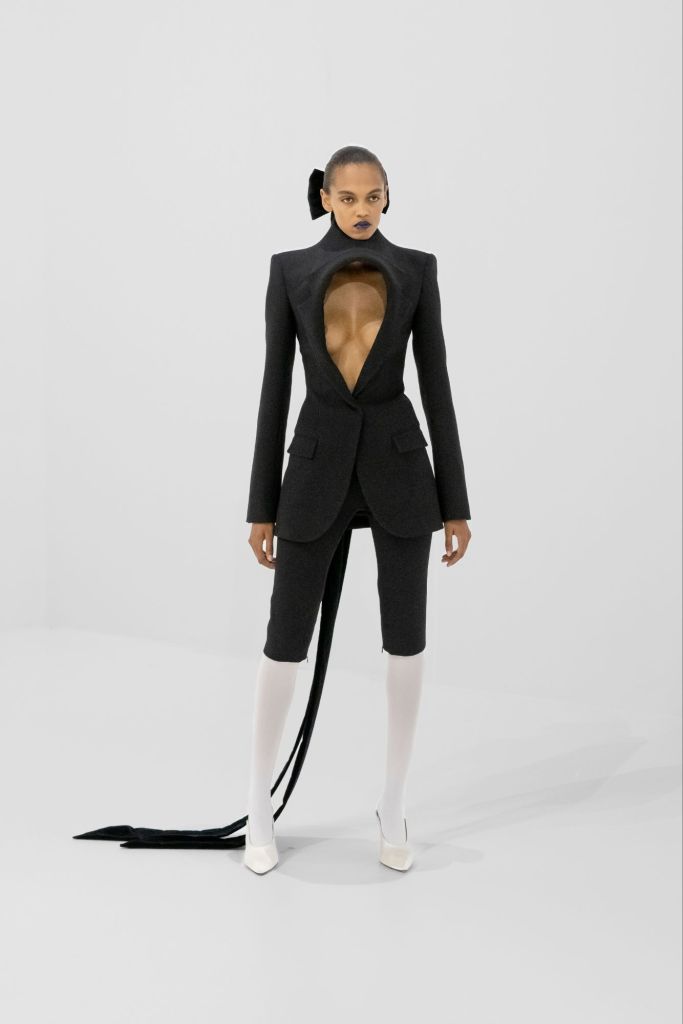
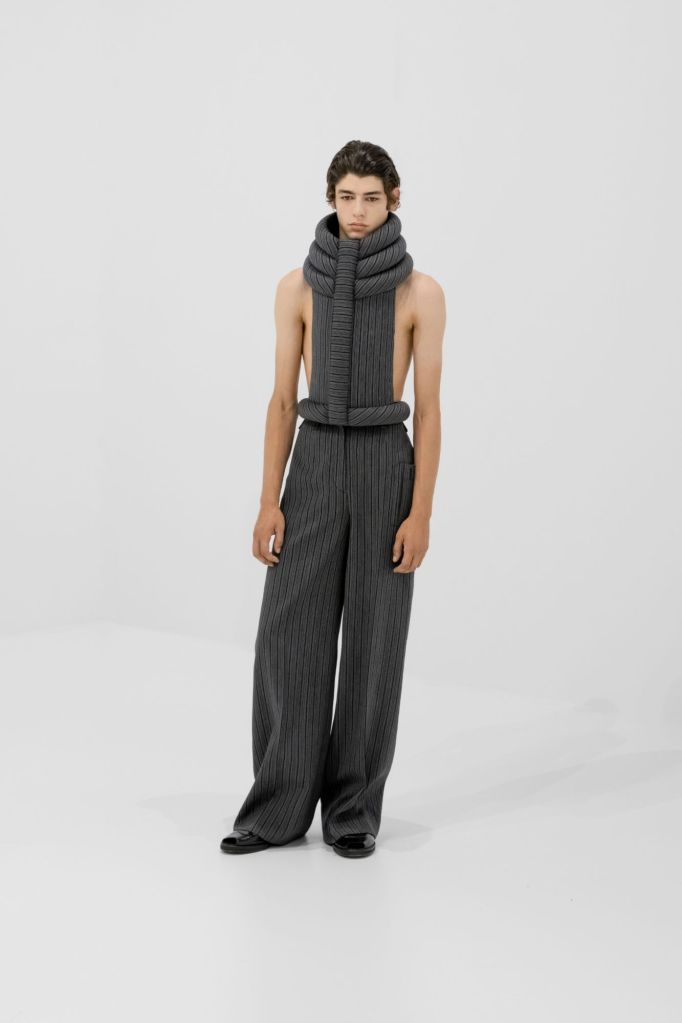
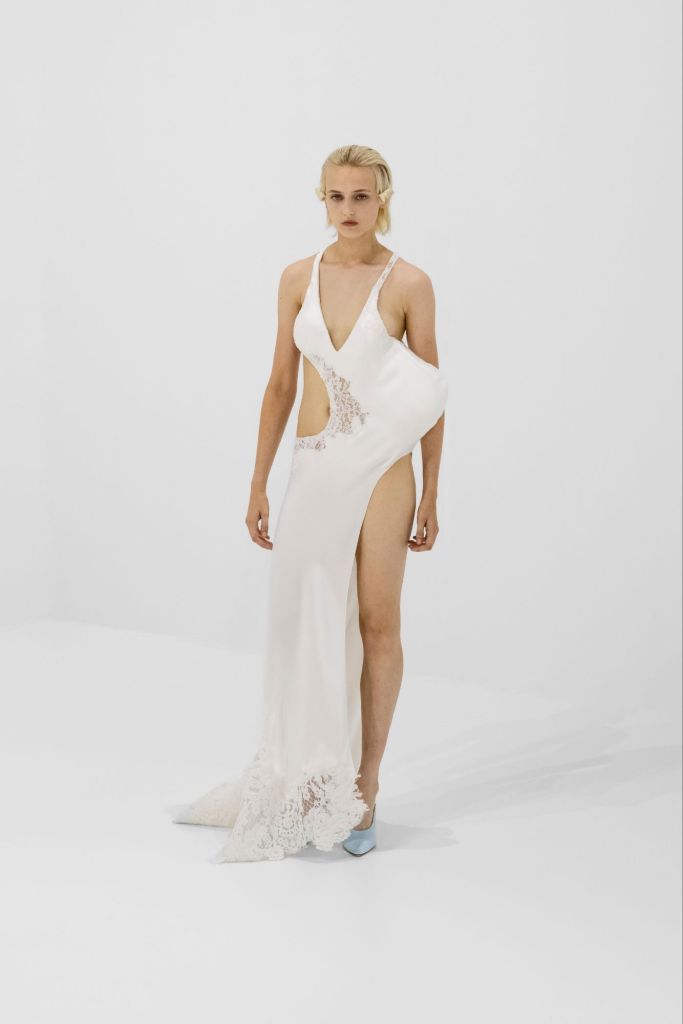
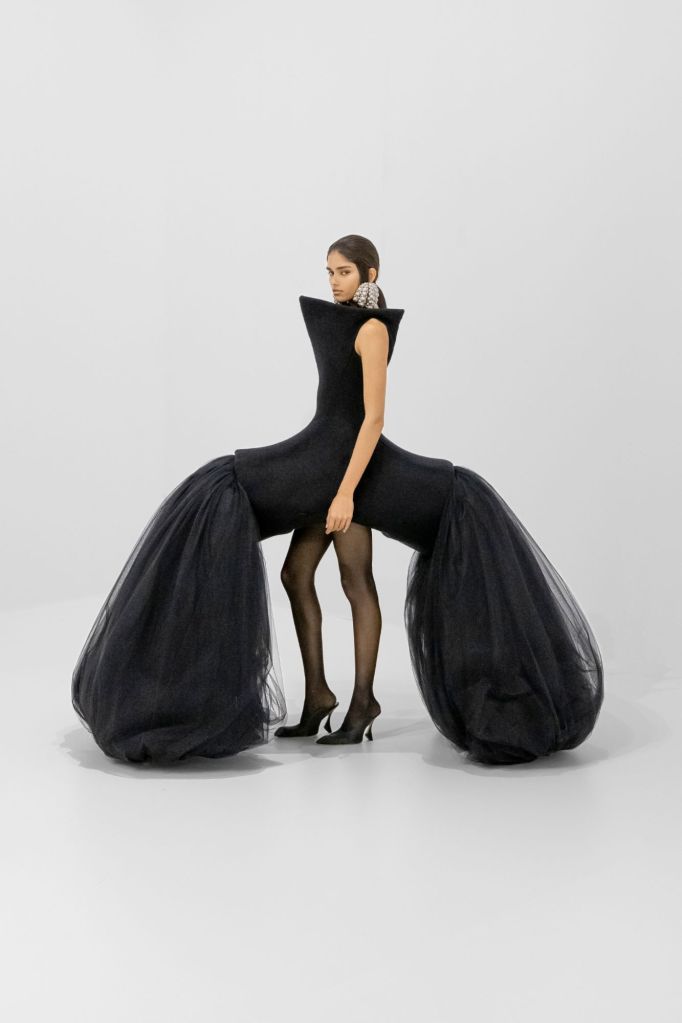
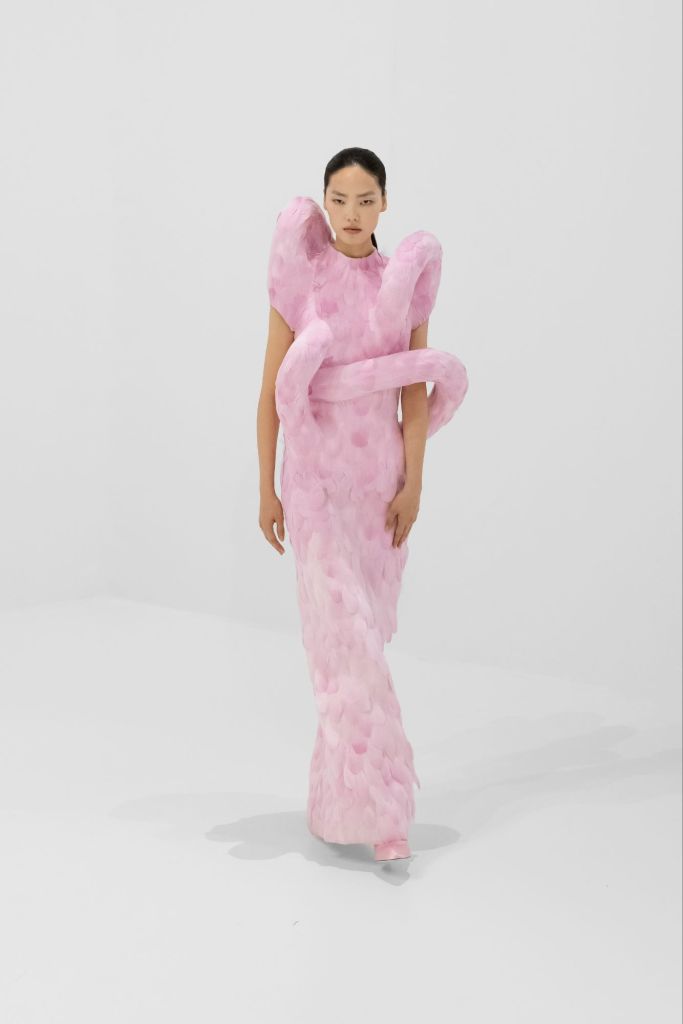
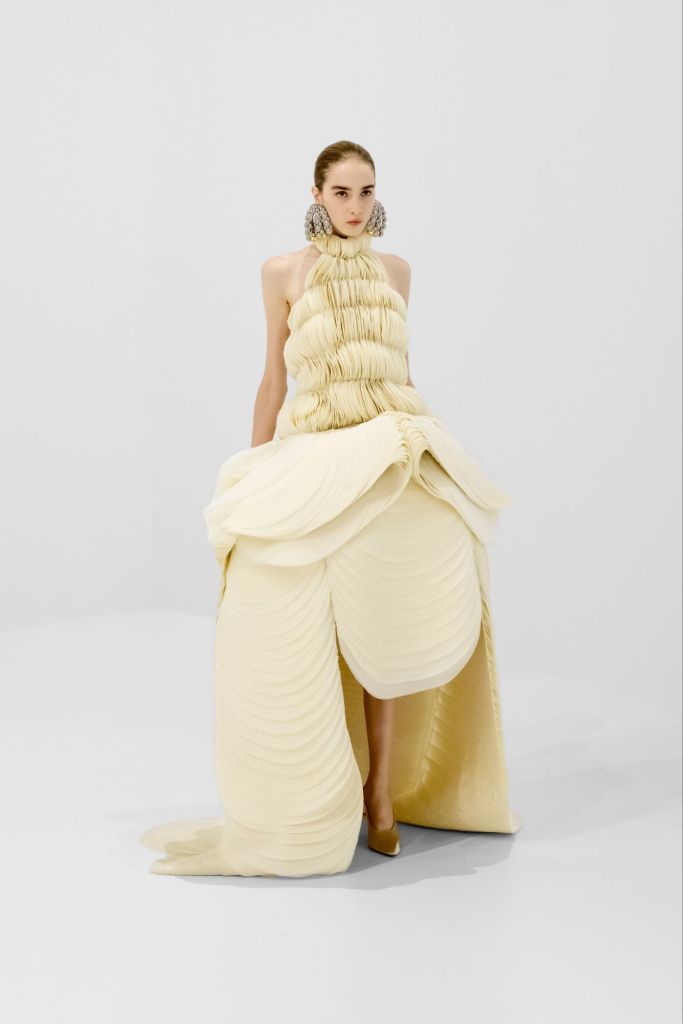
PERFORMANCE-DRIVEN FORMS. True exoskeletons form the structural framework of Jean Paul Gaultier Haute Couture FW26 / Fall/Winter 2026-2027 collection thanks to material innovation: flexible TPU (thermoplastic polyurethane) and PA12 (thermoplastic polyamide), both 3D-printed. Some pieces amplify the natural shoulder line into almost steroidal volumes, while others, such as collars and necklines projected forward, morph into sculptural décolletés. Trains break free of historical references altogether: bustles mutate into wasp-like tails, while crinolines become conduits from which cascades of tulle emerge at different points across the body. Through a play of corsetry and padding, growths and anatomical exaggerations continue to shape – and even distort – both feminine and masculine silhouettes.
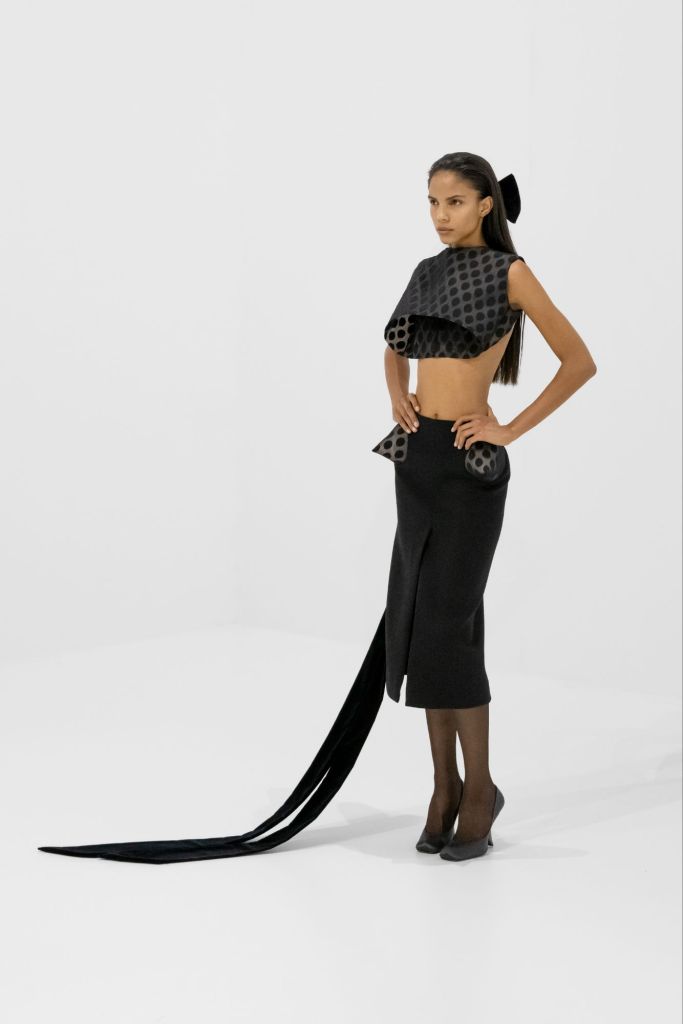
“I prefer to interrogate the silhouette rather than the body”, explains Duran Lantink. “I want to challenge the garment itself, to push it to the very limits of its sculptural potential.” Whether viewed in profile, from three-quarter angles, or from behind, multiple view-points take on an importance rarely seen. These sculptural silhouettes resist the photographic lens, which cannot reduce them to a simple frontal image: they invite the audience to discover the full power of their three-dimensionality.
EIGHTEENTH-CENTURY FANTASY. The figure of Marie Antoinette subtly permeates the collection through its details and silhouettes. Prints remain deliberately rare, allowing form to take center stage. Yet several motifs draw directly from the interiors of the Château de Versailles: a dress adorned with rinceaux recalls Marie-Antoinette’s Cabinet Doré, while another ensemble embroidered with floral bouquets inspired by the Queen’s bedchamber hangings, is executed using the sablé technique, a delicate scattering of microbeads favored during the eighteenth century. Capri trousers reference the knee breeches of the habit à la française, while the suivez-moi-jeune-homme ribbons tied into the hair extend the movement of silhouettes like the lingering trail of a court procession. Developed from the Autumn-Winter 2026–27 ready-to-wear collection, pumps and profiled mules are predominantly covered in satin, in hues inspired by the Siècle des Lumières. Their pied-de-chèvre heels echo the modelling of the silhouettes, while their proportions create the illusion that the foot is slightly larger than the shoe itself.
Above all, however, it is the echoes of court dress that matter most. Monumental in scale, these garments now appear uncomfortable, impractical, even dysfunctional. “Precisely,” confides the designer. “It is this dysfunction that I wanted to explore. Today, the absence of practicality feels almost absurd. Yet it allows me to place the search for form at the very heart of my creative process.”
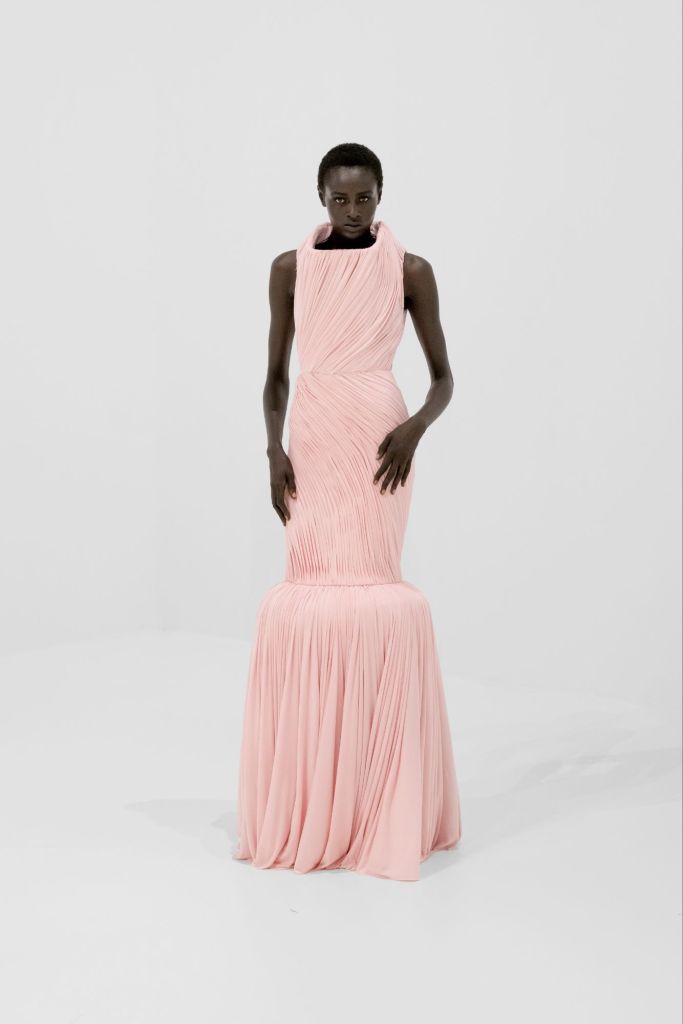
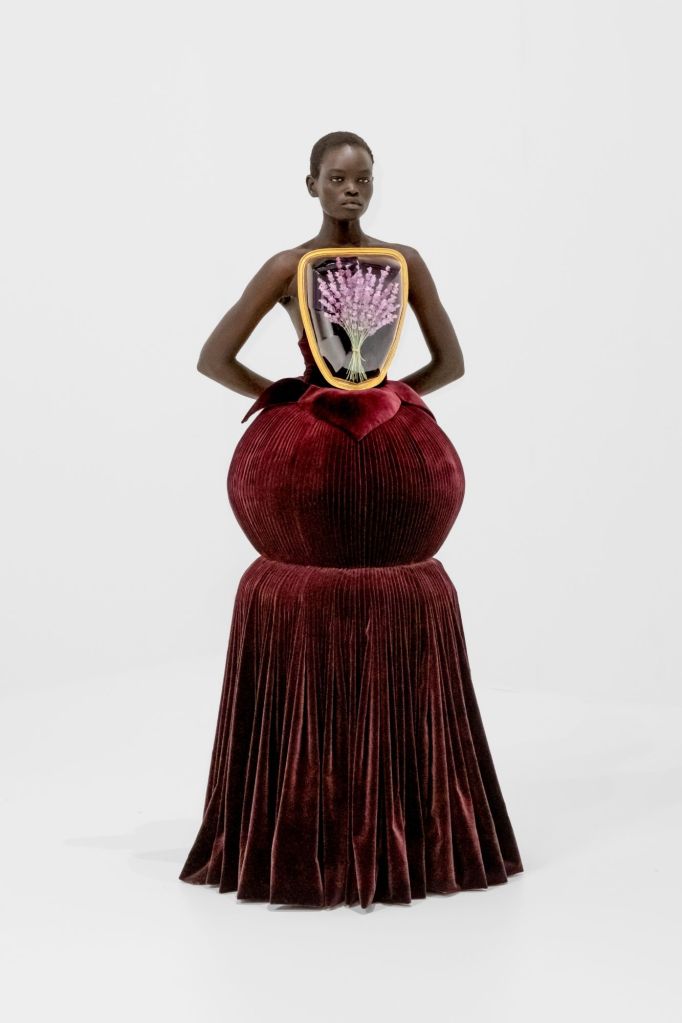
DOMINANT COLOURS. Burgundy serves as the starting point for many of the looks. A recurring shade throughout Jean Paul Gaultier’s history, it appears across a variety of materials and techniques… Around it unfolds a palette chosen for its dialogue with this signature hue: intense Bleu de Roy, menthe fraîche green, vibrant flamant rose, alongside the softer shades of cuisse de nymphe and cuisse de nymphe émue. Even their names, inherited from another era, evoke the imagined delicacy and lightness associated with Marie-Antoinette’s world.
GAULTIER HERITAGE REVISITED. Duran Lantink revisits the defining codes of the Jean Paul Gaultier wardrobe: the corset, the tailored jacket, Aran-knit textures, sculptural tailoring and tulle skirts… The House’s iconic cone bra is also reimagined. Freed from convention, the conical forms migrate across the body, transforming into sharp, thorn-like protrusions. Pushing this exercise even further, the designer draws directly from the House’s fabric archives. A striped wool cloth originally created for the Fall-Winter 2002–03 Haute Couture collection Les Hussardes finds a second life as a breastplate and tailored suit. Likewise, a long-forgotten biker jacket has been reconstructed into a patchwork piece and is returning to the runway in an entirely new form. Even Le Mâle, the House’s iconic fragrance, finds expression through a bouquet of white lavender displayed beneath the glass dome of an oversized medallion.
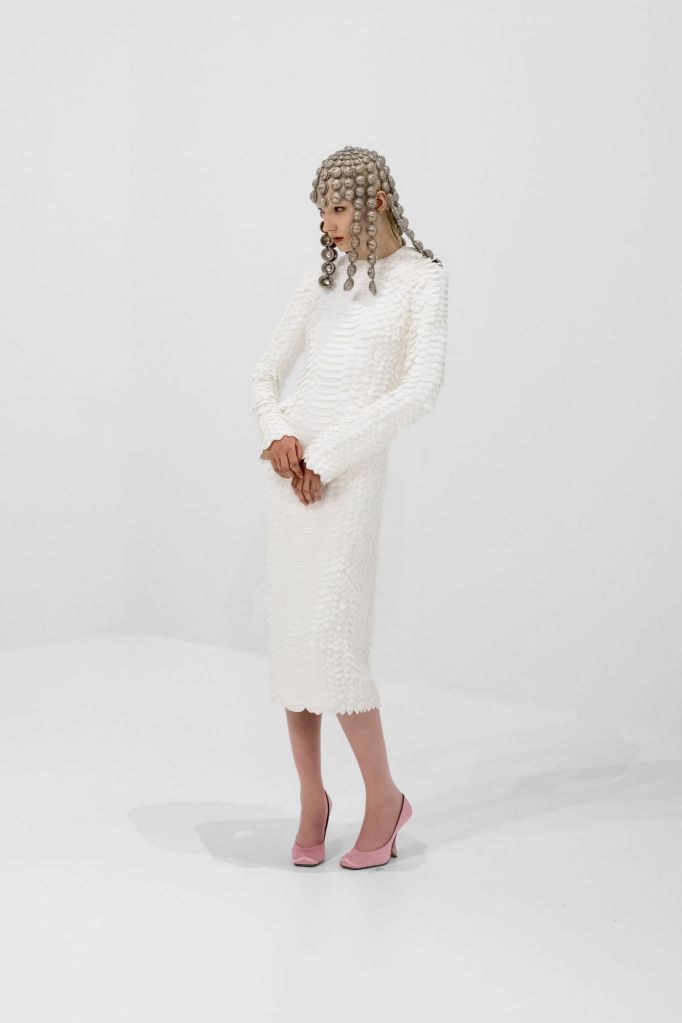
ZEELAND ORNAMENTS. The jewellery reflects Duran Lantink’s own Dutch heritage. Rendered in silver or gold-toned galvanized metal, the pieces are inspired by the Zeeuwse Knopen, the filigreed buttons traditionally worn with Zeeland costume. Enlarged and layered in abundance, they sometimes adorn the hair, protecting it like a suit of armour.
A DIALOG WITH CRAFTSPEOPLE AND THE ATELIERS. Duran Lantink draws upon the exceptional expertise of the Jean Paul Gaultier ateliers, supported by exceptional artisans: “For the first time, I have the opportunity to work with couture specialists, each bringing their own unique expertise,” says the designer. “I see this collection as a laboratory for experimentation. We are getting to know one another, but a mutual understanding is emerging. ” Collection after collection, this dialogue will serve the pursuit of form, in the spirit of the great eras of twentieth-century haute couture, when innovation in cut, materials, and technique lay at the very heart of creation. “Haute couture belongs to the realm of fantasy, and this coming together of experts is what makes it possible. It allows the impossible to become possible.” concludes Duran Lantink.












All images Jean Paul Gaultier Haute Couture FW26 / Fall/Winter 2026-2027 by the brand. PR Agency Lucien Pages Communication.