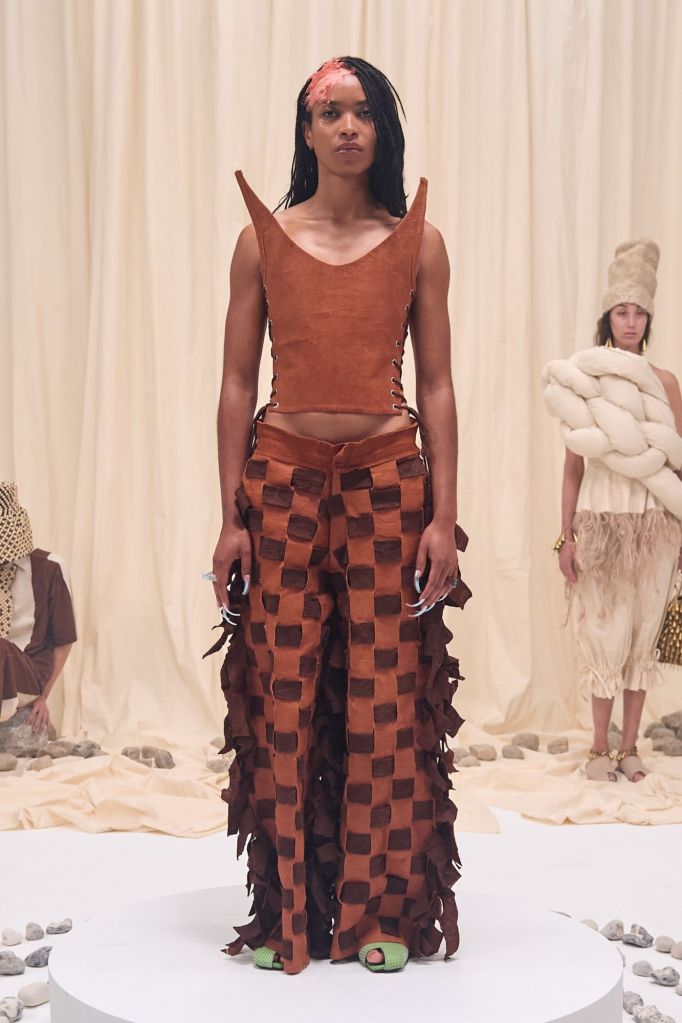
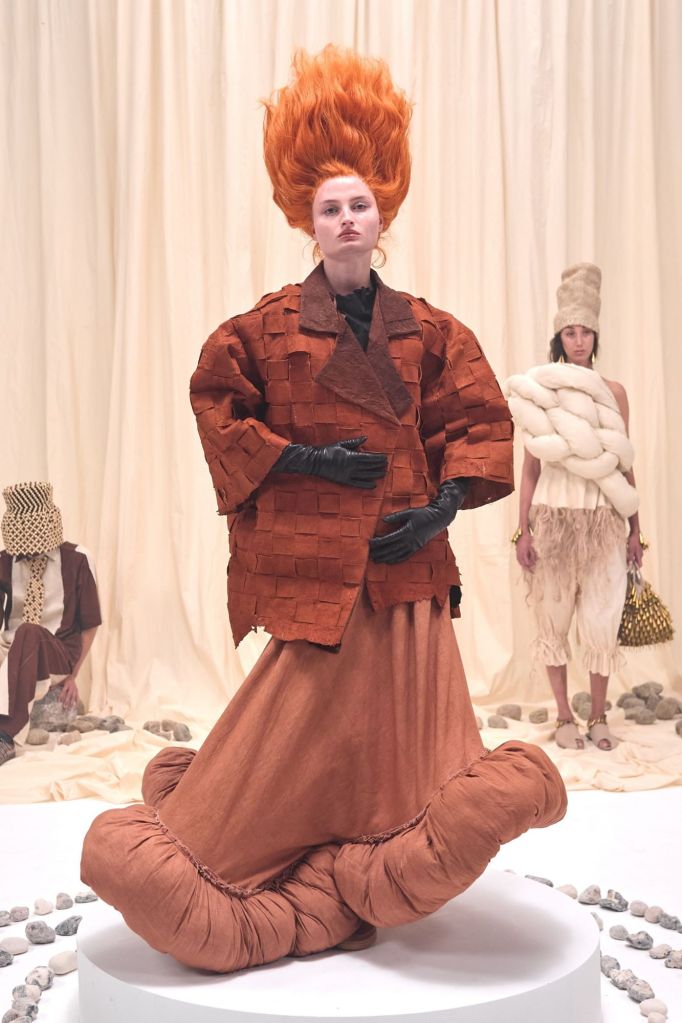
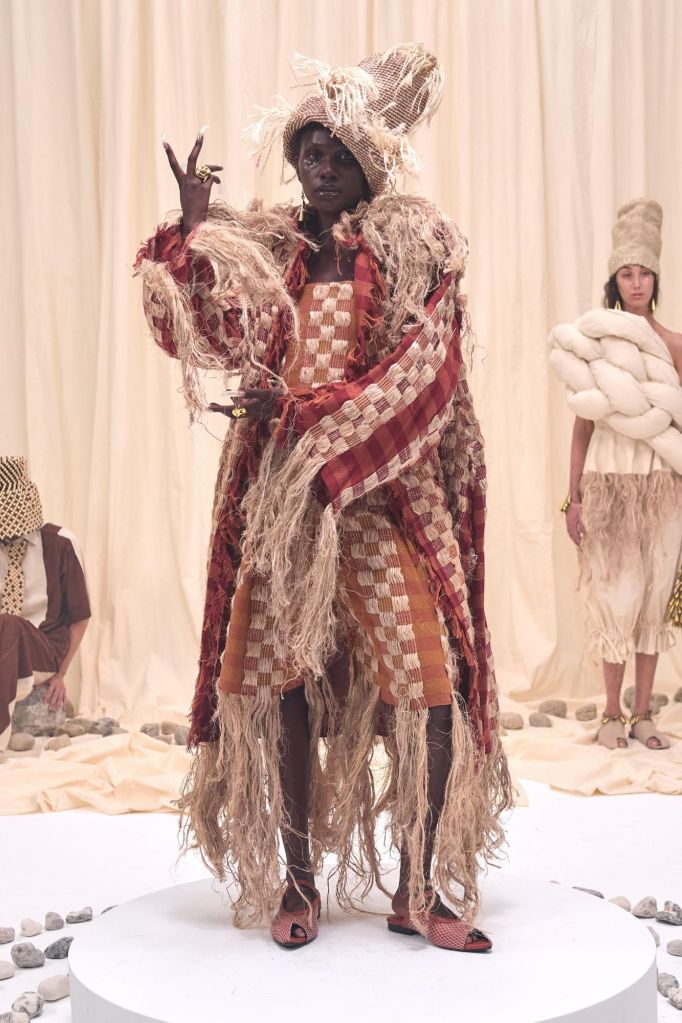
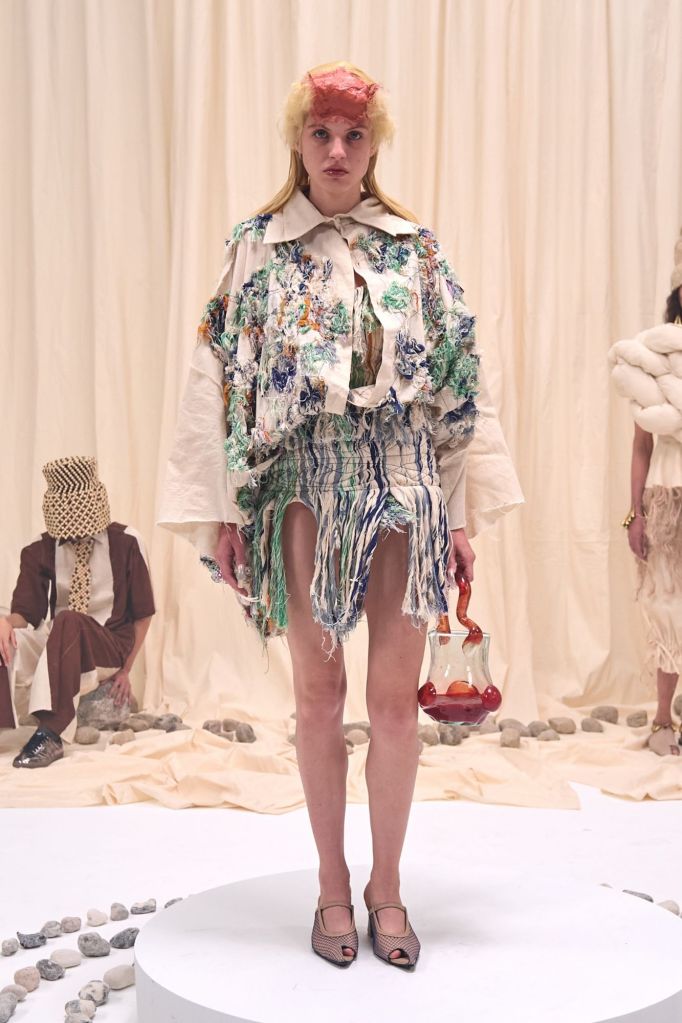
I.AM.ISIGO Spring/Summer 2027 / SS27 at Copenhagen Fashion Week entitled SACRED ECOLOGIES. A collection reinforcing an indigenous environmental design through the pedagogy of the wandering body.
COPENHAGEN, [6th August 2026] —I.AM.ISIGO (Iamisigo) SS27 / Spring/Summer 2027 collection, Sacred Ecologies, extends designer Bubu Ogisi’s ongoing inquiry into cloth as a living record and body as a site of transfiguration. Where past seasons have traced ancestral textile knowledge across the continent, this collection turns that knowledge political: the point at which material leaves the historic and moves towards the symbolic. Sacred Ecologies focuses on aesthetics in African environmental craftsmanship, exploring how the body stands in relation to land through an indigenous ecological consciousness, where socially transformative hand-work interweaves with the imagination that shapes it.
Aesthetics, here, is the means of assertion. This focus not only distances African ecocriticism from Western strands by rejecting the universalization of ecocritical concerns, it underlines the power of the symbolic and claims the ground for an imagination that was never dependent on Western terms. The principal reference point is Ngũgĩ wa Thiong’o’s novel Wizard of the Crow, a founding text for any distinct form of African ecocriticism. Set in the satirised state of Aburĩria, the novel refuses the separation of environmental questions from political ones. Nature is a revolutionary vehicle rather than a refuge: what it proposes is an African-centric, indigenous reclamation of land, set directly against neocolonial power. Its ecology is collective rather than contemplative — an ecology in which, as the critic Ogaga Okuyade has written of African environmental literature, the defence of the environment and the struggle against colonial rule are the same fight.
The land in the novel is partitioned along the same lines as the people who live on it: mansion and shack, the field that thrives and the field that starves. Nothing there decays on its own. The desolation of the land is the desolation of the human spirit — inherited, arranged, and human in origin. In the novel a herbalist working from the margins of a satirised state holds a plant knowledge the government cannot administer, while a resistance movement operates through disguise, layering and shifting appearance. Both are knowledge systems that never passed through writing, held in bodies whether human or object.
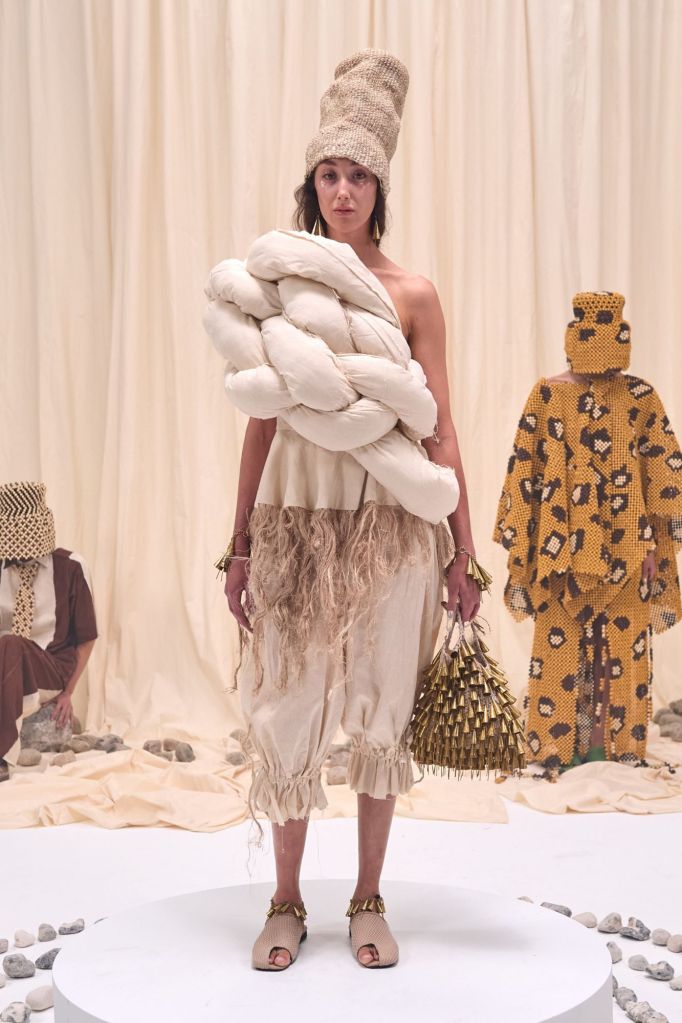
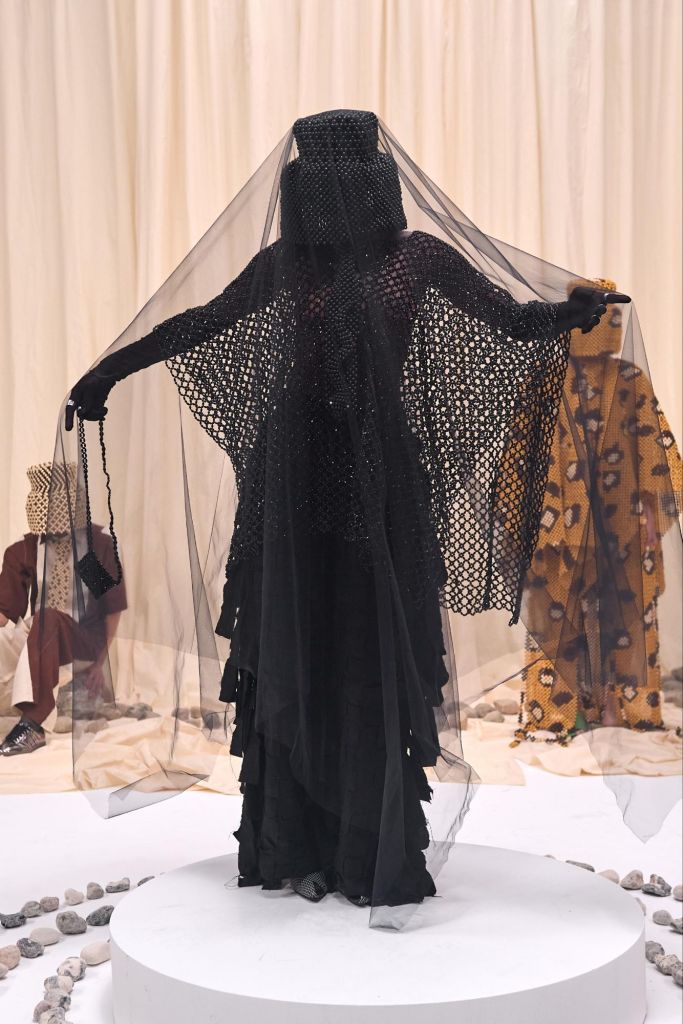
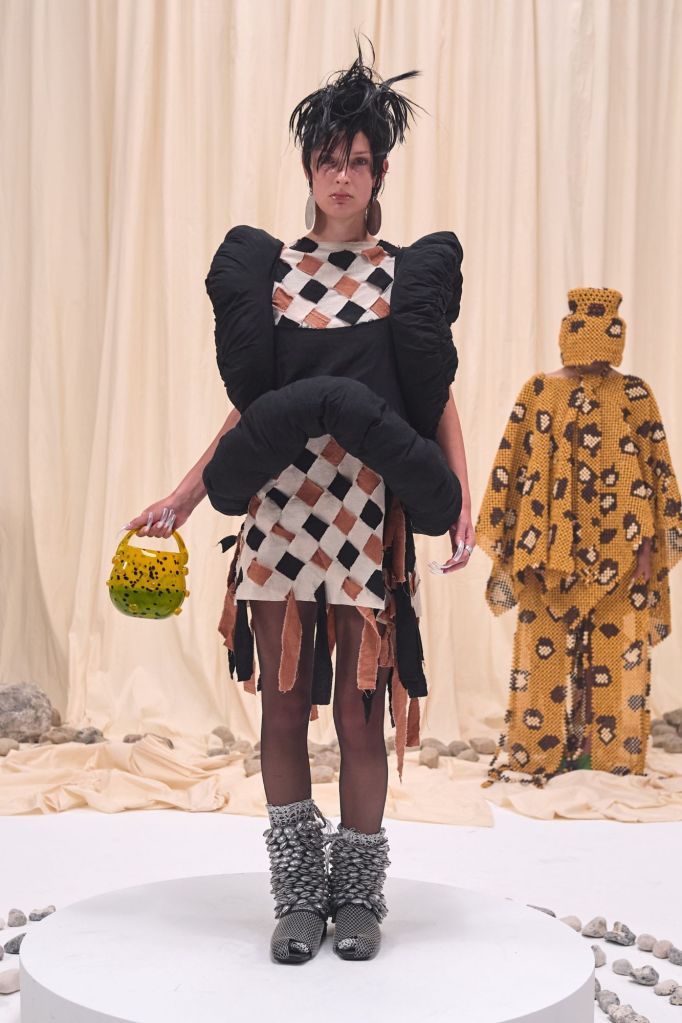
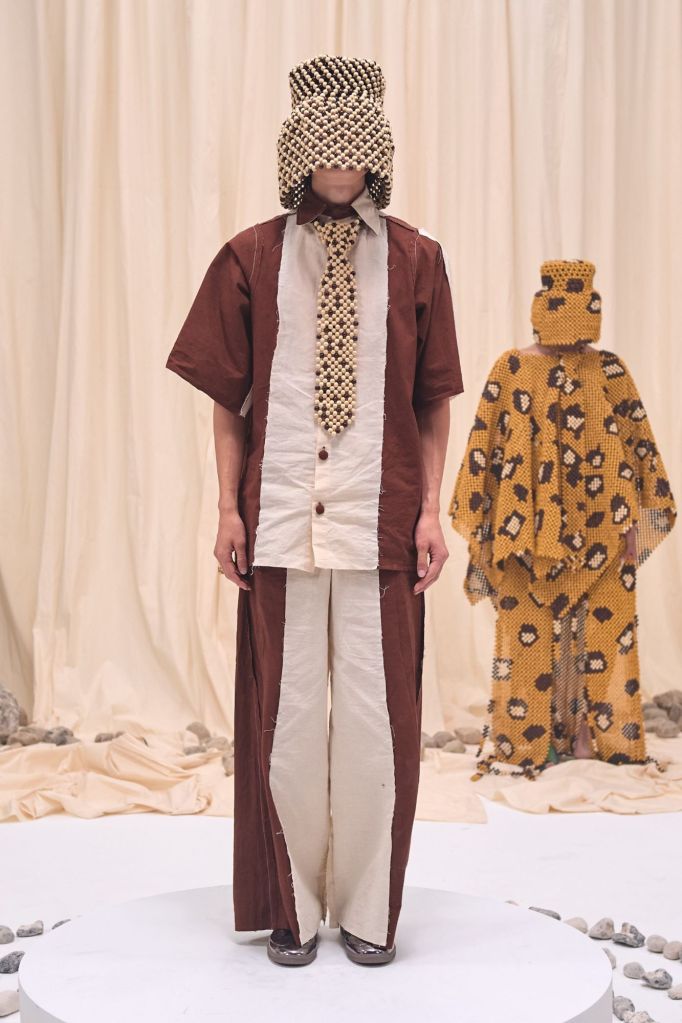
Several of the collection’s structural pieces are objects of that second kind. They blur the line between sculpture and human form — load-bearing shapes that carry their own architecture independent of the person inside them, taking their form from the lukasa, the Luba memory board: a hand-held object of wood, beads and shell that holds genealogy, migration and sacred geography without writing, and yields a different account to each reader who handles it. I.AM.ISIGO SS27 / Spring/Summer 2027 installation extends this same logic of the lukasa to scale — an ecological landscape mapped onto space, each node a potential archetype within a vernacular pantheon.
“Sacred Ecologies teases out what a vernacular design identity could look like but through the lens of a contemporary fever dream. Who/what are these bodies? They are because of what their environment is. There is a natural symbiosis between their action and the fibre’s reaction — and the fibre is nature. As Ngũgĩ writes, nature is the source of all cures.” — Bubu Ogisi, Creative Director of I.AM.ISIGO
Iamisigo SS27 / Spring/Summer 2027 collection is built almost entirely from reclaimed and plant-derived material, sourced and worked across the continent —banana fibre from Uganda, cotton and wooden beads from Nigeria, sisal from Tanzania, recycled aluminium from Kenya, alongside recycled glass, natural dyes and other reclaimed fibres, with weaving carried out in Kenya. All of it is worked through processes that resist mechanised finish. Waste does not leave the process; it changes form. Yarn left on the weaving machine is worked back into crochet pieces. Fabric offcuts are returned to outerwear in texturised form, held by a simple tying method. Nothing here is smoothed into uniformity. Surfaces carry the evidence of hand, of time, of a process that behaves more like ritual than production. This is deliberate.
I.AM.ISIGO has never treated craft as decoration; it treats craft as a divine mystery system, one that predates and quietly resists the industrial logic of design. Structurally, emi-finalist in 2026. All images I.A collection draws on what the house calls contemporary peripatetic pedagogies — the principle that spiritual and material knowledge has travelled with itinerant healers, wandering teachers, bodies displacing and dislodging themselves, rather than settling into institutions. Knowledge that moves is knowledge that survives confiscation — the most sacred ecology of all.
COLLABORATIONS of I.AM.ISIGO SS27 / Spring/Summer 2027, This season features one key collaboration: the Adidas deconstruction table staged during this year’s Copenhagen Fashion Week. Select pieces from the deconstruction table are featured in this year’s presentation.
ABOUT I.AM.ISIGO / iamisigo, I.AM.ISIGO is a contemporary wearable art practice based across Lagos, Nairobi and Accra. Founded by Nigerian designer and artist Bubu Ogisi, I.AM.ISIGO works across material research, ancestral textile knowledge, and spiritual practice from across the African continent. Ogisi was awarded the Zalando Visionary Award in 2025 and named an LVMH Prize semi-finalist in 2026.

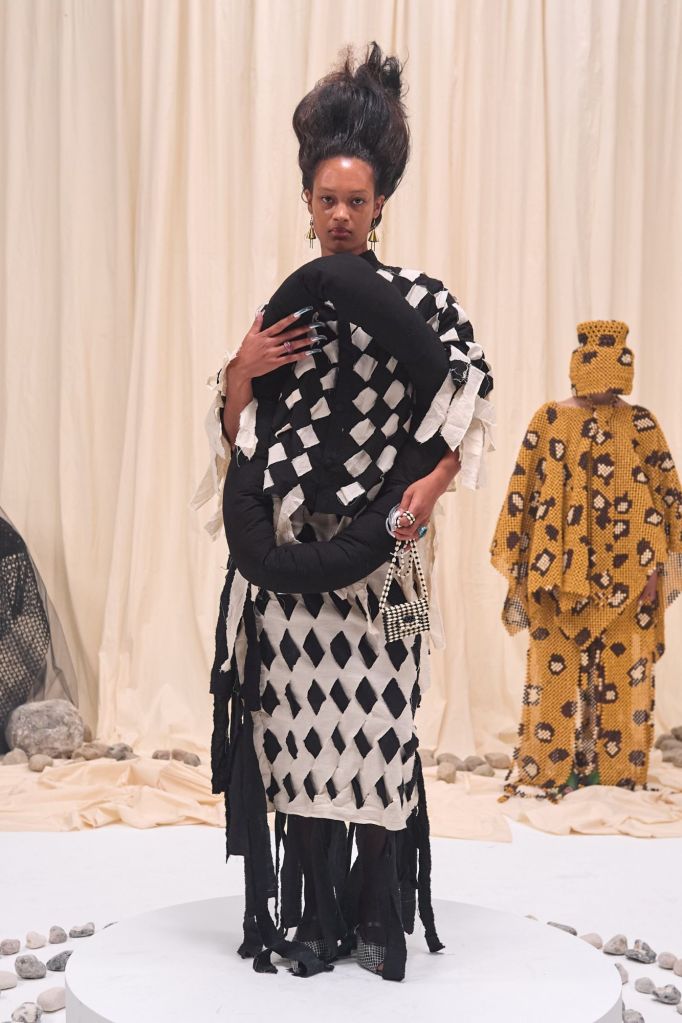
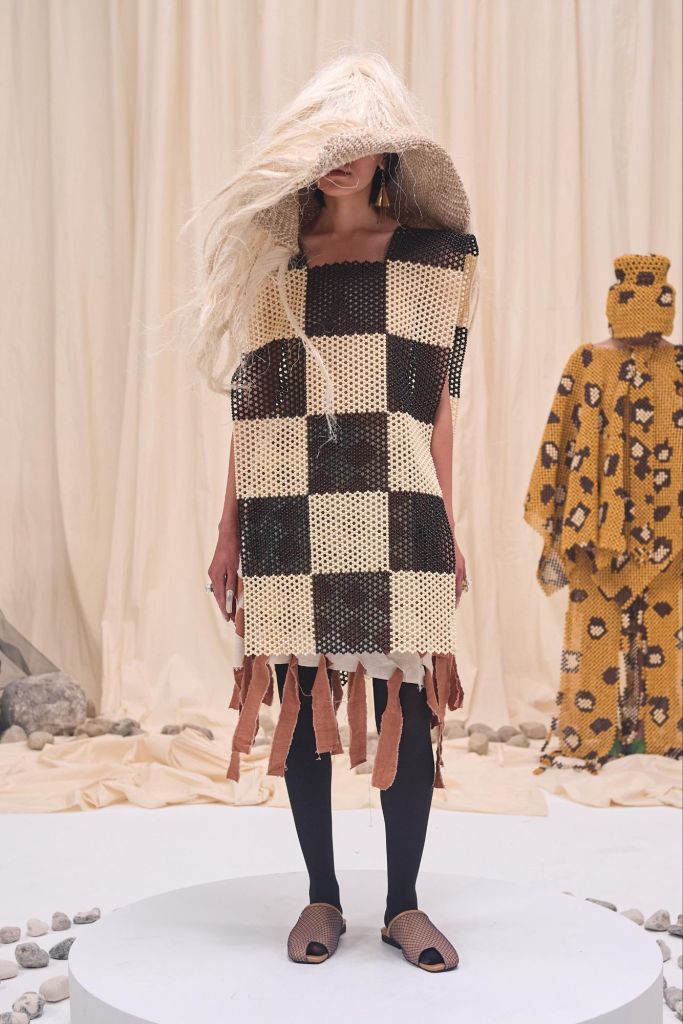
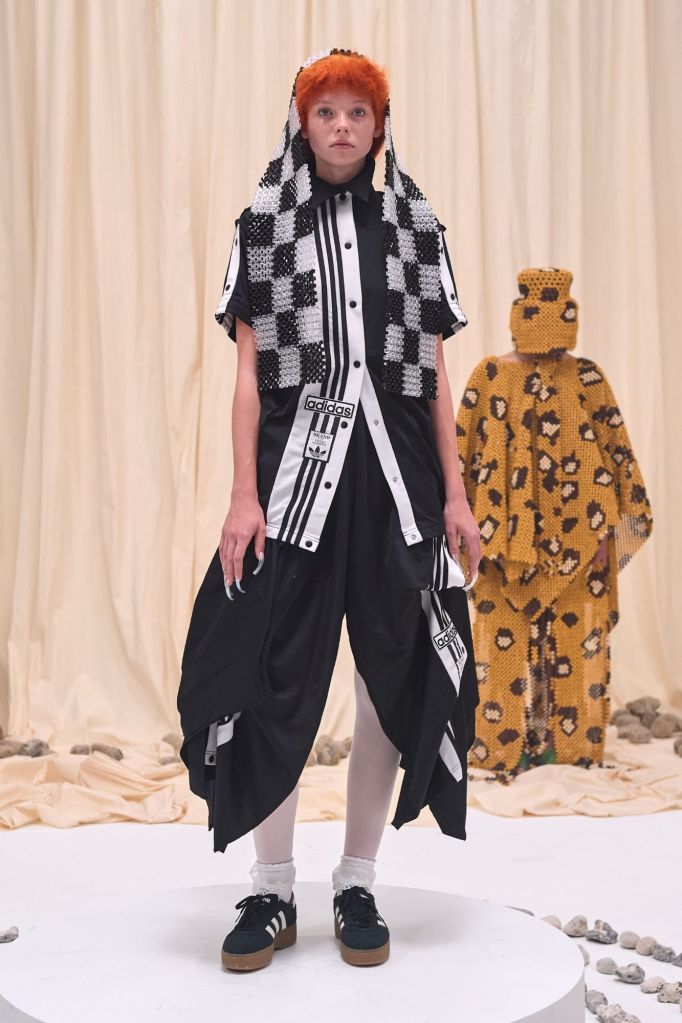
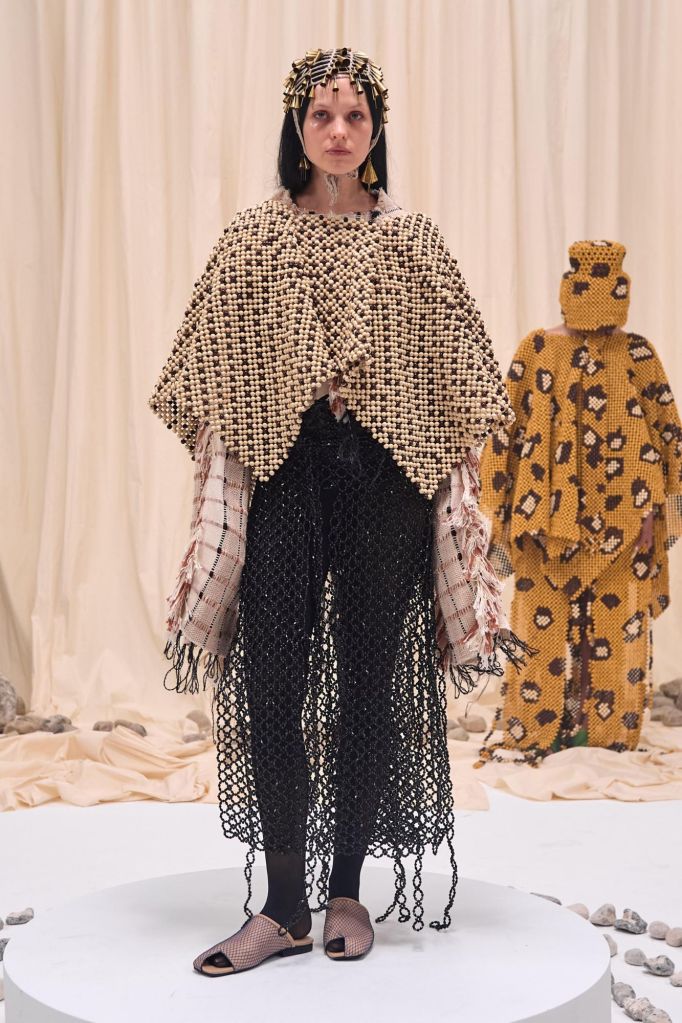




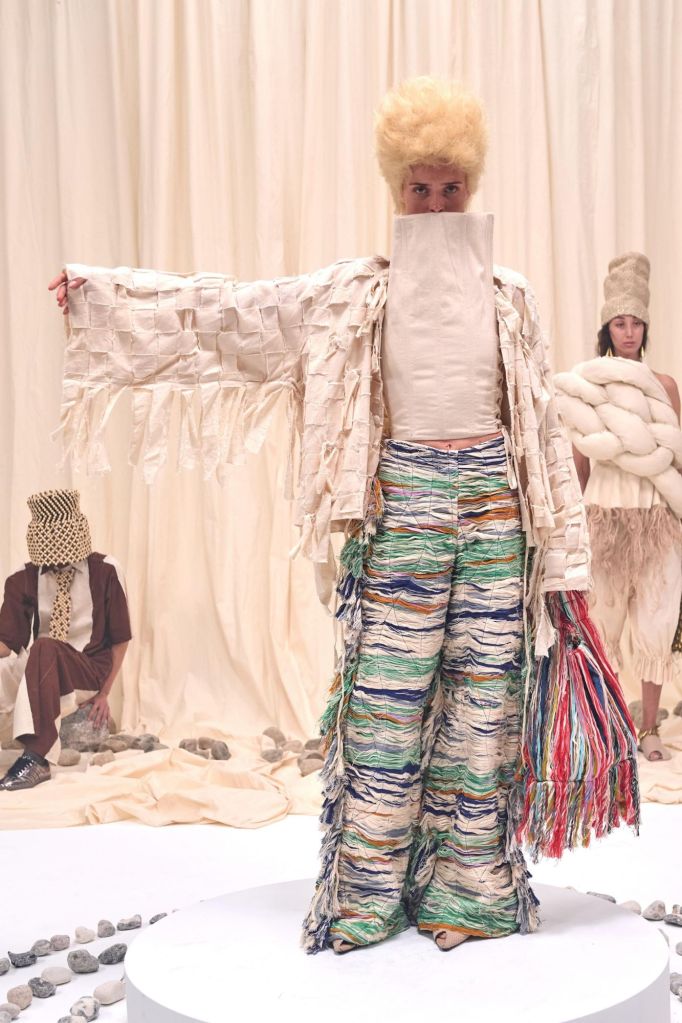
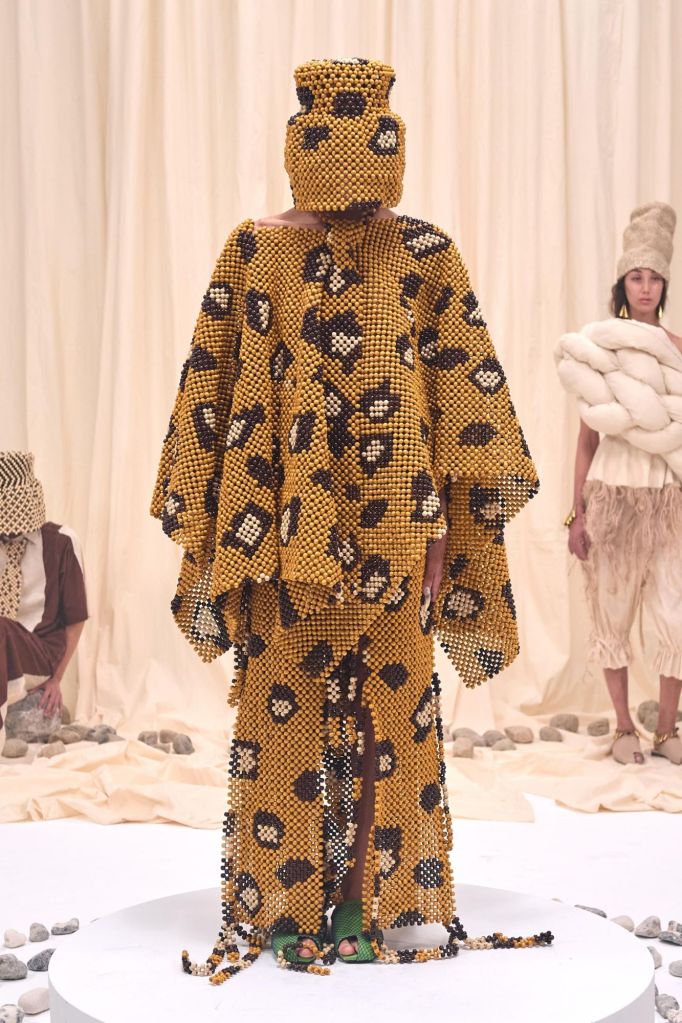
All images I.AM.ISIGO SS27 / Spring/Summer 2027 by Copenhagen Fashion Week